

The line between human and machine writing is getting blurrier every day. With advanced AI models, it’s now possible to create text that sounds remarkably human. But whether you’re a teacher checking student submissions, an editor verifying content quality, or just a curious reader, knowing how to spot AI-generated text is a valuable skill. This guide provides a clear, step-by-step process to help you identify content created by algorithms.
Distinguishing AI writing isn’t about finding a single “gotcha” moment. It’s about recognizing a pattern of signals. While some AI content is obvious, the more sophisticated examples require a thoughtful and multi-layered approach to detection. We’ll walk you through both manual analysis techniques and the use of specialized tools to make a more informed judgment.
A Step-by-Step Guide to Identifying AI Text
Follow these steps in order for a comprehensive analysis. Start with your own critical judgment before turning to technology, as this helps you build an intuition for the subtle differences between human and machine-generated content.
Step 1: Perform an Initial “Gut Check”
Before diving into technical analysis, start with a simple read-through. Human writing, even when formal, usually contains subtle imperfections, personality, and a distinct voice. AI text often lacks this organic feel. Pay close attention to the overall tone and style. Does the writing feel a bit too perfect or generic? Is the vocabulary correct but somehow lacking in flair or originality?
AI-generated content often has a sterile quality. It can explain concepts clearly but may struggle with expressing genuine emotion, humor, or personal anecdotes. Look for a uniform sentence length and structure that feels repetitive. If the text reads like an encyclopedia entry without any authorial personality, it’s an early sign that it might not have been written by a person.
Step 2: Fact-Check All Claims and Sources
AI models are notorious for a phenomenon known as “hallucination.” This means they can confidently state incorrect facts or even invent sources, studies, and quotes that don’t exist. This is one of the most reliable ways to catch AI-generated text. Take a few of the key claims made in the content and verify them with a quick search.
Scrutinize any data, statistics, or references mentioned. Does the article cite a specific study? Look it up. Does it mention a quote from an expert? Confirm that the expert actually said it. If the text provides vague sources like “studies show” or “experts agree” without linking to or naming them, your suspicion should increase. Fake sources are a major red flag.
Step 3: Look for Repetitive Phrasing and Structure
While human writers may have a preferred style, AI models often fall back on specific patterns and phrases. Read the text aloud and listen for unnatural repetition. An AI might use the same transition words over and over, such as “in addition,” “furthermore,” or “overall.” This can make the text feel formulaic and robotic.
Also, analyze the structure of the paragraphs. Do they all follow the same template, like starting with a topic sentence, followed by three supporting points, and ending with a concluding sentence? While this is a common writing structure, AI can apply it with such rigid consistency that it feels unnatural. Human writing tends to have more variation in paragraph length and flow.
Step 4: Use a Specialized Detection Tool
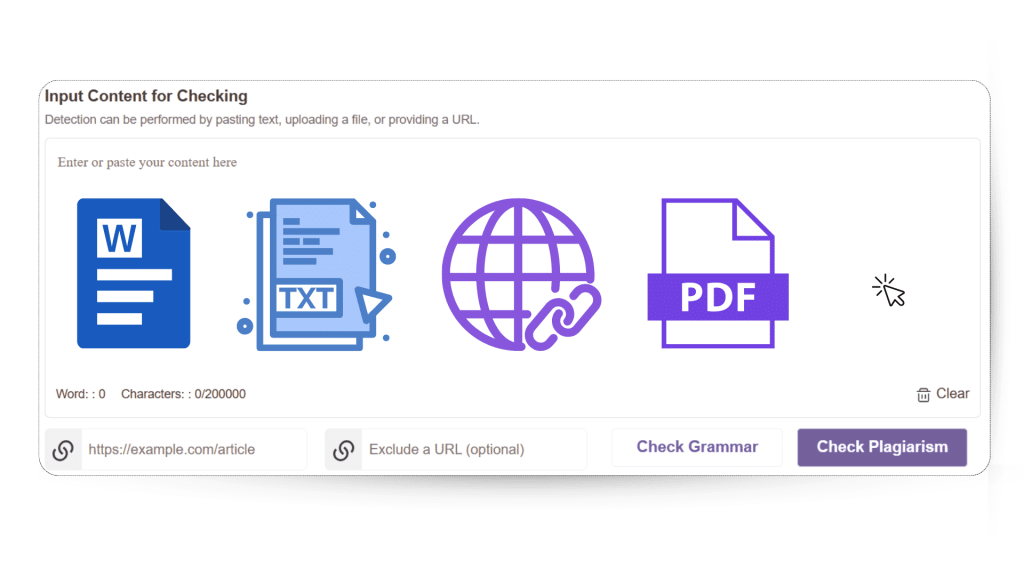
After your manual review, the next step is to use technology. AI detection tools analyze text for patterns that are statistically common in machine-generated content, such as word choice, sentence complexity, and predictability. These tools provide a probability score indicating the likelihood that the text was written by an AI. To get started, you can use a comprehensive Plagiarism Checker that also includes features for detecting AI-written content. This approach helps you check for both originality and authenticity in one go.
Using a dedicated ai plagiarism checker is a crucial step in any modern content verification process. Simply copy and paste the text into the tool and run the analysis. It will highlight sentences or entire sections that are likely generated by AI and provide an overall score. Remember, these tools are not infallible and can sometimes produce false positives, especially with heavily edited or hybrid human-AI content. They should be used as a strong signal, not as absolute proof.
Step 5: Evaluate the Content for Depth and Original Insight
This is where human intelligence still has a clear advantage. AI is excellent at summarizing existing information from the internet, but it struggles to produce truly original thoughts, deep analysis, or creative insights. Read the content with a critical eye. Does it offer a new perspective on the topic, or does it just rehash commonly known facts?
AI-generated text often feels wide but shallow. It can cover all the key points on a subject but fails to connect them in a meaningful or novel way. Look for a lack of nuance or critical thinking. For example, an AI might list the pros and cons of a topic without exploring the complex relationship between them. Human writers often add a layer of interpretation, personal experience, or critical analysis that AI cannot replicate.
Tips and Best Practices for AI Detection
* Use a Combined Approach: Never rely on a single method. The most accurate assessments come from combining your own critical reading skills (Steps 1, 2, 3, and 5) with the data provided by an AI detection tool (Step 4).
* Consider the Context: The type of content matters. A simple, factual product description is more likely to be created or assisted by AI than a personal essay or opinion piece. Always consider the purpose and context of the writing.
* Look for Hybrid Content: Many writers use AI as a starting point for ideas or drafts. The final piece may be a mix of AI and human writing. In these cases, detection tools may give ambiguous results, and your manual review becomes even more important.
* Stay Informed: AI technology evolves rapidly. The characteristics of AI-generated text today might be different a year from now. Keep up with the latest developments in AI writing and detection to stay ahead.
Common Mistakes to Avoid
* Treating Detector Scores as Absolute Proof: An AI detector’s score is a probability, not a certainty. False positives can occur, especially with non-native English writers or text that is highly structured. Use the score as a guide to investigate further, not as a final verdict.
* Ignoring the Possibility of Heavy Editing: A human editor can take a raw AI draft and revise it heavily, making it much harder to detect. If the text has some AI indicators but also shows signs of a human touch, it could be a collaborative piece.
* Making Accusations Without Strong Evidence: Be cautious before accusing someone of using AI. An inaccurate accusation can damage trust. Gather multiple points of evidence from the steps above before reaching a conclusion.
* Focusing Only on Detection, Not Quality: Ultimately, the quality and accuracy of the content are what matter most. If the text is well-written, factual, and serves its purpose, its origin becomes less important in some contexts.
Conclusion
Detecting AI-generated text is a skill that blends critical thinking with the smart use of technology. By starting with a manual review to check for tone, facts, and repetition, you can build a strong initial hypothesis. Following up with a reliable AI detection tool adds a layer of data to your analysis. Finally, evaluating the content for true depth and originality allows you to make a confident and well-rounded judgment. As AI becomes more integrated into our world, this balanced approach will be essential for anyone who works with the written word.