

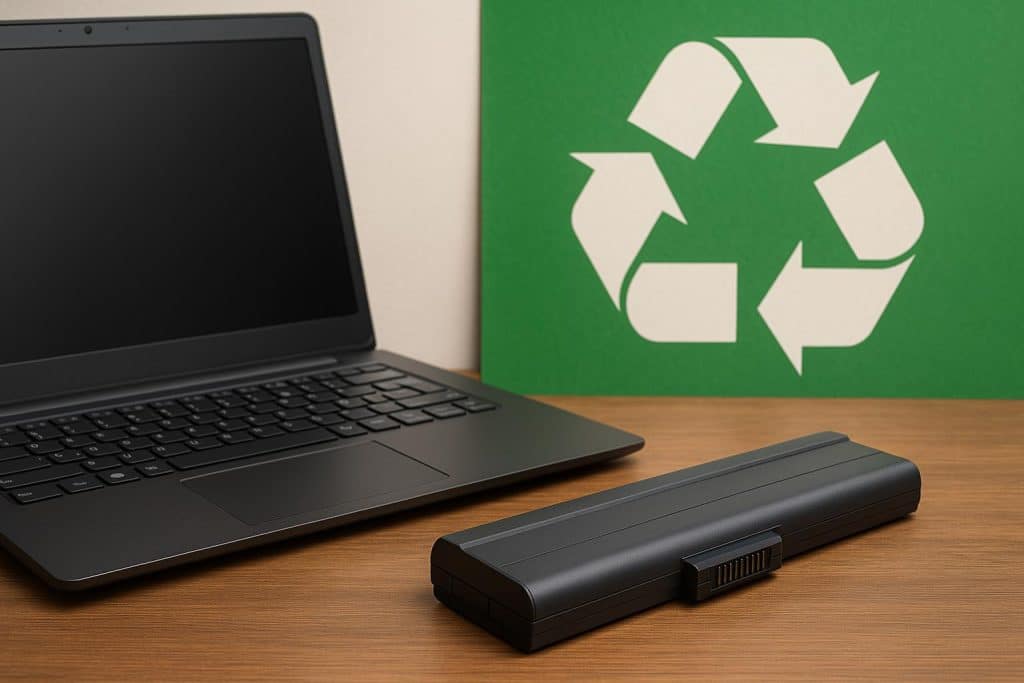
Laptop batteries are something many businesses deal with, but not everyone thinks about what happens when they stop working. As companies replace laptops, upgrade devices, clean out storage rooms, or retire old IT equipment, used laptop batteries can pile up quickly.
That creates a simple question: what should happen to them next?
Laptop battery recycling helps businesses manage these batteries properly instead of tossing them into the trash or leaving them in a closet for years. Laptop batteries contain useful materials, but they also need careful handling at end of life. Battery Recycling & Solutions helps businesses sort, collect, and recycle laptop batteries through an approved recycling process built for commercial battery recycling needs.
What Is Laptop Battery Recycling?
Laptop battery recycling is the process of collecting and properly processing used, damaged, or end-of-life laptop batteries so they do not end up in the regular waste stream.
In simple terms, it means taking old laptop batteries and sending them through the right battery recycling process instead of throwing them away.
Laptop battery recycling usually involves:
- Identifying the battery type
- Separating laptop batteries from general trash and e-waste
- Checking for swelling, damage, or exposed terminals
- Preparing batteries for proper handling and pickup
- Sending them to a responsible recycling process
- Recovering or processing usable materials where possible
Most modern laptop batteries are lithium-ion batteries. Older laptops may contain other battery types, but lithium-based batteries are the most common in today’s business equipment.
Why Laptop Battery Recycling Matters
Laptop batteries are small, but they can create big problems when they are handled incorrectly. They store energy, contain mixed materials, and may become unstable if they are crushed, punctured, overheated, or damaged.
For businesses, laptop battery recycling matters because old batteries often come from large device refreshes, IT cleanouts, employee returns, school technology upgrades, or office moves. A few batteries may not seem like a major issue. But a box full of aging laptop batteries can become harder to manage if there is no recycling plan.
Proper battery recycling helps businesses:
- Keep batteries out of regular trash
- Reduce clutter in IT and storage areas
- Manage old equipment more responsibly
- Separate batteries from general electronics
- Support environmental responsibility
- Create a safer process for bulk battery disposal
It also helps businesses avoid the common problem of “we will deal with it later.” Batteries left in storage for too long can become harder to identify, harder to sort, and more difficult to manage.
How Laptop Batteries Work and What They Are Made Of
Most laptop batteries are rechargeable lithium-ion battery packs. Inside the battery pack are individual cells, electronics that help manage charging, wiring, casing, and protective materials.
The battery works by storing and releasing energy as lithium ions move inside the cell during charging and use. When the laptop is plugged in, the battery charges. When the laptop is unplugged, the battery releases stored energy to power the device.
A laptop battery may contain:
- Lithium-based cells
- Plastic casing
- Circuit boards
- Copper and aluminum
- Steel or other metals
- Insulation and separator materials
- Battery management components
These materials are one reason laptop battery recycling is important. Batteries are not just waste. They are complex products with materials that should be handled through the right recycling process.
The Main Benefits of Laptop Battery Recycling
It Helps Reduce Improper Disposal
Laptop batteries should not be tossed into regular trash. They are not the same as ordinary office waste.
Recycling gives businesses a better option. It moves used batteries into a proper recycling stream instead of allowing them to be crushed, mixed, or mishandled in general waste.
It Clears Out Old IT Equipment Safely
Many businesses have old laptops, loose batteries, docking stations, chargers, and accessories stored in IT rooms. During cleanouts, laptop batteries are often discovered in drawers, boxes, bins, or outdated devices.
Laptop battery recycling helps clear out those materials in an organized way. It gives IT teams and facility managers a practical path for removing batteries from storage.
It Supports Responsible Material Management
Laptop batteries may contain materials that can be recovered or processed through battery recycling. While every battery is different, recycling helps keep those materials in a better end-of-life channel.
This is especially important for businesses that want a more responsible approach to electronics and battery disposal.
It Helps Businesses Handle Bulk Loads
One old laptop battery is easy to overlook. Hundreds of batteries from a company-wide equipment refresh are different.
Commercial laptop battery recycling helps businesses manage larger volumes without guessing how to sort, store, or move them. This matters for schools, offices, manufacturers, municipalities, healthcare facilities, and IT departments.
The Main Limitations or Challenges
Batteries Can Be Hard to Identify
Not every laptop battery is clearly labeled. Some may be built into the device. Others may be loose, old, or missing information.
This can make sorting harder, especially when laptop batteries are mixed with cell phone batteries, power tool batteries, alkaline batteries, or other battery types.
Damaged or Swollen Batteries Need Extra Care
Swollen laptop batteries are a common concern. A battery may appear puffed up, cracked, leaking, or misshapen. These batteries should be separated and handled carefully.
Businesses should not force swollen batteries back into devices, crush them, tape them casually into bundles, or mix them into a general collection box without guidance.
Built-In Batteries Can Complicate Recycling
Many modern laptops have internal batteries that are not meant to be removed quickly. In some cases, the whole device may need to be handled as part of an electronics recycling process.
This is another reason it helps to work with a recycling provider that understands both batteries and business equipment.
Mixed Battery Loads Require Sorting
A business may have laptop batteries, UPS batteries, phone batteries, tool batteries, and alkaline batteries in the same storage area. These should not all be treated the same.
Proper sorting helps make the recycling process cleaner and more efficient.
Common Places Businesses Find Old Laptop Batteries
Laptop batteries are common in many commercial and institutional settings. They may come from daily business use or larger equipment refresh projects.
You may find old laptop batteries in:
- Corporate offices
- IT departments
- Schools and universities
- Healthcare facilities
- Warehouses
- Manufacturing facilities
- Municipal buildings
- Data centers
- Repair shops
- Storage rooms
- Employee return programs
- Electronics cleanouts
Any organization that uses laptops will eventually need a plan for old batteries. The larger the organization, the more important that plan becomes.
Why Businesses Need Proper Laptop Battery Recycling
Laptop batteries should be separated from ordinary trash and handled through a proper battery recycling process. This is especially important when businesses are dealing with bulk quantities or damaged batteries.
A practical recycling process starts with a few simple steps.
First, identify whether the batteries are loose, built into laptops, damaged, swollen, or mixed with other battery types. Then separate them from regular waste and store them in a controlled area where they will not be crushed or exposed to unnecessary damage.
Businesses should also avoid letting batteries pile up in random boxes for long periods of time. A designated battery collection process makes recycling easier for employees, facility teams, and IT departments.
Working with an experienced battery recycling provider helps businesses manage the process with less confusion. It also helps ensure laptop batteries are moved into the right recycling channel instead of being treated like ordinary scrap.
Laptop Batteries Compared to Similar Battery Types
Laptop Batteries vs Cell Phone Batteries
Laptop batteries and cell phone batteries are often both lithium-ion, but they are different in size, shape, and use. Laptop batteries are usually larger and may contain multiple cells inside one pack.
Both should be recycled, but bulk laptop battery recycling may require different sorting and handling than small consumer battery collections.
Laptop Batteries vs Power Tool Batteries
Power tool batteries are built for heavier use and higher-demand applications. They may be found in maintenance departments, construction operations, warehouses, and repair teams.
Laptop batteries are usually tied to IT equipment and office technology. Both can be part of a business battery recycling program, but they should be identified and sorted properly.
Laptop Batteries vs UPS Batteries
UPS batteries are commonly used for backup power in offices, server rooms, and data centers. Many UPS systems use lead acid batteries, although some newer systems may use lithium-based batteries.
Laptop batteries are usually smaller and tied to portable devices. UPS batteries are often heavier and may follow a different recycling process depending on the chemistry.
When Laptop Battery Recycling Is the Right Fit
Laptop battery recycling makes sense when a business has batteries that are no longer useful, safe, or needed.
It is a strong fit for:
- Laptop refresh projects
- IT asset cleanouts
- Office moves
- School technology upgrades
- Damaged or swollen laptop batteries
- Old batteries removed from storage
- Batteries from employee device returns
- Bulk battery loads from repair or replacement programs
In simple terms, if your organization has old laptop batteries sitting around, recycling is the right next step.
When Laptop Battery Recycling May Need Extra Planning
Laptop battery recycling may require extra planning when batteries are damaged, swollen, leaking, unlabeled, or mixed with other battery types.
It may also need more coordination when batteries are still installed inside laptops. In those cases, the recycling plan may involve both electronics recycling and battery recycling.
That does not make the process difficult. It just means businesses should not guess. Getting guidance early can make the pickup, sorting, and recycling process much smoother.
How Battery Recycling & Solutions Helps With Laptop Battery Recycling
Battery Recycling & Solutions helps businesses manage laptop battery recycling in a practical and responsible way.
The service can help with:
- Commercial laptop battery recycling
- Lithium-ion laptop battery recycling
- Battery sorting and identification
- Bulk battery pickup
- Damaged or swollen battery guidance
- Battery recycling for IT departments
- Battery recycling for schools, offices, municipalities, and facilities
For many businesses, the biggest challenge is not knowing what to do with old batteries. Battery Recycling & Solutions helps make the process easier by giving organizations a clear path for proper recycling, pickup, and bulk battery management.
Frequently Asked Questions About Laptop Battery Recycling
What is laptop battery recycling?
Laptop battery recycling is the process of collecting and properly recycling used, damaged, or end-of-life laptop batteries. It keeps batteries out of regular trash and moves them into a responsible battery recycling process.
Can laptop batteries be recycled?
Yes. Most laptop batteries can be recycled through proper battery recycling channels. The exact process depends on the battery type, condition, and volume.
Why should laptop batteries be recycled?
Laptop batteries should be recycled because they contain stored energy and mixed materials that should not be handled like ordinary waste. Recycling helps businesses manage them properly and reduce improper disposal.
Are laptop batteries hazardous?
Laptop batteries can create safety concerns if they are damaged, crushed, punctured, swollen, or improperly stored. They should be handled carefully and recycled through the right process.
What should businesses do with swollen laptop batteries?
Swollen laptop batteries should be separated from other batteries and handled with care. Businesses should not crush, puncture, or force them back into devices. It is best to contact a battery recycling provider for guidance.
Does Battery Recycling & Solutions recycle laptop batteries?
Yes. Battery Recycling & Solutions helps businesses recycle laptop batteries, including lithium-ion laptop batteries, bulk battery loads, and batteries from IT cleanouts or device replacement programs.
Conclusion
Laptop battery recycling is an important part of responsible business recycling. Old laptop batteries should not be thrown into regular trash, left in storage indefinitely, or mixed into general scrap without proper handling.
A clear recycling process helps businesses reduce clutter, manage batteries safely, and keep end-of-life materials moving in the right direction. For companies, schools, municipalities, IT departments, and commercial facilities, laptop battery recycling is a practical step that supports cleaner operations and responsible disposal.
Battery Recycling & Solutions helps businesses with laptop battery recycling, battery pickup, sorting, and bulk battery management, making it easier to handle old batteries the right way.