

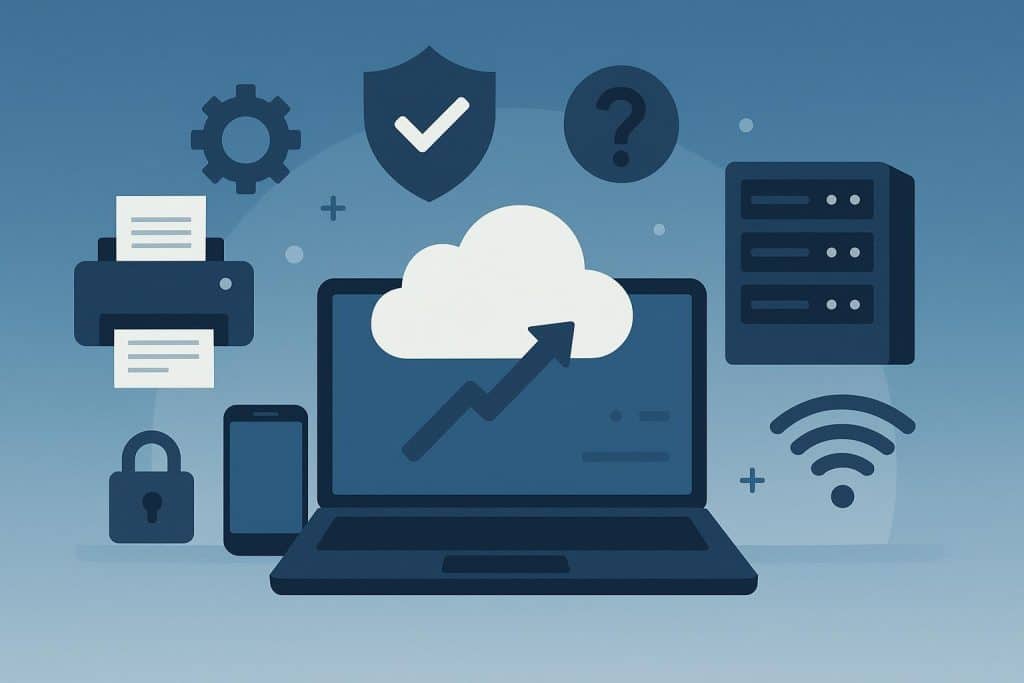
Small businesses today rely on technology for almost every part of their operations, from communication and sales to accounting and customer data management. At the same time, managing IT systems has become more complex and more critical. Cyber threats, software updates, remote work, and compliance requirements all add pressure to business owners who already wear many hats. This has led many owners to ask a key question: Are managed IT services for small businesses actually worth the investment? To answer that, it helps to understand what managed IT services are, what problems they solve, and how they compare to handling IT in-house.
What Are Managed IT Services?
Managed IT services refer to outsourcing some or all of a company’s IT responsibilities to a third-party provider, often called a managed service provider or MSP. Instead of reacting to problems as they arise, an MSP takes a proactive approach by monitoring systems, maintaining hardware and software, and addressing issues before they disrupt operations. Services often include network monitoring, cybersecurity, data backup, cloud management, help desk support, and strategic IT planning. For small businesses, this model replaces the break-fix approach, where IT support is only called after something goes wrong.
The IT Challenges Small Businesses Face
Small businesses face unique technology challenges that differ from those of larger enterprises. Limited budgets often mean outdated hardware or software, while small teams may lack dedicated IT staff altogether. At the same time, small businesses are frequent targets for cyberattacks because attackers assume defenses are weaker. Downtime caused by server failures, malware, or simple user error can halt operations and damage customer trust. Keeping up with updates, patches, and security best practices can feel overwhelming when IT is not your core expertise.
In-House IT vs Managed IT Services
Some small businesses try to manage IT internally, either by assigning tasks to a tech-savvy employee or by hiring a single IT generalist. While this can work in very small environments, it often comes with limitations. One person cannot match the breadth of expertise offered by a team of specialists. Vacation time, illness, or turnover can leave gaps in coverage. Managed IT services for small businesses provide access to a team with experience across multiple technologies and industries, usually at a predictable monthly cost that is easier to budget than salaries and emergency repairs.
Cost Considerations and Budget Predictability
Cost is often the first concern when evaluating managed IT services. On the surface, paying a monthly fee may seem more expensive than handling IT as issues arise. However, the true cost of reactive IT includes downtime, lost productivity, emergency repair fees, and potential data loss. Managed services typically operate on a flat fee model, which helps smooth out expenses and avoid surprise costs. Over time, many small businesses find that proactive maintenance and monitoring reduce major incidents, leading to lower overall IT spending and better financial predictability.
Improved Security and Risk Reduction
Cybersecurity is one of the strongest arguments in favor of managed IT services. Small businesses often lack the tools and expertise needed to defend against phishing, ransomware, and data breaches. An MSP implements layered security measures such as firewalls, antivirus, endpoint protection, and regular patching. They also monitor systems around the clock for suspicious activity. This proactive approach reduces risk and helps protect sensitive customer and business data. In many industries, strong security is not just a best practice but a requirement for compliance and insurance coverage.
Reduced Downtime and Better Productivity
When technology fails, work stops. Even short outages can disrupt customer service, delay projects, and frustrate employees. Managed IT services focus on preventing these issues through continuous monitoring and maintenance. Potential problems are identified and addressed before they escalate into full-outages. When issues do occur, users have access to a help desk that can respond quickly. This leads to less downtime, faster resolution times, and a smoother day-to-day experience for employees who rely on technology to do their jobs.
Access to Expertise and Strategic Guidance
Technology decisions can shape the future of a small business, but choosing the right tools is not always straightforward. Managed IT services give small businesses access to experienced professionals who understand current trends and best practices. Beyond fixing problems, a good MSP acts as a strategic partner, helping plan upgrades, migrations, and long-term IT roadmaps. This guidance can prevent costly mistakes and ensure that technology investments support business goals rather than hinder them.
Scalability for Growing Businesses
As a small business grows, its technology needs change. More employees, more customers, and more data all put additional strain on IT systems. Managed IT services for small businesses are designed to scale easily. Services can be adjusted as the company grows, without the need to hire additional staff or invest heavily in new infrastructure all at once. This flexibility allows businesses to expand confidently, knowing their IT environment can support growth without major disruptions.
Potential Drawbacks to Consider
While managed IT services offer many benefits, they are not a perfect fit for every business. Some owners worry about losing direct control over their systems or relying too heavily on an outside provider. The quality of service can vary between providers, making it important to choose carefully. Communication, response times, and transparency should be clearly defined in service agreements. Businesses with very simple technology needs may not require a full managed services package, though even basic monitoring and security can provide value.
Choosing the Right Managed IT Provider
If you decide to explore managed IT services, selecting the right provider is critical. Look for an MSP with experience working with small businesses in your industry. Ask about security practices, response times, and how they handle support requests. A good provider will take the time to understand your business and tailor services accordingly. Clear service level agreements and regular reporting help ensure expectations are met and performance remains consistent.
Is It Worth It in the Long Run?
For many small businesses, managed IT services are worth the investment. They provide peace of mind, predictable costs, improved security, and access to expertise that would otherwise be difficult to afford. Instead of reacting to problems, businesses can focus on growth and customer service while technology runs smoothly in the background. While every business is different, the shift toward managed IT services reflects a broader understanding that technology is too important to leave unmanaged. For small businesses looking to stay competitive, secure, and efficient, managed IT services for small businesses are often not just worth it, but essential.