

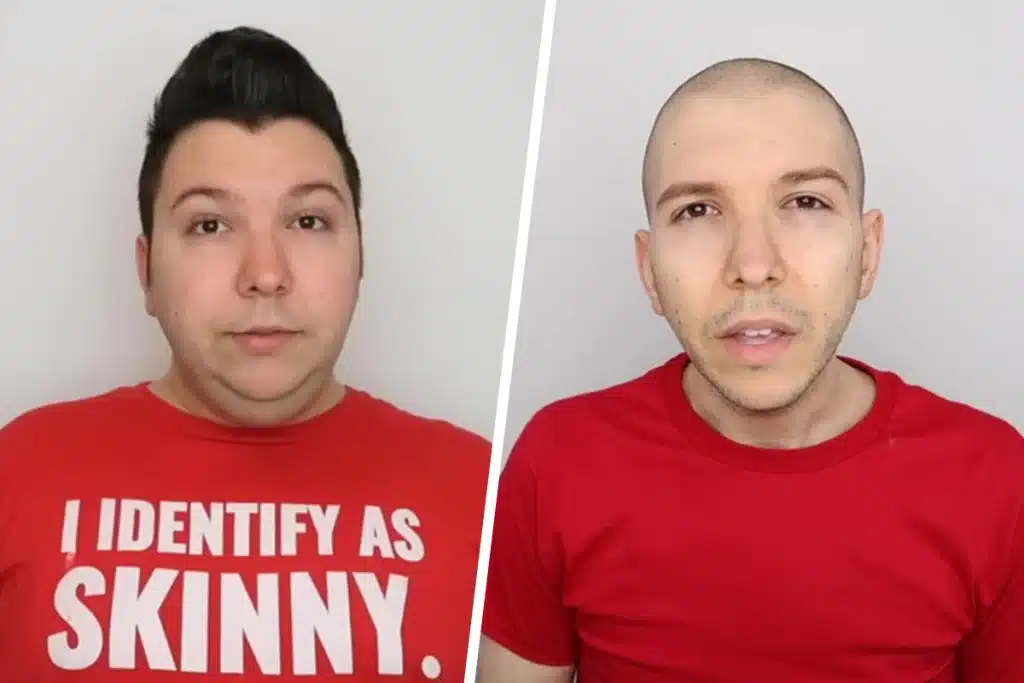
For years, viewers believed they were watching Nicholas Perry’s health collapse in real-time, yet his viral “Two Steps Ahead” reveal suggests he was actually years into a secret recovery. Through pre-recorded content, Nikocado Avocado confuses fans by claiming he never really lost weight because the character they watched had already vanished. This manipulation of the Nicholas Perry weight loss journey timeline frames his 250-pound transformation not merely as a diet, but as a deliberate social experiment.
Mastering the ‘Vault’: How Content Backlogging Allowed a 250-Pound Secret
Nicholas Perry’s secret 250-pound transformation requires looking past the upload date. The strategy relies on “content backlogging”—essentially creating a digital vault of footage. Much like a TV network films an entire season before the first episode airs, Perry reportedly recorded nearly two years of “Mukbang” (eating broadcast) videos in advance. This allowed him to maintain a consistent schedule featuring his heavier persona while his real-world self secretly began a drastic lifestyle change.
Viewers asking how did Nikocado Avocado lose weight so fast are reacting to an illusion of immediacy. There was no rapid medical miracle; instead, Perry utilized a calculated delay. This disconnect complicates the process of identifying fake weight loss reveal videos, as Perry was physically recovering even as his channel showed him in deep decline.
The Nikocado Avocado pre-recorded videos timeline relied on a three-stage divergence between his digital avatar and reality:
- Strategic Shift (2022): Perry began a healthy lifestyle while simultaneously mass-filming consumption content.
- The Backlog Buffer: He utilized this “vault” of unhealthy footage as a mask during his physical transformation.
- Divergent Release: As he lost weight privately, he released the heaviest footage to maximize the eventual contrast.
The Villain’s Monologue: Why Nicholas Perry Treated His Audience as a Social Experiment
Perry’s “Two Steps Ahead” video recontextualizes his career as long-form performance art rather than a documented mental health spiral. By adopting the persona of a gluttonous villain, he intentionally fed the internet’s appetite for “train wreck” entertainment, effectively challenging viewers to decide if they were witnessing a tragedy or financing one with their clicks. This Nicholas Perry performance art commentary suggests that the “character” of Nikocado was a suit he wore to expose the grotesque nature of online fame.
The specific Nikocado Avocado Ozymandias monologue meaning becomes clear through his theatrical delivery while wearing a giant panda mask. Drawing on the “mastermind” tropes found in cinema and literature, Perry characterized his viewers as “ants” blindly consuming content. He suggests that while the public mocked his perceived lack of control, he was actually the one pulling the strings, mirroring the poem Ozymandias which illustrates how easily powerful empires—or in this case, audience assumptions—can crumble.
This reveal serves as a mirror rather than an apology. By proving that his “breakdowns” were calculated acting, Perry highlights the dark voyeurism inherent in the psychological manipulation of YouTube audiences. If millions watched a man destroy himself for entertainment only to find out the destruction was staged, it raises a critical question regarding our own digital literacy.
Beyond the Reveal: How to Spot Curated Realities in Your Social Feed
The Nikocado Avocado redemption arc fundamentally shifts how we view online reality, proving that a creator’s upload schedule rarely reflects their actual life. Navigating future viral narratives with Digital Literacy requires distinguishing the person from the brand and using specific verification steps:
- Check for seasonal/timestamp inconsistencies in videos.
- Look for physical continuity errors across platforms.
- Question ‘outrage’ cycles designed for engagement.