

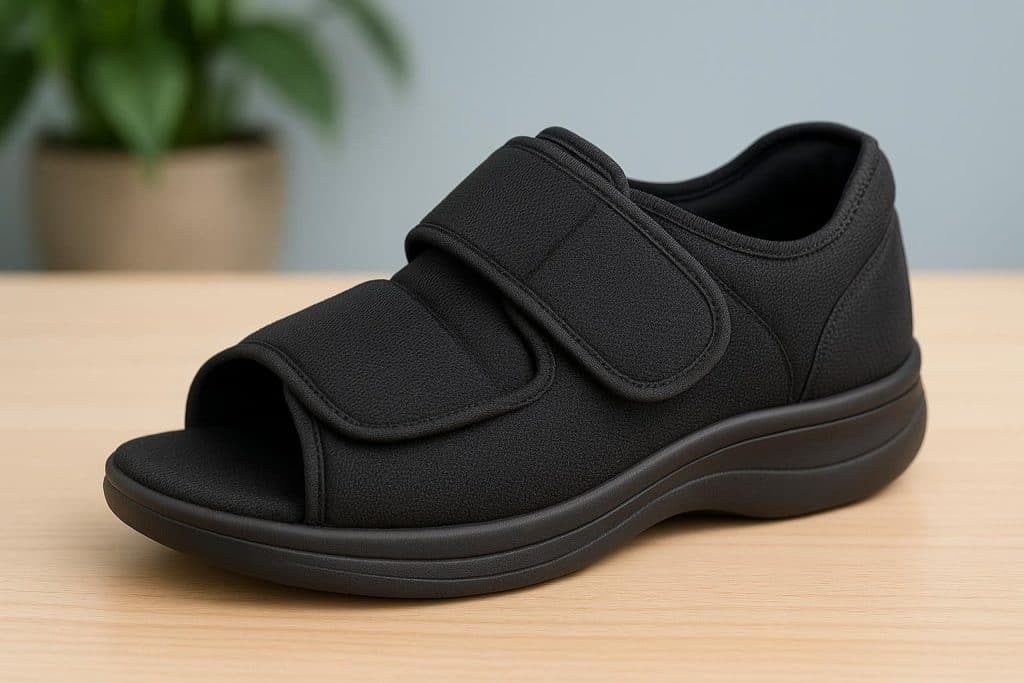
Swollen feet can make ordinary footwear feel suddenly impossible. A pair that felt fine last month may start pressing across the toes. A trainer that looked roomy in the shop may feel tight by the afternoon. Even simple things like walking to the car, standing at work, travelling, or doing errands can become uncomfortable when the feet are carrying extra fluid.
Swelling in the feet, ankles, or legs is often called oedema, also written as edema. Swelling can kick off for all sorts of reasons; like being on your feet all day, hot weather, long-haul trips, bangs and bruises, pregnancy, meds, dodgy circulation, or bigger health gremlins lurking. The NHS says puffiness in ankles, feet, or legs often sorts itself out, but get a doc’s take if the cause is murky or you’ve got other dodgy symptoms tagging along.
That is why footwear matters. The right shoes cannot treat the medical cause of swelling, but they can reduce pressure, improve comfort, and make daily movement easier. For people who struggle with tight shoes, extra wide fit shoes for swollen feet can be a practical solution because they give the foot more room without forcing you into a badly oversized size.
What Shoes Are Best for Swollen Feet?
The best shoes for swollen feet give plenty of room, let you tweak the fit, pack in cushioning, stay steady, breathe easy, and slip on without a fuss. They should have a wide toe box, soft upper, supportive sole, secure heel, and enough depth so the top of the foot does not feel crushed.
They should not pinch, rub, trap heat, or leave deep marks on the skin. They should also adapt to the fact that swelling can change during the day.
Why Normal Shoes Often Fail Swollen Feet
Most standard shoes are made for a fairly fixed foot shape. Swollen feet do not behave like that.
A foot may feel normal in the morning, slightly tight by lunch, and much larger by evening. This is especially common after long standing hours, warm weather, walking, commuting, or sitting for a long time during travel.
A standard-width shoe does not always allow for that change. Once swelling begins, the upper presses down, the toe box tightens, and the sides squeeze the foot. That pressure can create soreness, rubbing, redness, or skin irritation.
For people who already deal with foot pain, bunions, arthritis, diabetes-related foot concerns, or circulation issues, that pressure can become more than a comfort problem.
The Toe Box Matters More Than You Think
The toe box is the front section of the shoe where your toes sit. When feet swell, the toes and forefoot often need more space. A narrow toe box can squeeze the toes together and increase pressure around the big toe, little toe, and ball of the foot.
Arthritis Foundation guidance on walking shoes says toe box width is especially important because swelling can make a tight toe box aggravate bunions and cause extra painful problems.
This is one reason extra wide fit shoes for swollen feet can feel so different from regular footwear. They are not simply bigger. They are shaped to offer more space where swollen feet usually need it most.
Adjustable Fit Is a Smart Feature, Not a Small Detail
Swelling is rarely consistent. That is why adjustability matters.
Laces, hook-and-loop straps, elastic panels, stretch uppers, and adjustable closures allow the shoe to adapt across the day. You may need a firmer fit in the morning and more room later. A fixed slip-on shoe may be convenient, but it can become restrictive if the upper has no flexibility.
A smart footwear solution should let you loosen pressure without losing stability. The foot still needs to feel secure. A shoe that’s too baggy can lead to sliding around, chafing, and even trips over nothing.
The ideal fit is roomy but controlled.
Extra Depth Helps When the Top of the Foot Swells
Some people only think about width, but depth is just as important.
Swollen feet may need extra vertical space, especially over the top of the foot and around the forefoot. If the shoe is too shallow, it can press down even when the width feels acceptable.
Extra-depth designs help reduce that top-down pressure. Shoes with extra room let you layer in thicker socks, supportive insoles, or orthotics if your doc reckons they’re the go.
This is particularly useful for people whose swelling changes throughout the day or who find that standard shoes leave marks across the upper part of the foot.
Cushioning Should Be Supportive, Not Too Soft
When feet are swollen, soft shoes may seem like the obvious answer. But softness alone is not enough.
A shoe that’s too mushy lets your foot sink in and feel wobbly as, ramping up tiredness, especially on longer treks. One that’s rock-hard turns every step into a bone-jarring thud.
The sweet spot’s balanced cushioning: the sole slurps up the impact but keeps your foot planted firm. Spot on for pounding pavements, hard floors, shopping centres, airports, office grind, or even home lino.
For swollen feet, you want that calm, held-in comfort, no teetering about.
Stability Helps You Walk With More Confidence
Swollen feet can feel like dead weights, tight as a drum, or just plain clumsy. Plenty of folks feel less sure-footed too, ’cause the foot doesn’t sit right in the shoe.
A steady shoe sorts that by giving your foot a proper, no-nonsense platform. Hunt for a supportive midsole, a heel that locks in tight, and an outsole with real bite. No sliding around in the back, either. The sole should not feel flimsy. The shoe should help you move without forcing the foot to grip or compensate.
Swelling can already make walking a bit of a slog and uncomfortable. Dodgy shoes just pile on extra grief.
Breathable Materials Make Long Wear Easier
Swollen feet often cop it worse when shoes lock in the heat. Warm, clammy trotters just crank up the friction, niggles, and all-round grief.
Breathable uppers, soft linings, and moisture-wicking gear help keep the inside of your shoes feeling fresher. Bloody handy for folks in shoes all day, commuters, travellers, or anyone in hotter spots.
The goal is simple: the foot should have space, support, and airflow.
Compression Socks and Shoes Need to Work Together
Some people with swelling are advised to use compression socks or stockings. Cleveland Clinic explains that compression therapy can help improve circulation in the lower legs, ankles, and feet and is used for swelling linked to poor circulation conditions.
But compression wear also changes how shoes fit. A shoe that is already tight may become uncomfortable with thicker or medical-grade socks.
That is another reason extra wide fit shoes for swollen feet can be helpful. They allow more room for socks without crushing the forefoot. Still, compression should be used under proper guidance, especially if you have diabetes, circulation problems, or other medical conditions.
When Swelling Needs Medical Attention
Footwear can help with comfort, but swelling should not always be treated as a simple shoe-fit issue.
The British Heart Foundation flags that ongoing or sudden bad swelling in ankles and feet can sometimes point to bigger issues with the heart, kidneys, liver, or blood flow. Cleveland Clinic says get medical help if the puffiness worries you, hits out of nowhere, or comes with other serious-feeling symptoms.
Get medical help quickly if swelling is sudden, severe, one-sided, painful, red, hot, or linked with breathlessness, chest pain, dizziness, or a major change in how you feel.
Shoes can support comfort. They should not replace diagnosis.
How to Choose Shoes for Swollen Feet
Shop later in the day if your feet usually swell by afternoon or evening. That gives you a more realistic fit.
Wear the socks you normally use. If you wear compression socks, try shoes with them.
Check the toe box. Your toes should not feel squeezed.
Check the sides. The widest part of the foot should not press hard against the shoe.
Check the top. The upper should not leave deep marks.
Check the heel. It should feel secure without rubbing.
Walk around properly before deciding. A shoe that feels tight while standing still will usually feel worse after a full day.
The best extra wide fit shoes for swollen feet should give room without feeling sloppy, cushion without feeling unstable, and support the foot without trapping it.
Small Design Details That Make a Big Difference
Look for removable insoles if you need more internal space or custom support. Go for rounded or wide toe boxes over those pointy, tapered fronts. Opt for soft, bendy uppers if your feet are on the touchy side. Steer clear of stiff seams where the swelling hits hardest.
A grippy outsole’s a smart move too—swollen feet can make your steps feel a bit off, so solid traction saves slips on smooth floors, paths, or lightly wet patches.
And if you’re cooped up indoors for hours, don’t sleep on house shoes. Padding about barefoot or in daggy slippers mightn’t cut it for protection or support, especially with tender feet.
Final Thoughts
Swollen feet can affect confidence, mobility, comfort, and daily routine. The right shoes will not remove the underlying cause of edema, but they can make life easier while you manage it properly.
Good footwear gives your feet space to change during the day. It reduces squeezing, rubbing, heat, and pressure. It supports walking without making the foot feel trapped.
Extra wide fit shoes for swollen feet are not about buying oversized footwear. They are about choosing shoes shaped for real feet, real swelling, and real daily movement.
When your shoes stop fighting your feet, walking becomes calmer, standing feels easier, and comfort becomes something you can rely on instead of chase.