

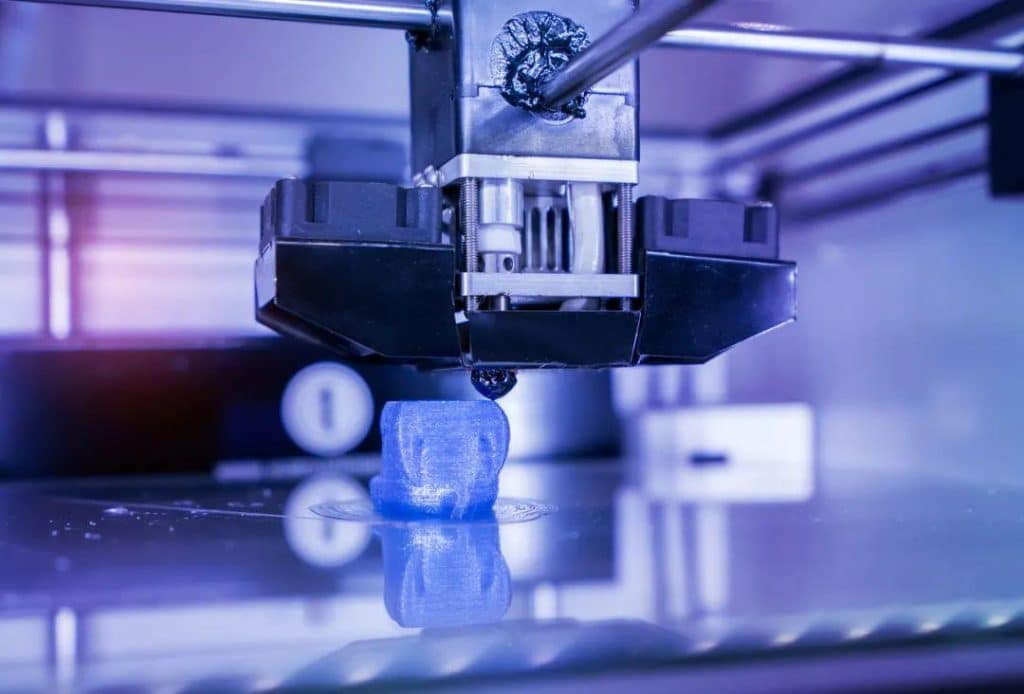
From the current research and application of rapid prototyping (RP) technology, although it has significant advantages, it also has notable limitations. Issues such as limited available materials, low part accuracy, high surface roughness, poor physical properties of prototype parts, high price of forming machines, and elevated operating and production costs. These issues have become bottlenecks that hinder the wider adoption of the technology.
Current Status of Rapid Prototyping Technology
Today, rapid prototyping still faces many challenges. Most problems come from the current level of technology. The biggest issues are in the following areas:
Process Issues
Rapid prototyping is based on building parts layer by layer. The key questions are: what materials to use and how to stack the layers. Researchers are studying and developing new layer-by-layer methods to improve part quality, accuracy, and speed.
As the technology improves and its use grows, the focus is shifting from rapid prototyping to rapid manufacturing, and from making concept models to mass customization. The machines are also developing into three types: concept machines, production machines, and special-purpose machines.
Material Issues
Material development is always a hot topic. Good rapid prototyping materials should meet these needs:
- Easy to process quickly and accurately.
- Strong enough for functional parts (good strength, stiffness, moisture resistance, and heat stability).
- Easy to handle in later processing steps.
Researchers are working on new materials, especially composites like nanomaterials and heterogeneous materials that are hard to make with other methods. The goal is to create materials that are good for making prototypes, easy for further processing, and strong enough for different uses.
Accuracy Issues
Current rapid prototyping parts usually have an accuracy of about ±0.1 mm, especially in the height direction. Because of the layer-by-layer method, it is hard to reach the same surface quality and precision as traditional machining.
One good solution is to combine rapid prototyping with traditional machining methods to get the benefits of both. We need to improve the accuracy, reliability, and production capacity of current machines, increase efficiency, and shorten production time. It is especially important to improve surface quality and mechanical properties so the parts can be used for mold making and functional testing.
Software Issues
Most rapid prototyping systems use the STL file format for slicing. This format uses many small triangles to represent the CAD model. However, it has problems: gaps between triangles can cause data loss, and the flat layers create a staircase effect that lowers surface quality and accuracy.
Now, new slicing methods are being developed. These include direct slicing based on model features or curved surface layering. They can slice the CAD model directly without converting to STL format. This reduces errors from triangle approximation and improves both accuracy and speed.
Energy Issues
Rapid prototyping uses different energy sources such as light, heat, chemical, and mechanical energy. Most machines use lasers. Laser systems are expensive to buy and maintain, and their energy efficiency is low.
We need better solutions in energy density, precise energy control, and forming quality. New types of energy sources should be developed.
Application Issues
At present, rapid prototyping is mainly used for new product development. Its main benefit is shortening the development cycle and getting quick market feedback.
Because of its great potential, many industries are now interested in it. In the future, as accuracy and material performance improve, it can be used in more fields such as biomedicine, archaeology, cultural relic protection, art design, and architectural modeling. It could become a high-efficiency, high-quality, and high-precision copying system.
Future Trends of Rapid Prototyping Technology
The future development trends of rapid prototyping technology are mainly reflected in the following aspects:
Material Forming and Preparation
With the development of science and technology, materials and parts are required to offer high performance. There is a need to achieve quantification and digitization in material and part design, as well as the integration and unification of material and part preparation.
Biomanufacturing and Growth Forming
The 21st century is the century of biological science. Rapid prototyping technology can be combined with engineering science, especially manufacturing science. Based on the understanding of life activities at different levels, biotechnology and biomedical engineering can create wealth for humanity and solve human health problems.
Computer Peripherals and Networked Manufacturing
Rapid prototyping technology is a fully digital manufacturing technology. The three-dimensional forming function of RP equipment shares common characteristics with ordinary printers.
Micro Manufacturing
Currently, commonly used micro machining methods are based on subtractive principles. These methods struggle to process complex three-dimensional micro-structures, and further increases in aspect ratio are limited. In contrast, rapid prototyping is based on the discrete/stacking manufacturing principle and can produce structures of any complex shape.
Direct Writing Technology
Direct writing technology is able to precisely control material units and is at the core of rapid prototyping.
As the technology moves from prototyping to actual manufacturing, higher precision is required. Using modeling, computer simulation, and optimization, such as finite difference and finite element methods, can improve accuracy and achieve true net-shape forming.
Bottom Line
Rapid prototyping is one of the most important tools helping us move from traditional manufacturing to the digital era. It allows designers and engineers to turn ideas into real physical parts quickly and efficiently.
At Getzshape (www.getzshape.com), the company provides a full range of rapid prototyping technologies to help businesses of all sizes bring their ideas to life. Whether you need a quick prototype for testing or a key bridge toward final production, rapid prototyping remains an essential part of product development and future manufacturing.