

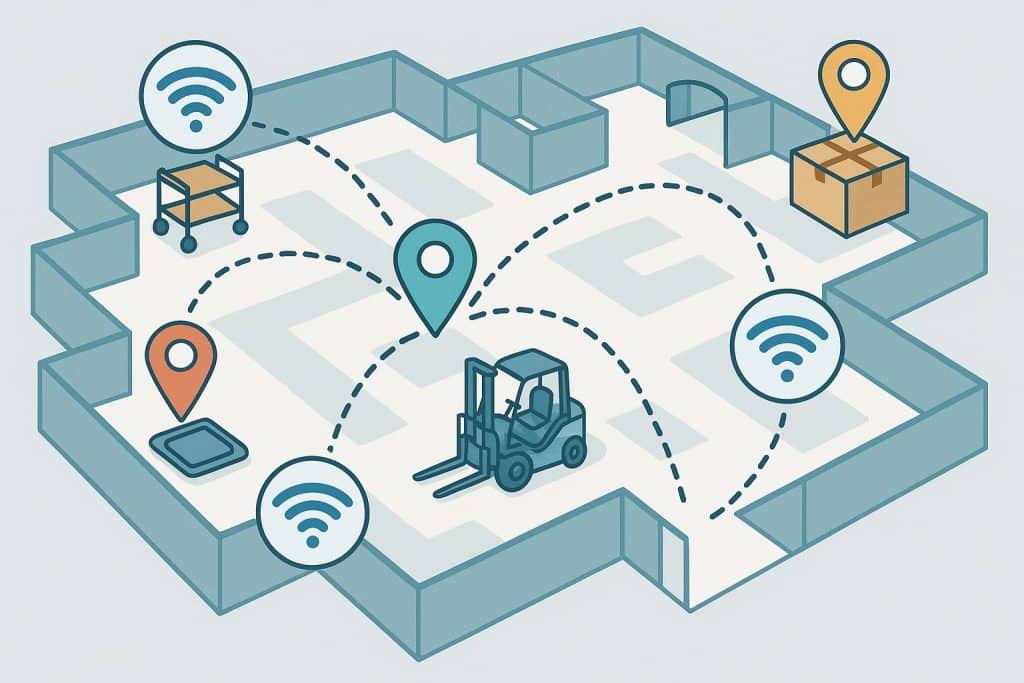
Managing a large-scale industrial facility often involves dealing with significant visibility challenges. Once equipment or materials move indoors, conventional tracking solutions become ineffective. Technologies like GPS are unable to function properly through dense concrete structures or metallic storage systems, leaving operations teams without real-time insight the moment assets enter the facility.
Depending on manual scanning or simple proximity alerts only adds to the confusion. These outdated methods create inefficiencies that directly impact productivity and operational costs. Upgrading indoor tracking systems is no longer just a technological upgrade—it is a fundamental requirement for maintaining consistent workflow. Without accurate visibility, optimizing a fast-paced industrial environment becomes nearly impossible, especially when valuable mobile assets cannot be tracked reliably.
Financial Impact of Poor Inventory Visibility
A lack of accurate indoor tracking quickly translates into measurable financial losses. One common issue is the emergence of “ghost inventory,” where items appear to exist in system records but cannot be physically located. For example, if materials are misplaced during staging, the enterprise system may still reflect their last scanned location, creating a disconnect between digital records and reality.
This forces managers to halt operations, reorganize workflows, and adjust production schedules to compensate for missing items. Such disruptions significantly reduce efficiency and output.
To mitigate these issues, many facilities maintain excess buffer stock near production areas. While this may seem like a temporary solution, it leads to overcrowded workspaces, restricts movement, and slows down automated systems. Additionally, it can result in unnecessary procurement decisions, such as ordering replacements or paying for expedited shipping for items that are already somewhere within the facility.
Limitations of Passive Tracking Systems
Passive tracking systems rely on fixed checkpoints where assets must pass through specific locations to update their status. This creates a bottleneck in environments where asset movement is unpredictable and dynamic.
In modern manufacturing setups, materials and work-in-progress items often move based on real-time production needs rather than fixed routes. If an item is diverted for inspection or rework, it may fall outside the tracking system entirely. Meanwhile, the system continues to assume normal progression, leading to inaccurate scheduling and missed production targets.
This dependency on fixed checkpoints makes passive tracking unsuitable for high-speed, flexible manufacturing environments.