

In the global energy transition, there is no shortage of companies promising smarter, cleaner, and more efficient power systems. What is far rarer is a company that combines three things at once: category-defining product design, genuine profitability at scale, and a growth curve so steep that it forces investors to rethink how quickly a new energy company can mature.
That is why Sigenergy’s IPO story is drawing unusual attention.
Founded less than four years ago, Sigenergy has moved from startup to Hong Kong listing candidate in just 3 years and 11 months, placing it among the fastest mainland Chinese companies ever to reach this stage. On paper, that speed is already remarkable. But speed alone is not what makes the story compelling. Plenty of young companies grow fast for a period. Far fewer manage to do so while entering high-value international markets, delivering premium margins, and building a technology platform that looks increasingly difficult to replicate.
This is what makes Sigenergy different in the eyes of capital markets: the company is not simply another hardware maker riding the storage boom. It is presenting itself as something more ambitious — an AI-native energy platform company whose hardware, software, manufacturing, and user-side intelligence are designed to work as one. And in a market that has long been crowded with similar-looking boxes, inverters, and batteries, that distinction matters.
A Growth Story That Defies Category Norms
To understand the investment interest around Sigenergy’s IPO, it is worth starting with the numbers — not because numbers tell the whole story, but because here they set the tone unusually clearly.
From revenue of RMB 58 million in 2023 to RMB 1.33 billion in 2024 and an estimated RMB 9 billion in 2025, Sigenergy’s top-line trajectory points to an approximately 150-fold increase in just two years. That alone would place the company among the fastest-growing names in the broader photovoltaic and storage space. But the more surprising part is what happened alongside that expansion: profitability did not disappear under the weight of growth. It strengthened. Gross margin rose from 31.3% in 2023 to 46.9% in 2024, and is projected to reach 50.1% in 2025, while adjusted net margin is expected to reach 35.9%. In an industry where scale is often pursued at the expense of economics, that is not just impressive. It is disruptive.
This is one of the central reasons Sigenergy’s IPO stands out. The company is not coming to market with a familiar “growth first, profits later” narrative. Instead, it is making a stronger claim: that in the next phase of energy technology, differentiated systems can command premium pricing, and that integrated AI-driven energy products may be structurally more profitable than conventional hardware businesses.
That changes the conversation. It shifts Sigenergy from being evaluated as a cyclical equipment supplier toward being examined as a higher-quality technology platform — one with stronger pricing power, faster innovation cycles, and a potentially broader long-term monetization path.
Why the Market Is Rewarding This Company’s Speed
Speed is often discussed as if it were a marketing flourish. In Sigenergy’s case, it is better understood as evidence of system efficiency.
The company’s rapid path toward IPO is not happening because it found a quick shortcut to capital. It is happening because multiple layers of the business appear to have scaled together unusually well. Product definition, market entry, channel expansion, manufacturing, software iteration, and brand recognition have all moved at a pace that is rare in energy technology.
That coordination matters more than the headline timeline. In traditional energy hardware businesses, one bottleneck is enough to slow the whole system down. A company may build a promising product but struggle with certification. Or it may win demand but fail to deliver consistently across geographies. Or it may scale shipments while margins collapse under competitive pressure. What Sigenergy appears to have done is avoid that pattern. It has expanded into demanding overseas markets, built share, sustained premium economics, and translated that performance into a capital-markets story — all within a narrow window.
This is why the phrase “fastest Hong Kong IPO among mainland enterprises” is not merely a timing milestone. It functions as a shorthand for something more important: a company that compressed years of execution into a much shorter cycle without appearing to sacrifice product quality, operational rigor, or commercial traction.
For investors, that suggests not just momentum, but managerial coherence. And coherence is one of the hardest qualities to find in high-growth industrial technology companies.
The Real Product Is Not a Battery Box
Another reason Sigenergy’s IPO narrative is resonating is that its flagship products do not fit neatly into the old logic of the storage sector.
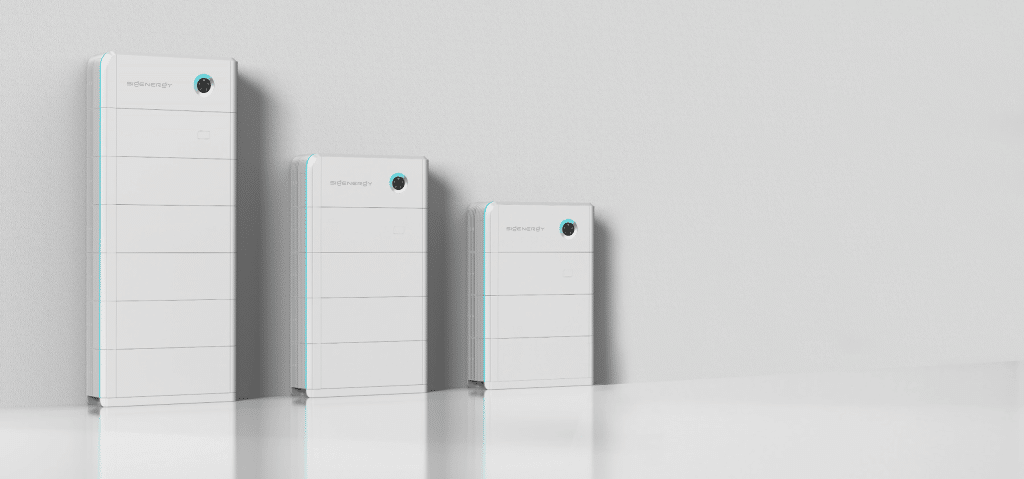
The traditional framing of energy storage companies has been simple: better cells, lower cost, larger capacity, broader distribution. Sigenergy’s approach is more structural. Its flagship SigenStor product is not positioned merely as a battery system, but as a “five-in-one” integrated energy platform combining inverter, battery pack, PCS, EV DC charging module, and EMS. That matters because it changes the unit of competition. Instead of competing module by module, the company competes at the system level.

This has commercial implications that go beyond technical elegance. When a company turns what was previously a fragmented system into a single coordinated product architecture, it can simplify installation, reduce failure points, improve user experience, and create a clearer basis for premium pricing. It also creates tighter integration between hardware and software, which is where the company’s AI story becomes much more than branding.
In this sense, Sigenergy is not just selling storage equipment. It is selling a better-organized energy system — one that can be updated, optimized, and increasingly personalized over time. For capital markets, that is a much more interesting proposition than selling standardized hardware into a pricing war.
Why “AI in All” Matters to the IPO Story
In many industries, AI is still being used as an accessory term — something applied after the fact to make existing products sound more modern. Sigenergy’s IPO materials push a different idea: that AI is not an add-on, but an architectural layer embedded throughout the business. That logic runs across several levels.
At the user level, AI supports energy planning, dispatch, service, and safety. The company says its AI-enabled planning capabilities have already connected to 84 electricity operator platforms across 36 countries, with more than 25,000 power stations globally having AI functions activated. More than 14,700 users are supported in participating in electricity market trading, and Sigenergy also positions its energy app as the first in the industry to integrate GPT capabilities.
At the system level, this means the company’s products are not static assets. The installed base becomes part of a data loop. Every new deployment can enrich how the AI models understand pricing, load behavior, dispatch conditions, and user preferences. That matters because it creates the possibility of compounding intelligence. The product improves not only through new hardware generations, but through software learning across the fleet.
And at the business-model level, that creates something rare in energy hardware: a genuine data flywheel. More installations generate more operating data. More data improves AI performance. Better AI performance improves user outcomes. Better user outcomes strengthen word-of-mouth and installer confidence. That, in turn, supports further market-share expansion.
This is one of the clearest reasons investors may see Sigenergy as more than a short-cycle growth story. If the company can keep that loop working, the business becomes increasingly defensible over time.
High-Value Markets Are the Strongest Form of Validation
Revenue growth and market share can be interpreted in many ways on their own. What gives them greater meaning is performance in demanding international markets, where product quality, certification, service capability, and long-term reliability are tested much more rigorously.
This is why Sigenergy’s international market presence matters so much to its IPO story. The company has already secured leading positions in residential storage markets such as Australia, Ireland, South Africa, Sweden, and the Benelux region. Frost & Sullivan also ranks it first globally in shipments of stackable distributed solar-storage-in-one systems. At the same time, its commercial network has expanded across more than 80 countries and regions, supported by over 160 distributors and more than 13,200 installers worldwide.
These are not easy markets to win. Australia and parts of Europe are among the most sophisticated distributed energy markets in the world, with demanding installers, discerning end users, and high expectations for product performance, certification, service responsiveness, and long-term reliability. Winning in those environments suggests that Sigenergy’s differentiation is not just theoretical. It is being tested in markets where weak products are exposed quickly.
That distinction matters enormously in an IPO context. Investors are generally more willing to believe in a premium technology story when it is validated first in high-standard markets rather than in lower-barrier segments. It is a sign that the company’s value proposition can hold where scrutiny is highest.
A Profit Story, Not Just a Volume Story
For years, much of the energy storage industry has been trapped in a familiar dilemma: scale is pursued through price compression, and once price compression begins, profitability becomes hard to recover.
Sigenergy’s current financial profile offers a different narrative. The company’s 2025 gross margin of 50.1% and adjusted net margin of 35.9% suggest that it is not merely participating in the industry’s growth cycle; it is capturing a disproportionate share of value within it.
This matters because margins are often where product philosophy becomes visible. High margins are not simply an accounting outcome. In Sigenergy’s case, they point to an underlying commercial reality: customers appear willing to pay more for an energy system that is more integrated, more intelligent, and easier to live with over time.
If that holds, then the IPO is not just about monetizing a fast-growing business. It is about putting public-market capital behind a model that has already shown evidence of premium economics. That is a fundamentally stronger place from which to list.
What Investors Are Really Buying
So what are investors actually buying if they buy into the Sigenergy IPO story?
Not just today’s revenue. Not just a battery manufacturer. Not just another Chinese exporter in the clean-tech wave.
What they are potentially buying is a company that sits at the intersection of several powerful trends at once: the electrification of homes and businesses, the digitization of energy management, the globalization of high-performance Chinese manufacturing, and the emergence of AI as a practical operating layer in real-world infrastructure.
That combination is what makes the story unusually rich. Sigenergy is early enough to still feel like a challenger, but operationally advanced enough to present itself as a category leader. It is benefiting from the growth of distributed energy, but also trying to shape what the next generation of distributed energy systems will look like. It is participating in capital markets at a moment when investors are searching for companies that can combine industrial depth with software-like scalability.
This is why the IPO narrative resonates beyond pure financials. It is not only about whether the company has grown fast. It is about whether it represents a new type of energy company altogether.
Conclusion
In many IPO stories, the most difficult task is separating hype from substance. In Sigenergy’s case, the reason the market is paying close attention is that the two are not moving in opposite directions. The hype exists because the substance is unusually strong.
A company founded less than four years ago is approaching public markets with triple-digit growth, industry-leading profitability, leadership in high-value overseas markets, and a technology architecture built around the integration of AI, software, hardware, and manufacturing. That is not a common combination.
What Sigenergy’s IPO ultimately represents is more than a milestone for one company. It is a signal that the energy sector may be entering a new phase — one in which capital is no longer rewarding only scale, capacity, or low cost, but also system intelligence, integration depth, and the ability to turn energy assets into evolving platforms.
For investors, that is why Sigenergy is not just another listing candidate in a hot sector.
It is one of the clearest tests yet of whether the public market is ready to value the next generation of energy companies the way they increasingly operate: not as hardware vendors, but as intelligent system builders.
Contact Sigenergy today to get more information on energy storage industry!