

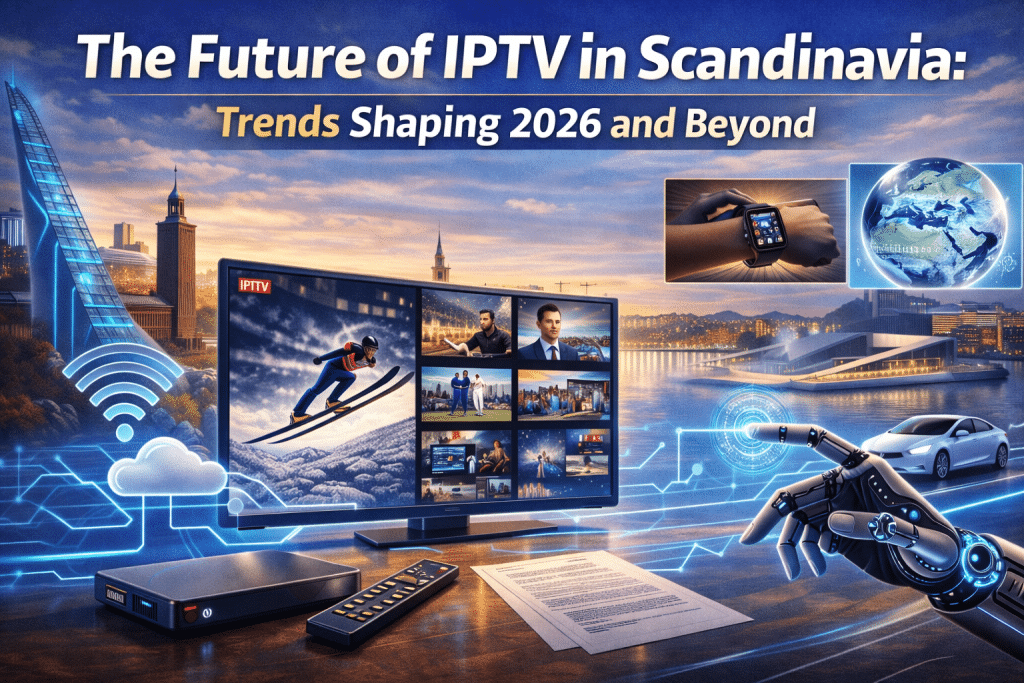
The television landscape in Scandinavia has transformed dramatically over the past decade. What was once dominated by cable and satellite providers is now increasingly powered by internet-based streaming solutions. IPTV (Internet Protocol Television) sits at the center of this transformation, reshaping how audiences in Sweden, Norway, Denmark, and Finland consume content.
As we move through 2026, IPTV is no longer just an alternative — it’s becoming the standard. From smarter streaming technology to personalized viewing experiences and expanded sports coverage, the future of IPTV in Scandinavia looks both innovative and consumer-driven.
In this article, we’ll explore the key trends shaping IPTV across the Nordic region, what viewers can expect in the coming years, and how services like Nordic IPTV are aligning with evolving audience demands.
The Rapid Growth of IPTV in Sweden and Beyond
Scandinavia is uniquely positioned for IPTV growth. With some of the fastest internet speeds in Europe and a high level of digital adoption, Nordic countries provide the perfect environment for internet-based television.
Why IPTV Is Expanding So Quickly
Several factors are fueling the shift:
- High-speed fiber internet availability
- Growing demand for flexible viewing
- Rising cable subscription costs
- Multi-device households
- Increased interest in international content
IPTV in Sweden, in particular, has seen steady adoption as viewers seek more affordable and customizable entertainment options.
By 2026, IPTV Nordic platforms are expected to capture an even larger share of the home entertainment market.
Trend 1: Personalization and AI-Driven Viewing
One of the most significant trends shaping IPTV in Scandinavia is personalization.
Modern IPTV services now offer:
- Customized channel lists
- Smart recommendations
- Viewing history tracking
- User-specific profiles
Instead of flipping through hundreds of channels, users can now see curated suggestions based on preferences.
Providers such as IPTV Nordic are integrating smarter navigation tools that help viewers quickly access Nordic TV channels, sports events, or on-demand shows that match their interests.
This shift reflects a broader consumer expectation: convenience without compromise.
Trend 2: Stronger Sports Streaming Across Scandinavia
Sports remain a major driver of IPTV growth in the region.
From Allsvenskan football in Sweden to SHL hockey and major international tournaments, sports streaming Sweden audiences demand continues to expand.
How IPTV Is Transforming Sports Viewing
IPTV services now offer:
- Multi-angle viewing options
- HD and Full HD streams
- Faster stream startup times
- Integrated highlights and replays
- Access to international leagues
Compared to traditional cable, IPTV subscription Sweden services often provide broader sports coverage without expensive add-on packages.
As sports broadcasting rights evolve in 2026 and beyond, IPTV providers are adapting rapidly to ensure viewers have uninterrupted access.
Trend 3: Multi-Device Streaming as the New Normal
Gone are the days when families shared a single television set.
In 2026, Scandinavian households commonly stream on:
- Smart TVs
- Firestick devices
- Android TV boxes
- Tablets and smartphones
- Laptops
IPTV for Smart TV and IPTV for Firestick have become essential features rather than bonuses.
This flexibility allows users to watch live Nordic TV channels in the living room while others stream movies or sports on mobile devices.
Multi-device functionality is no longer optional — it’s expected.
Trend 4: Expansion of Scandinavian Content Libraries
Another major trend shaping the future of IPTV in Scandinavia is the expansion of regional content.
Viewers increasingly seek:
- Local documentaries
- Nordic drama series
- Cultural programming
- Regional news
IPTV Sverige platforms are focusing more on Scandinavian IPTV services tailored to local tastes.
By combining regional programming with international channels, IPTV providers deliver a more complete entertainment package than traditional broadcasters.
Trend 5: Improved Streaming Stability and Infrastructure
IPTV reliability used to be a concern. However, infrastructure improvements have dramatically enhanced performance.
Key advancements include:
- Content Delivery Networks (CDNs) optimized for Nordic countries
- Server redundancy systems
- Better bandwidth management
- Reduced buffering during peak hours
As fiber coverage continues expanding in Sweden and neighboring countries, IPTV streaming quality will only improve.
For viewers, this means fewer interruptions and a smoother experience during high-demand events like live sports finals.
IPTV vs Traditional Cable: The Ongoing Shift
The comparison between IPTV and cable TV remains relevant in 2026.
Cost Efficiency
Cable often includes:
- Installation fees
- Hardware rental costs
- Rigid packages
IPTV services generally offer:
- Flexible pricing
- No installation
- Simple app-based access
Content Flexibility
Cable packages limit customization, while IPTV platforms allow users to tailor channel lists and watch on-demand content freely.
Global Accessibility
Cable is location-bound. IPTV works anywhere with internet access, making it ideal for Scandinavian expats and frequent travelers.
These advantages explain why IPTV continues gaining popularity across the Nordic region.
Trend #6: Integration with Smart Home Ecosystems
Smart home technology adoption is high in Scandinavia.
IPTV platforms are now integrating with:
- Voice assistants
- Smart remotes
- Home automation systems
This seamless integration enhances user experience and aligns IPTV with modern digital lifestyles.
Trend #7: Growing Demand for International Access
Scandinavian viewers increasingly want access to global content — from American dramas to European sports leagues.
IPTV Nordic platforms provide international channels alongside local Scandinavian networks.
This blend of local and global programming strengthens IPTV’s appeal in multicultural households and among younger viewers.
Challenges Ahead for IPTV in Scandinavia
Despite strong growth, IPTV faces ongoing challenges:
- Content licensing complexities
- Competition from global streaming platforms
- Consumer education about legitimate providers
However, established services like Nordic IPTV are positioning themselves by focusing on reliability, transparency, and diverse channel offerings.
Frequently Asked Questions
1. Is IPTV the future of television in Scandinavia?
Yes. With expanding fiber infrastructure and evolving viewer expectations, IPTV is set to dominate the Nordic entertainment market.
2. How reliable is IPTV in Sweden?
Thanks to strong broadband networks, IPTV in Sweden offers stable and high-quality streaming for most households.
3. Can IPTV replace cable completely?
For many viewers, IPTV already provides a full replacement — including live channels, sports, and on-demand programming.
4. What devices support IPTV services?
IPTV works on Smart TVs, Firestick, Android TV, mobile devices, and computers.
5. Is IPTV subscription Sweden affordable?
Compared to traditional cable, IPTV subscription Sweden services are generally more cost-effective and flexible.
Conclusion: A Bright Future for IPTV in Scandinavia
As 2026 unfolds, IPTV stands at the forefront of the Scandinavian entertainment revolution. Driven by faster internet, personalized features, better sports coverage, and flexible multi-device access, IPTV is reshaping how Nordic viewers consume television.
The future points toward even greater innovation — smarter recommendations, broader content libraries, and seamless integration across devices.
For households seeking the best Nordic IPTV experience, services like IPTV Sverige are adapting to meet modern demands while offering access to Nordic TV channels, sports streaming Sweden coverage, and international programming.
The shift from traditional broadcasting to internet-powered television is no longer a prediction — it’s a reality unfolding across Scandinavia.