

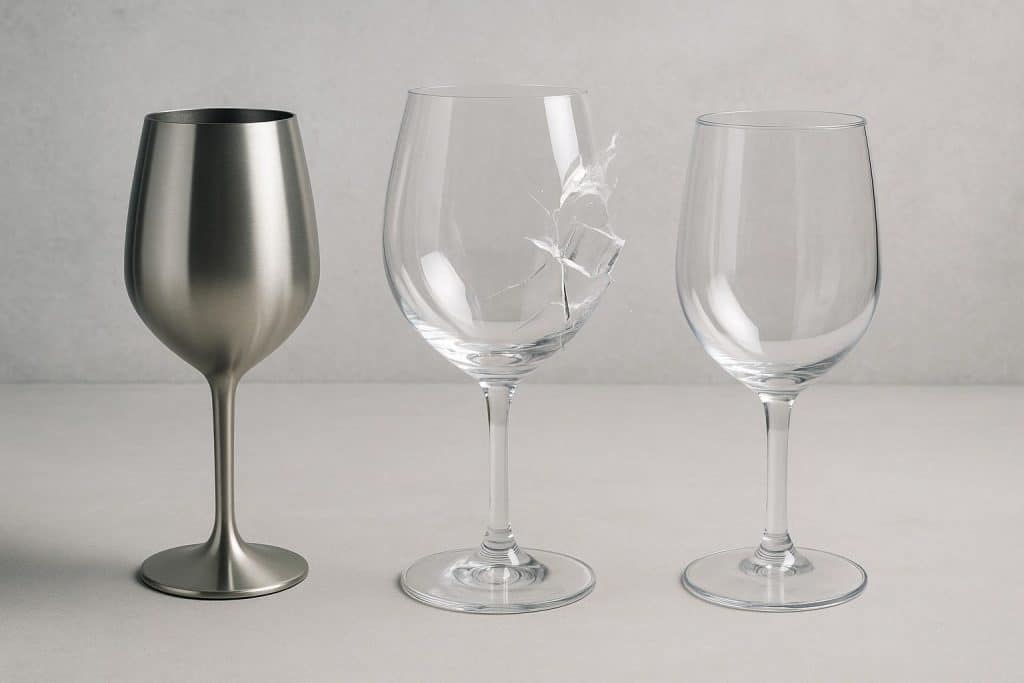
Wine glasses take real punishment at pool decks, picnic tables, patios, and crowded kitchens. Standard crystal can sharpen aroma and show color well, yet one slip often ends its useful life. Material choice affects fracture risk, surface temperature, rim contact, and hand comfort during service. This review compares common options through practical use tests, including drop resistance, lip feel, weight, and chill retention, so readers can judge which type protects both the pour and the experience.
Why Material Decides the Outcome
Many shoppers focus on shape first, though failure usually starts at the rim, stem, or base during ordinary handling. In repeated home checks, a durable, unbreakable wine glasses set matters most after sink contact, patio drops, and long outdoor use, where balance, temperature control, and grip influence the tasting ritual almost as much as whether the vessel survives.
Traditional Glass Still Sets the Standard
Traditional glass still defines the benchmark for clarity and aroma release. Its neutral surface leaves flavor unchanged, and a fine rim guides wine neatly across the tongue. Yet impact testing stays unforgiving. Thin bowls chip early, stems fail quickly, and light contact near stone counters often causes immediate breakage. For calm indoor meals, glass keeps its appeal. For decks, travel bags, or tile floors, it remains the most fragile option.
Tritan and Acrylic Offer a Safer Start
Tritan and acrylic reduce breakage risk while keeping a familiar, clear appearance. Lower weight helps during parties, especially where guests stand, move, and refill often. Surface wear becomes the main weakness. Fine scratches collect over time, and that haze can obscure color and clarity. Some models also have a thicker lip than classic stemware. That change affects flow across the palate before aroma fully reaches the nose.
Polycarbonate Wins on Impact
Polycarbonate handles blunt force better than many clear plastics, so it appears often on boats, at resorts, and in event service. Repeated drops usually leave it intact. That advantage comes with tradeoffs. Heat exposure can alter its crisp feel, and wash cycles may leave visible marks over time. For heavy traffic settings, it performs well. Many drinkers notice a firmer edge and less delicate mouthfeel when they taste more carefully.
Stainless Steel Balances Safety and Use
Double-walled stainless steel often posts the strongest overall results in everyday testing. It resists shattering, hides light scuffs, and slows temperature rise during extended service. Capacity and rim thickness matter here more than appearance alone. A thin lip helps direct the pour with less interruption, while insulation keeps white wine cooler for longer. Strength by itself is not enough. The best design still needs poise, comfort, and steady balance in hand.
Shape and Rim Matter More Than Many Expect
Material gets most attention, yet geometry shapes much of the sensory result. A broader bowl gives red wine room to release aroma. Narrower forms support chilled whites and keep brighter notes focused. Rim thickness matters just as much. Thin edges guide liquid cleanly, while bulky lips can blunt precision. Some metal designs outperform plastic rivals for that reason. They mirror familiar stemware proportions instead of feeling like casual outdoor drinkware.
Stemmed and Stemless Serve Different Needs
Stemmed and stemless formats fail in different ways. A stem adds elegance yet creates another stress point during washing, drying, and storage. Stemless forms remove that weakness and travel better inside totes or picnic bins. Hands warm the bowl faster without a stem, which can raise the temperature sooner than intended. Insulated metal addresses that issue well. For outdoor use, many readers gain more from stability and chill control than formal presentation.
Simple Home Tests Reveal Real Performance
Basic household tests reveal useful patterns quickly. A cold rinse shows whether the exterior sweats after filling. Ten minutes on a sunny table exposes how slowly or quickly the contents warm. A gentle tap against a sink edge identifies weak rims faster than any product description. Weight also matters after several pours. If a vessel feels awkward while empty, service rarely improves once wine, ice, or a chilled carafe enters the routine.
Buying Priorities That Hold Up
The strongest buying criteria are straightforward. Check rim thickness, insulation style, capacity, and base width before judging appearance. Next, match the shape to red, white, or mixed pours. Storage habits matter too. Busy homes benefit from pieces that resist chips and stack without tipping. Outdoor hosts should place extra value on grip and thermal control. Those features protect the wine, reduce mess, and make service easier across many settings.
Conclusion
Unbreakable wine glasses succeed only when material strength supports the tasting experience rather than replacing it. Clear plastics reduce fracture risk, though they often lose polish with repeated use. Traditional glass still feels refined, yet it asks for calmer surroundings and careful handling. Double walled stainless steel offers the best balance for many households because it combines impact protection, steadier temperature control, and a more precise rim. That combination keeps wine service practical, relaxed, and satisfying.