

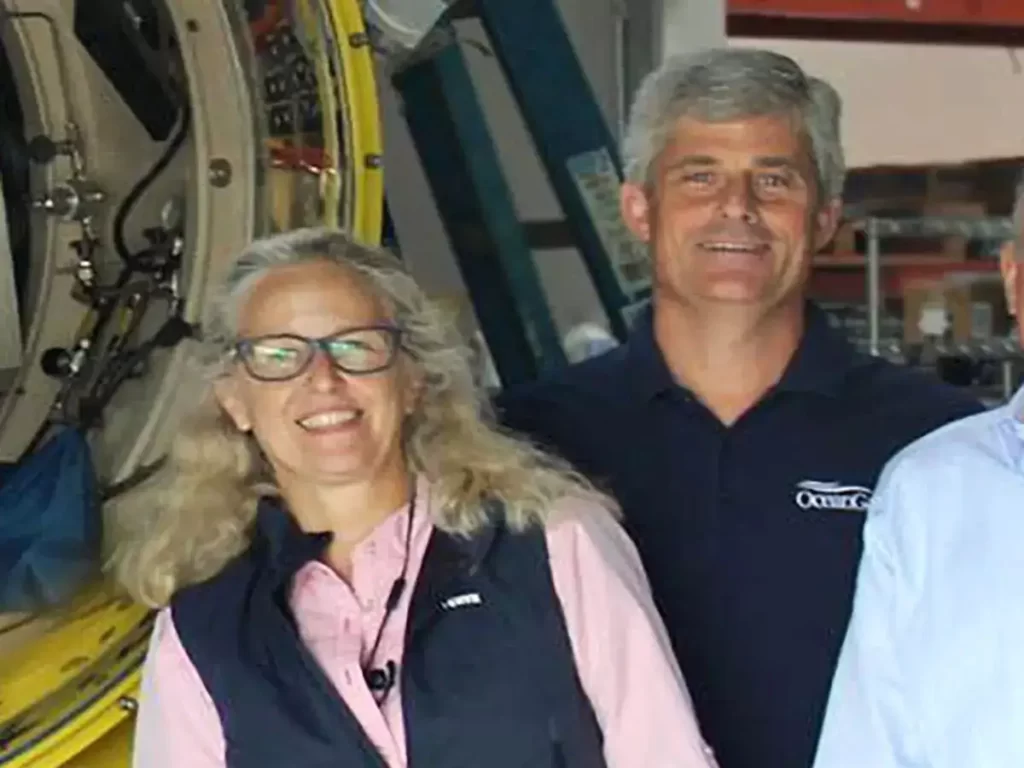
In the summer of 2023, the world was captivated by the search for the Titan submersible until its tragic implosion. While global headlines faded, the story was far from over for the families involved, especially Wendy Weil Rush, the wife of OceanGate CEO Stockton Rush, who died aboard the vessel (Wendy Weil M 1986).
Beyond her role in the company and her own profound loss, her story holds a uniquely tragic twist of history. News reports confirmed that Wendy Rush has a direct family link to two of the most famous victims who died on the Titanic in 1912—the very shipwreck the Titan was exploring.
Wendy Weil M 1986: A Haunting Family Echo: Wendy Rush’s Ancestry and Role in OceanGate
For Wendy Rush, the loss of her husband in the North Atlantic carries a chilling historical echo. She is the great-great-granddaughter of Isidor and Ida Straus, two of the most well-known victims of the Titanic disaster in 1912.
Isidor Straus, the wealthy co-owner of Macy’s department store, and his wife Ida were first-class passengers on the liner’s maiden voyage. Their story has become a legendary tale of devotion. As the ship sank, Ida was offered a seat on a lifeboat but famously refused to leave her husband’s side. Survivors reported last seeing the couple standing arm-in-arm on the deck as the ship went down.
Beyond this incredible family history, Wendy Rush was also a key figure within OceanGate. She served as the company’s Communications Director and, according to past reports, had personally participated in three previous expeditions to the Titanic wreck. Her involvement was not passive; she was an active part of the company’s mission to explore the deep.
This intersection of personal history and professional life placed her at the center of a modern tragedy that uncannily mirrored her own family’s past, creating a story of profound loss that spans more than a century.
Wendy Weil M 1986: The Aftermath for OceanGate and Wendy Rush
Following the tragedy, OceanGate suspended all exploration and commercial operations permanently. While this marked a definitive end for the company, the human aftermath continues long after the headlines have faded. For Wendy Rush, the focus shifts from a corporate collapse to the quiet navigation of personal grief.
Public information regarding her current activities is scarce, as is expected for someone navigating such a profound and public loss. The update on her situation is less about a physical location and more about her place within a unique and tragic historical narrative.
Her story remains inextricably linked to the very shipwreck that claimed her ancestors over a century ago and simultaneously defined her husband’s fatal ambition. It stands as a powerful, personal legacy—a quiet reminder that behind every global spectacle, there are individuals left to navigate the lasting echoes of history.