

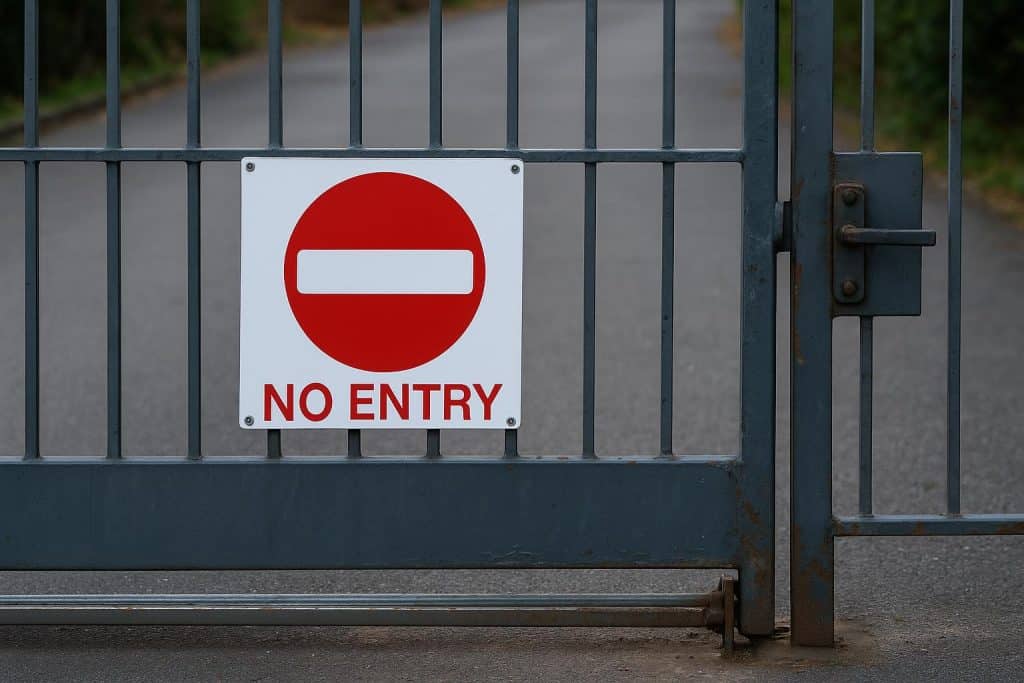
Gate safety is too often overlooked in commercial settings. Automated gates are powerful machines, and when poorly installed or maintained, they pose serious risks. From retail and construction to mining and local government sites, many businesses fall into common, avoidable errors that compromise safety and compliance.
Assuming Compliance Is Built-In
A common misconception is that automated gates are automatically safe or compliant. This is rarely the case. Gate systems must meet relevant Australian standards. One example is guidance from SafeWork NSW, which emphasises that industrial gates must be inspected and maintained to prevent serious risks such as gates falling or becoming unhinged.
Many businesses fail to verify that their systems include essential safety features, such as obstruction sensors, warning signage, or emergency stop functions. Without proper oversight, installations may fall short of compliance, exposing site operators to liability if someone is injured due to missing safety measures.
Using the Same Setup Everywhere
Not all sites have the same safety needs, yet businesses often apply a one-size-fits-all approach. A gate fit for a supermarket may not suit a construction site or a busy depot.
Each location has different risks. Dusty environments need sealed equipment; high-traffic zones require faster, more durable systems. When sites don’t match the gate type to conditions, reliability and safety suffer.
Skipping Risk Assessments
Many installations begin without a proper, site-specific risk assessment. This is a serious oversight. Without it, hazards like crush points, poor visibility, or unsafe pedestrian access go unnoticed.
Even small details, gate swing direction, ground slope, or who’s using the gate, can affect safety. Skipping this step often leads to retrofitting or worse, accidents.
Poor Integration with Site Systems
Gates are often treated as standalone items, not linked to broader security or safety systems. This can create major vulnerabilities. If a gate doesn’t open during a fire alarm, or can’t be monitored through the central system, it becomes a hazard.
Properly integrated systems improve emergency response and overall site control. Yet many businesses don’t ensure this level of connection during installation.
No Ongoing Maintenance
Automated gates need regular servicing to stay safe. Many businesses install and forget, assuming the system will run indefinitely without issue.
But sensors can misalign, motors wear down, and control systems fail. Without checks, small faults can become major risks. Maintenance isn’t optional—it’s a basic safety requirement.
Choosing the Wrong Equipment
Gate components are often selected for price or appearance, not performance or suitability. This is especially true with openers and motors.
For example, commercial swing gate openers may seem standard, but they must be chosen carefully. Gate weight, usage frequency, and environment all affect what model is right. Using the wrong one shortens lifespan and increases failure risk.
Treating Gate Safety as an Afterthought
The core mistake businesses make is treating gate safety as a minor detail. In reality, it should be integral to site design and operation.
Gate systems must be safe, fit for purpose, regularly maintained, and well-integrated. Anything less can lead to injury, liability, and costly downtime. Businesses that treat gate safety proactively, not reactively, are far better placed to protect staff, visitors, and operations.