

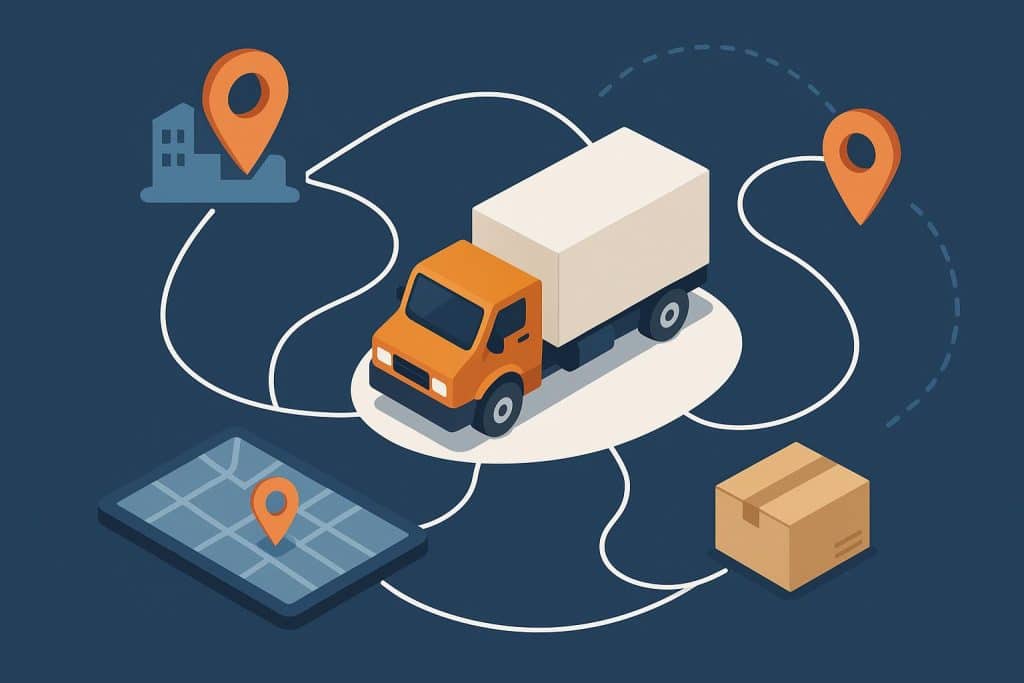
High-volume delivery networks demand reliable final mile carrier tracking systems managing thousands of simultaneous shipments. Organizations operating at scale require a visibility infrastructure capable of systematically handling complexity.
Unreliable tracking creates operational chaos, customer dissatisfaction, and competitive disadvantage across networks entirely. Modern final mile carrier tracking represents critical infrastructure, determining success in competitive logistics.
Carriers managing high-volume networks must choose tracking systems that can withstand operational pressure and complexity. Understanding reliability factors enables organizations to effectively select and implement appropriate tracking infrastructure. Let’s learn what makes final mile carrier tracking reliable in demanding, high-volume networks.
Why Reliability Matters in Competitive Delivery Markets
Reliable final mile carrier tracking directly determines customer satisfaction and competitive positioning fundamentally. Customers demand transparency and accuracy in delivery-tracking information throughout operations.
Unreliable tracking damages customer relationships and creates operational inefficiencies, significantly affecting profitability. Operational decisions depend on reliable carrier tracking data, enabling systematic, effective management.
Resource allocation, route planning, and performance optimization require accurate tracking information constantly. Poor tracking reliability prevents evidence-based decision-making, harming competitive positioning and operational efficiency.
Unreliable carrier tracking triggers customer defection to competitors offering superior visibility solutions. Organizations investing in reliable tracking infrastructure capture customer satisfaction and competitive advantages. The business case for investing in final mile carrier tracking is becoming increasingly clear.
5 Problems Faced Without Final Mile Carrier Tracking
The absence of reliable tracking infrastructure leads to systemic operational failures. Organizations without carrier tracking face escalating consequences that compound daily across network operations.
- Operational Blindness
Dispatchers operate without visibility into actual vehicle locations and delivery progress. Decisions rely on phone calls and manual status updates rather than objective data. Information gaps prevent proactive intervention before failures occur.
- Customer Communication Breakdown
Recipients experience information blackouts regarding shipment status and arrival timing. Support teams field an exponential volume of WISMO inquiries without accurate responses. Satisfaction deteriorates as expectations diverge from operational reality.
- Accountability and Recovery Failures
Lost shipments lack documentation supporting investigation and recovery claims. Financial liability falls entirely on operators in the absence of carrier tracking. Insurance disputes escalate without proof of delivery or condition.
- Optimization Impossibility
Route efficiency cannot improve without data revealing actual performance patterns. Driver productivity remains unmeasured and unmanaged. Network planning relies on intuition rather than empirical evidence.
- Compliance and Risk Exposure
Regulatory violations occur without documentation proving adherence. Temperature-sensitive shipments spoil without condition monitoring alerts. Audit failures trigger penalties and operational restrictions.
7 Factors Ensuring Final Mile Carrier Tracking Reliability in High-volume Networks
Building reliable final mile carrier tracking systems requires understanding multiple interconnected technical elements working together. High-volume networks expose weaknesses, forcing organizations to invest systematically in advanced infrastructure.
- Architectural Scalability Handling Exponential Data Growth
Cloud-based architecture enables carrier tracking to scale resources in response to demand fluctuations dynamically. Distributed systems architecture systematically prevents bottlenecks that would cripple operations during peak periods.
- Redundancy and Fault Tolerance Preventing Operational Disruption
Redundant systems ensure that final mile carrier tracking continues to operate when individual components fail. Data replication across multiple geographic locations prevents complete information loss during disasters.
- Data Accuracy and Validation Maintaining Information Integrity
Validation protocols catch erroneous data before it significantly impacts operations and decision-making processes. Automated accuracy checks systematically maintain the integrity of carrier tracking data throughout delivery operations.
- Real-time Location Intelligence and Geofencing Capabilities
GPS integration provides continuous position tracking, enabling operational visibility into carrier tracking. Real-time capability transforms operations from reactive to proactive management, enabling responsive decision-making.
- Automated Exception Detection Managing Operational Issues
System-level monitoring identifies delivery exceptions automatically without manual intervention from staff. Final mile carrier tracking exception management reduces operational friction and improves delivery success rates.
- Multi-carrier Integration Providing Unified Visibility
Final mile carrier tracking systems integrate disparate carrier systems, providing unified visibility seamlessly. Unified visibility enables cross-carrier optimization and resource allocation decisions systematically across networks.
- Predictive Analytics Forecasting Delivery Outcomes
Machine learning models forecast delivery outcomes, enabling proactive issue resolution before failures. Final mile carrier tracking predictions identify potential failures before they impact customers negatively significantly.
Implementation Best Practices for Final Mile Carrier Tracking
Successful deployment of effective final mile carrier tracking requires a systematic approach beyond technology selection. Organizations must address assessment, integration, and adoption phases comprehensively.
- Assess Current State Thoroughly
Map visibility gaps across the entire delivery lifecycle. Quantify reliability failures to build a compelling business case. Baseline assessment identifies priority improvement areas.
- Select Scalable Architecture
Evaluate platforms demonstrating proven performance under peak load conditions. API-first architecture enables ecosystem connectivity. Elastic infrastructure accommodates growth without performance degradation.
- Ensure Offline Resilience
Verify driver applications function fully without connectivity. Synchronization must occur automatically upon restoration. Cache mechanisms prevent information loss during network failures.
- Validate Integration Capabilities
Confirm connectivity with warehouse management, customer platforms, and financial systems. Data consistency across integration points prevents operational friction. Real-time synchronization eliminates latency gaps.
- Implement Data Governance
Establish validation rules ensuring data quality at ingestion. Encryption and access controls protect sensitive information. Audit trails support compliance requirements and security investigations.
- Deploy Analytics Infrastructure
Configure performance metrics enabling objective driver management. Historical data analysis reveals optimization opportunities. Predictive capabilities transform operations from reactive to preventive.
- Manage Organizational Change
Secure leadership commitment sustaining implementation through adoption curves. Driver onboarding requires clear communication and aligned incentives. Customer communication transition maintains service continuity.
Transform Your Network with Reliable Final Mile Carrier Tracking
Organizations operating high-volume networks must evaluate tracking infrastructure against reliability criteria. Technical architecture, scalability, resilience, data integrity, integration depth, and analytics capability determine whether platforms support excellence or constrain it.
Technology partners such as FarEye offer advanced final mile carrier tracking software designed for high-volume network requirements. Comprehensive assessments identify capability gaps and implementation priorities.
Pilot programs demonstrate measurable impact before committing to full deployment. The cost of unreliable tracking compounds across every delivery cycle. Failed deliveries, customer churn, and inefficiency accumulate into a competitive disadvantage.
Investment in reliable carrier tracking positions organizations for sustainable performance in demanding market conditions. Evaluate your current tracking reliability against the capabilities outlined above. Identify gaps preventing your network from achieving the required visibility.