

Key Takeaways
- Pickleball participation in the U.S. grew 311% over three years, reaching nearly 20 million players in 2024, creating a massive base of traveling players who expect the sport wherever they vacation.
- Major Mexican resort destinations including Cancun, Los Cabos, and the Riviera Maya are actively building dedicated pickleball courts to attract and retain sport-motivated travelers.
- Resorts with pickleball courts report stronger guest engagement, longer stays, and repeat bookings from players who actively plan trips around court access.
- Buying pickleball equipment in bulk through wholesale suppliers has become a practical, cost-efficient strategy for hotels and resorts managing high guest volume.
- U.S.-based pickleball brands with proximity to Latin America offer resorts faster shipping, consistent quality standards, and English-language support that simplifies procurement.
- The sport’s cross-generational appeal makes it a standout amenity for resorts targeting families, couples, and active adult travelers at the same time.
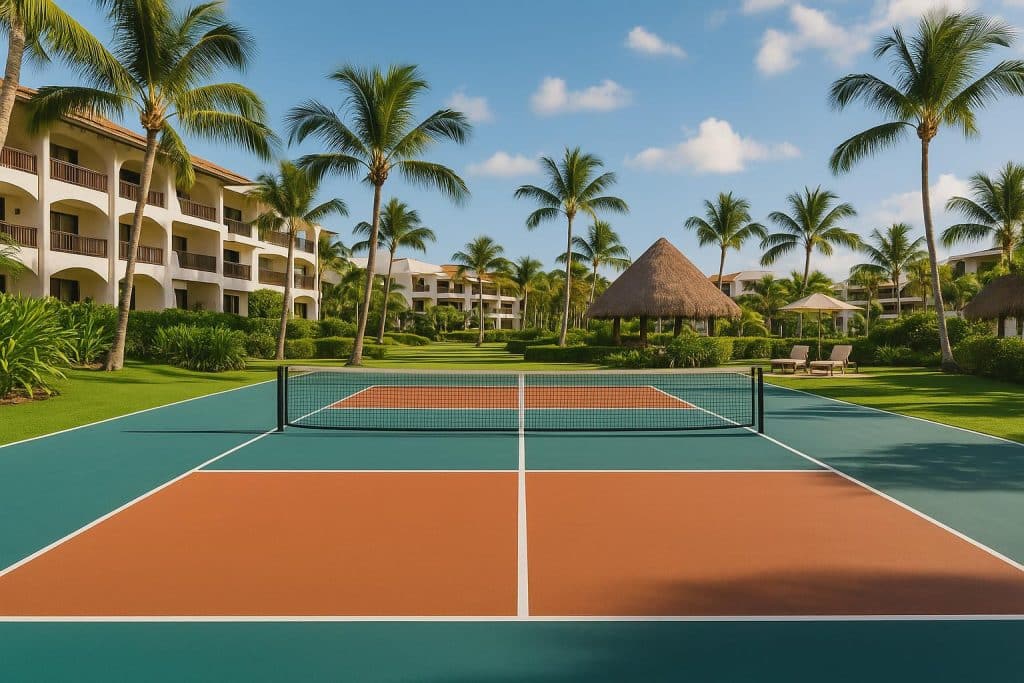
If you’ve spent any time in Mexico’s resort corridors over the past two years, you’ve probably noticed something new popping up between the pool decks and tennis courts. Pickleball courts are showing up everywhere, and it’s not a coincidence.
This isn’t just a trend imported from the American suburbs. It’s a calculated move by resort operators responding to a shift in what modern travelers actually want when they book a vacation. And the numbers make a compelling case for paying attention.
The Sport That Follows Its Players on Vacation
Pickleball participation in the United States reached an estimated 19.8 million players in 2024, a 45.8% increase from the previous year and a 311% jump over the preceding three years, according to the Sports and Fitness Industry Association’s Topline Participation Report. That’s a massive and growing pool of players who don’t suddenly stop caring about the sport the moment they board a flight to Cancun.
Active travelers are a different kind of guest. They plan around their sport, not just their destination. They search for resorts with courts before booking. They leave reviews that specifically mention court quality, equipment, and how easy it was to get a game going. Resorts that understand this aren’t just adding an amenity, they’re attracting a loyal and repeat-booking segment.
The number of core pickleball players in the U.S., defined as those who play eight or more times per year, climbed to 7.48 million in 2025, up more than 20% from 2024. Core players are exactly the guests who will choose one resort over another based on whether courts are available. They’re not casual about it.
Mexico Is Already Responding
The resort industry in Mexico hasn’t been slow to notice.
Tres Palapas Baja Pickleball Resort in Los Barriles, Baja California Sur, now operates ten outdoor professional courts with permanent nets and lighting, offering daily programming including clinics, round-robins, and tournaments, all within a full resort setting that includes lodging, a café, and a pool. That’s not a side amenity. That’s pickleball as the entire premise of the resort.
The Palmas de Cortez resort in Los Barriles went even further, building a 24-court facility called the Palmas Pickleball Resort and Academy, complete with a pro shop and restaurant, with courts opening along the Sea of Cortez in late 2024. Groups were traveling from California, Arizona, Texas, and Canada specifically for this.
And it’s not just boutique properties. Sandos Hotels and Resorts added modern sports facilities including pickleball courts at multiple properties in 2024 and opened dedicated courts at Sandos Finisterra, offering guests views of the Pacific Ocean while they play.
AVA Resort Cancun, one of the newest five-star properties in Mexico, opened with six dedicated pickleball courts as part of a larger sports complex that includes tennis and padel, with all courts floodlit for evening play. That level of infrastructure investment signals something beyond a passing fad.
Why This Sport Works So Well in a Resort Context
Not every sport translates naturally to a vacation environment. Pickleball does, for a few specific reasons.
The learning curve is short. A total beginner can have a genuinely fun game within the first hour. That means a resort doesn’t need to filter guests by skill level or manage complicated beginner programs just to fill courts. Anyone can show up and play.
It’s also social by design. The standard doubles format means guests naturally interact with people they’ve never met. For resort operators, this is gold. It creates spontaneous social experiences that guests associate with the property itself, not just the sport. People remember who they played with and where they were when they had that great rally.
The sport also fits a wide age range. Active adults in their fifties and sixties were the original pickleball demographic, but the 25 to 34 age group now represents the largest single bracket of pickleball players, accounting for 16.7% of all participants. A resort with courts can genuinely appeal to a multigenerational group traveling together, which is one of the hardest things in hospitality to pull off.
The Equipment Question Every Resort Has to Answer
So a resort operator in Playa del Carmen or Puerto Vallarta decides to add two, four, or six pickleball courts. Then what?
You need paddles. You need balls. You need nets that can handle daily use by guests who aren’t always gentle. You need replacement equipment when gear walks off or wears out, which it will. And you need to solve all of this without paying retail prices for commercial-scale quantities.
This is where the wholesale side of the sport becomes a real operational consideration. Resorts aren’t the same as individual players. They’re buying in volume, often replacing equipment on a rolling schedule, and they need suppliers that understand commercial demand.
PicklePro Shop is one U.S.-based brand that has built its product line specifically around quality and durability without pricing out the buyer who needs to outfit an entire amenity program. Founded in Fort Lauderdale, Florida, the company designs, tests, and quality-controls its products locally before they ship, which matters when you’re sourcing gear for a resort that needs consistency across every paddle in the rack.
Their product range covers the full spectrum. Junior sets and lightweight paddles work well for guests trying the sport for the first time. Their MAX and PKLE-line paddles, built with T700 carbon fiber faces and thermoformed frames, hold up to serious daily use. Every paddle ships with a fitted protective cover included, which reduces wear between sessions and helps equipment last longer in a hospitality environment where storage and handling aren’t always ideal.
Proximity Matters for Latin American Buyers
Here’s a practical point that often gets overlooked when resort procurement teams are evaluating suppliers. Where a supplier is based affects everything from lead times to customer service to import logistics.
A resort in the Dominican Republic or a hotel group operating in Mexico’s Riviera Maya is dealing with shipping timelines, customs processes, and sometimes language barriers when sourcing from overseas manufacturers. A U.S.-based supplier based in South Florida is logistically closer, communicates in English with Spanish-speaking markets, and ships faster to the Caribbean and Latin America than a factory on the other side of the world.
That geographic advantage is part of why brands like PicklePro Shop’s wholesale program are drawing interest from hotel buyers, HOAs with amenity programs, and sports facility operators across Mexico, Colombia, the Dominican Republic, and the broader Caribbean region. Being Miami-adjacent isn’t just a brand detail. It’s a supply chain advantage.
What the Next Phase Looks Like
The resorts that move early on pickleball infrastructure tend to show up in travel media, “best of” lists, and the niche-but-growing category of sport-specific travel recommendations. That visibility compounds. A property mentioned in a pickleball travel guide gets bookings from players who would never have found it otherwise.
The growing collections of Mexico-based pickleball resorts are attracting players who understand what they need to make the most of the sport on vacation, and resorts that provide proper courts and equipment are the ones making those lists.
The global pickleball equipment market was projected to grow from $1.5 billion in 2023 to $4.4 billion by 2033, according to market research data from late 2024. That’s not a sport in decline. It’s a sport entering a long, sustained phase of mainstream adoption, and Mexico’s resort corridor sits directly in the path of its most active players.
Resorts that treat pickleball as a genuine program rather than an afterthought, complete with quality equipment, maintained courts, and some form of organized play, are going to find themselves with a competitive advantage that’s hard to replicate quickly. Building courts takes time. Building a reputation for great pickleball takes longer.
The resorts that start now are already ahead.
FAQ
What is driving pickleball growth in Mexico’s resort industry?
The core driver is the sheer number of active pickleball players in the United States who travel to Mexico regularly. With nearly 20 million U.S. players and millions more playing in Canada, demand for courts at vacation destinations has grown quickly. Resorts are responding because sport-motivated guests tend to book intentionally and return repeatedly when their experience is good.
Which regions of Mexico are seeing the most pickleball resort development?
Los Cabos and the Baja Peninsula have seen some of the most dedicated development, with purpose-built facilities like Palmas Pickleball Resort and Tres Palapas Baja in Los Barriles. The Riviera Maya and Cancun corridor, including resorts in Costa Mujeres, are also adding dedicated courts to their sports amenity programs.
How do resort operators source pickleball equipment in bulk?
Most resort operators purchasing at volume work with wholesale suppliers that offer bulk pricing on paddles, balls, nets, and accessories. U.S.-based suppliers with proximity to the Caribbean and Latin American markets are often preferred because of shorter shipping times and simpler logistics compared to sourcing directly from overseas manufacturers.
What type of pickleball equipment do resorts typically need?
Resorts generally need a mix of beginner-friendly paddles for first-time guests, more durable mid-range paddles for regular open play, quality nets with portable or permanent setups, plenty of balls rated for outdoor conditions, and protective covers or storage solutions to extend equipment life. Buying in sets or bundles from a wholesale supplier usually makes the most financial sense at scale.
Is pickleball suitable for all resort guests, not just experienced players?
Yes, and this is one of the main reasons resorts find it valuable. Pickleball has a short learning curve compared to tennis or padel, which means guests of varying ages and athletic backgrounds can all participate without significant instruction. The sport’s doubles format also makes it naturally social, which fits well in a hospitality environment.
Why do U.S. suppliers have an advantage when selling pickleball equipment to Mexican and Caribbean resorts?
Geographic proximity reduces shipping times and import costs compared to sourcing from manufacturers in Asia. U.S.-based suppliers, particularly those based in Florida, are better positioned to serve the Caribbean, Mexico, and Central American markets with faster fulfillment, U.S. quality standards, and easier communication. For resorts replacing gear frequently due to high guest volume, reliable replenishment timelines matter.
How is pickleball changing the competitive landscape among resort properties?
Resorts with dedicated pickleball programs are increasingly showing up in sport-specific travel media and recommendation lists, which brings in a targeted and often loyal traveler segment. Properties that offer quality courts, maintained equipment, and organized play formats like open sessions or round-robins tend to earn stronger reviews from pickleball-motivated guests, which improves visibility in booking searches and travel communities.