

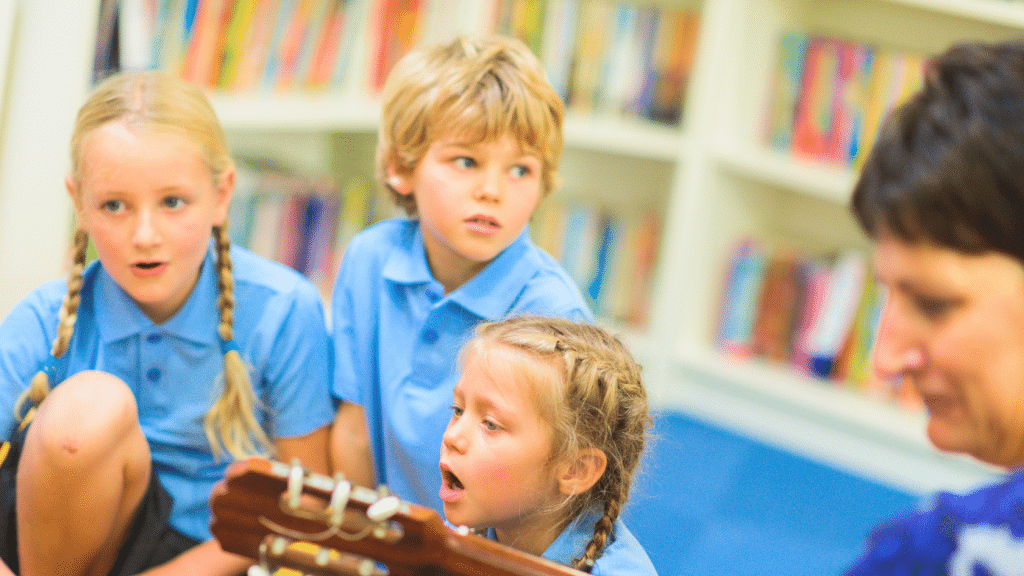
Every weekly primary school timetable has a few hours blocked off for what teachers call PPA time — Planning, Preparation and Assessment. It’s a statutory entitlement: by law, teachers must get at least 10% of their teaching time free to plan and assess their classes. While the class teacher is doing that, somebody else has to take the class.
Historically, that “somebody else” has often been whoever was available — a teaching assistant, a part-time supply teacher, sometimes the head doing a quick lesson between meetings. The cover gets delivered, the box gets ticked, the day moves on.
What’s changed over the last few years is a quiet but significant rethinking of what that time is actually for. A growing number of UK primary schools have realised that PPA cover is one of the few unprotected hours in the week where they can introduce specialist teaching in subjects the core curriculum doesn’t have time to do justice — music, languages, mindfulness, structured PE. Done well, those hours stop being a logistical headache and start being one of the most valuable parts of the school week.
The squeezed-out subjects
Speak to almost any primary teacher and they’ll say the same thing: the curriculum is full. Literacy and numeracy take up most of the morning. Science, history, geography and design technology compete for what’s left. By the time you’ve got through phonics screening, SATs preparation, end-of-key-stage assessments and the constant feedback loop with parents, the subjects that don’t appear on a league table tend to be the first to lose minutes.
Music is the obvious casualty. Despite being a statutory part of the National Curriculum, the actual time devoted to it in many primaries is minimal. A class teacher who isn’t musically trained will, understandably, lean on recorded singalongs and pre-packaged YouTube lessons because that’s what they can deliver confidently. The result is generations of children leaving primary school without ever having been properly introduced to rhythm, melody, instrumental basics, or the cultural breadth of music as a subject.
The same pattern repeats with modern foreign languages. Spanish or French is on the timetable in name, but the depth varies enormously depending on whether the school has a teacher who can actually speak the language fluently. Mindfulness and structured PE — both increasingly recognised as having measurable effects on cognitive performance and mental health — sit in a similar grey area: everyone agrees they matter, nobody quite has the bandwidth to deliver them properly.
Why specialist tutors solve a specific problem
The case for bringing in external specialist tutors during PPA isn’t just about ticking the cover box more elegantly. It’s about acknowledging that some subjects are better taught by someone who has trained in them.
A music teacher who plays multiple instruments and has spent years working with children of different ages will deliver an hour of music education that simply can’t be replicated by a general primary teacher reading from a scheme of work. The difference shows up in two ways: the children get exposure to real specialist knowledge, and the school’s own staff get genuinely useful PPA time without the management overhead of arranging it themselves.
Mindfulness is another good example. The evidence base for structured mindfulness in childhood — reduced anxiety, improved focus, better self-regulation — is now substantial enough that the Department for Education has actively backed pilots. But “do some mindfulness” is the kind of instruction that produces wildly variable results depending on who delivers it. A trained specialist who runs the same well-developed curriculum across multiple schools brings consistency and depth that’s hard to build in-house.
PE is the third area where this plays out clearly. Most primary teachers are not specialist coaches, and “PE” can drift into supervised playtime if the class teacher hasn’t planned a structured lesson. A specialist who arrives with their own equipment, their own lesson plans, and a focus on age-appropriate physical literacy turns that hour into something measurably different.
What schools are actually getting wrong
The mistake some primaries make is treating PPA cover as a procurement problem — find the cheapest provider, fill the slot, move on. That approach produces what you’d expect: forgettable lessons, high tutor turnover, and a missed opportunity.
Schools getting this right tend to do three things differently. They book the same specialist tutors regularly so the children build relationships over a school year. They give specialists a proper curriculum (or work with a provider who has one), rather than ad hoc one-off lessons. And they treat the specialist as part of the school community rather than a contractor passing through — including them in updates, parent communications, and end-of-term events.
The practical effect on children is significant. Subjects that would otherwise drift into background noise become genuine focal points of the school week. Children who don’t shine in literacy or numeracy often discover real strengths in music, languages or physical activity — and that discovery shifts their sense of themselves as learners.
What parents can usefully ask
If you’re a parent of a primary-aged child, the question worth asking at the next parents’ evening or open day isn’t “what time does my child do music?” — it’s “who teaches it, and what’s their background in it?”
The answer tells you a lot. A school where music, languages or mindfulness are taught by trained specialists with their own developed curriculum is treating those subjects seriously. A school where they’re delivered ad hoc by whoever’s available is, however well-intentioned, not.
This is also worth asking about PE. Specialist sports coaching during the school day, separate from after-school clubs, makes a real difference to how much children engage with physical activity in their wider lives.
The bigger picture
The curriculum pressure on primary schools isn’t going to ease. If anything, the trend is the other way. What that makes specialist PPA provision is one of the few practical tools schools still have to expand the breadth of what children are exposed to within the school day, without taking time away from the core subjects.
Done well, it stops being a cover arrangement and becomes something closer to a quiet investment in the parts of education that don’t show up on a SATs paper but tend to shape children the most.