

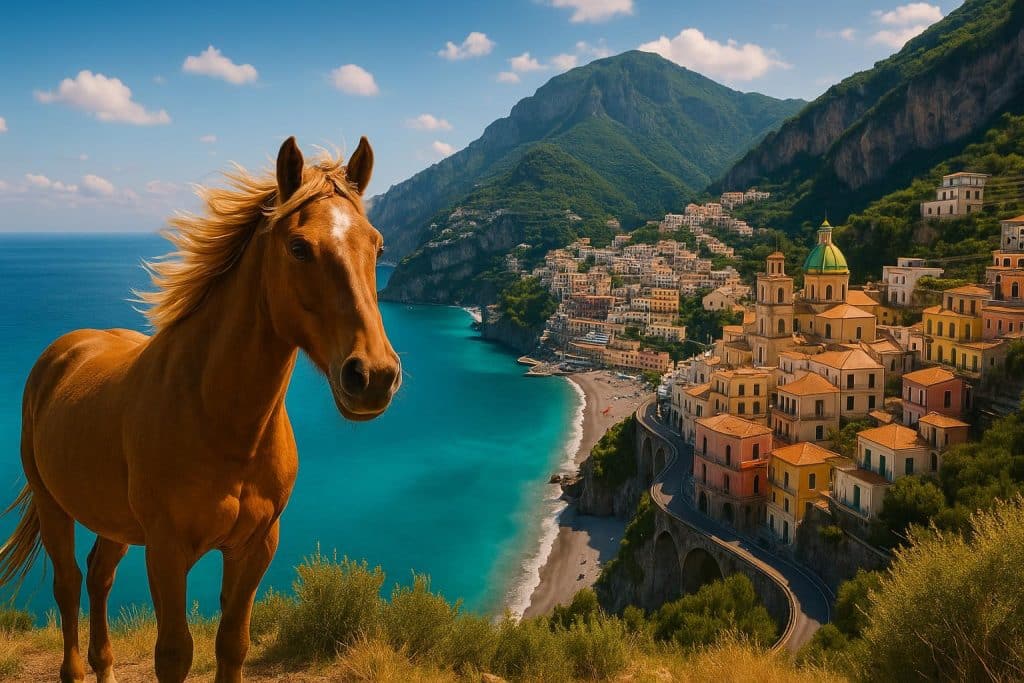
Anyone who has worked in travel marketing knows the particular frustration of trying to sell a place with the wrong visuals. A destination can be genuinely extraordinary — the kind of place that stops people mid-scroll when they’re planning a trip — but if your video looks like it was filmed on a cloudy Tuesday by someone who had somewhere else to be, none of that comes through. The footage becomes the bottleneck, and the destination loses.
For most of the travel industry’s history, producing compelling destination video meant significant investment. You needed a crew on location, ideally during golden hour, ideally during the right season, ideally when the beach wasn’t crowded or the mountain wasn’t under cloud cover. Even well-resourced travel brands would find themselves limited to a handful of visual assets they’d have to reuse across every campaign for years. Smaller operators — boutique hotels, independent tour companies, regional tourism boards with modest budgets — often couldn’t produce anything at the level their destinations deserved.
That constraint is shifting, and AI video generation is one of the more interesting forces driving the shift.
What Destination Video Actually Needs to Do
Before getting into the tools, it’s worth thinking about what destination video is actually trying to accomplish. The goal isn’t documentation — it’s transportation. A good destination video makes the viewer feel, for a moment, like they’re somewhere else. It evokes the quality of light at a particular time of day, the sense of scale of a landscape, the texture of a place. It does something that a list of amenities or a block of descriptive text simply cannot do.
That’s a high bar, and it’s one reason the category has always demanded strong visuals. A resort can describe its infinity pool in a thousand ways, but thirty seconds of the right footage makes the argument more effectively than any copywriter could.
The challenge is that producing that footage — footage that genuinely transports rather than merely informs — has always required being in the right place at the right time with the right equipment and the right crew. Sometimes that’s feasible. Often it isn’t.
How AI Video Generation Changes the Equation
AI video models don’t eliminate the need for strong creative direction, but they do decouple it from the logistical constraints of physical production. A travel brand working with a tool like Happy Horse — developed by Alibaba and notable for the quality of its motion and visual coherence — can generate footage that captures the feel of a destination without requiring a production trip to happen under ideal conditions.
That matters in a few specific ways for travel marketing.
The first is seasonal coverage. Most destinations have a primary season when they’re at their most photogenic, and that’s when the majority of their visual assets get produced. But travelers book year-round, and a destination that only has summer footage may struggle to market itself effectively in autumn or winter, even if it’s genuinely worth visiting in those seasons. AI-generated video can fill those seasonal gaps, producing visually compelling assets that convey the specific character of a place in a season you don’t have footage for.
The second is variety. A hotel or tour operator running digital advertising needs to rotate creative constantly — the same video shown repeatedly to the same audience stops working quickly. Generating visual variations, different framings of the same property, different times of day, different weather moods, becomes possible without scheduling additional shoots.
The third, and perhaps most significant for smaller operators, is simply cost. A travel brand that can produce multiple polished video assets without commissioning multiple production trips has a meaningful operational advantage. That advantage compounds over time, particularly in content-hungry channels like social media and programmatic video advertising.
Where the Results Hold Up Best
AI video generation for travel isn’t uniformly strong across every type of content. The results tend to be most impressive for establishing shots and atmosphere — wide landscape views, abstract evocations of a destination’s character, the play of light on water or across architecture. These are the kinds of shots that communicate feeling rather than specific factual detail, and they’re also the shots where a viewer’s tolerance for slight imprecision is highest.
Where the technology requires more care is in highly specific or detailed scenes — a particular suite at a particular hotel, a precise local dish served in a specific restaurant, a recognizable landmark that needs to be rendered with complete accuracy. AI generation may not get those details exactly right, and in travel marketing, inaccuracy in specific claims creates real trust problems. A traveler who books based on a video and arrives to find the reality significantly different from what was suggested is not going to be happy about it.
The practical approach that makes most sense is using AI-generated video as a complement to real footage rather than a replacement for it. Use generated assets for emotional and atmospheric content — the stuff that sets the mood and draws people in — while maintaining real photography and video for the factual specifics of what a property or experience actually delivers. That combination gives a travel brand both the visual richness to compete in a crowded content environment and the honesty that sustained customer relationships require.
The Content Volume Problem in Travel
One thing that often gets underestimated in travel marketing is how much content the modern distribution landscape actually demands. A decade ago, a hotel might produce a single promotional video and run it for a year or two. Today, between social media, paid video advertising, YouTube, email campaigns, and the content requirements of various OTA platforms, the appetite for fresh visual material is essentially continuous.
Most travel brands, even reasonably well-resourced ones, are not producing content at the rate their distribution channels could absorb it. The result is that they’re either reusing assets past their effective lifespan or leaving content slots empty that could be driving bookings. AI video generation doesn’t solve this problem entirely — good output still requires good creative direction — but it does significantly reduce the production bottleneck that keeps content volume constrained.
For a boutique hotel property with two or three rooms and a marketing budget to match, the ability to produce a fresh batch of visually compelling video assets without commissioning an expensive production shoot is not a marginal improvement. It’s a genuine change in what’s possible.
A Shift in Who Gets to Compete
The broader pattern here is one that shows up across a lot of creative tool categories: as production capability becomes more accessible, the advantages that used to accrue almost exclusively to large, well-funded players start to flatten out. A major international hotel chain with a dedicated content production team still has advantages, but the gap between what they can produce and what a smaller, independent operator can now produce with AI tools is narrowing in ways that weren’t true a few years ago.
For travelers, that’s probably a net positive — more destinations and operators can present themselves compellingly, and the visual quality of what’s available to browse when planning a trip keeps rising. For the travel brands paying attention, the window to get ahead of this shift is still open, but it won’t be indefinitely.