

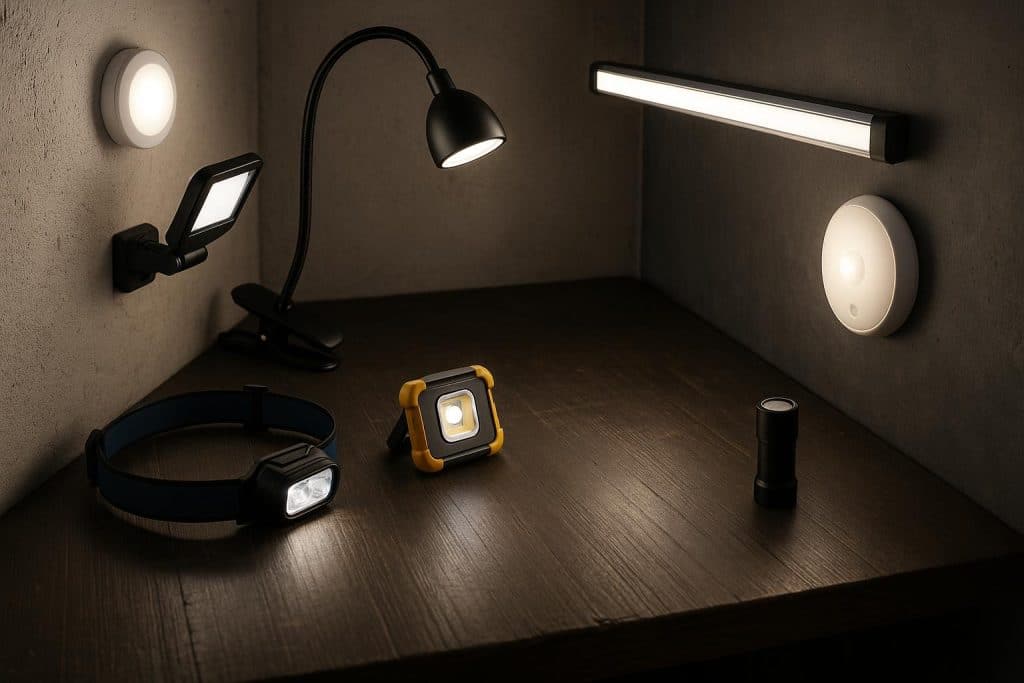
Tight workspaces demand focus, precision, and flexibility. Whether installing hardware inside cabinets, inspecting wiring in crawlspaces, or repairing plumbing in utility closets, proper lighting directly affects speed and accuracy. This guide was developed by reviewing contractor recommendations, remodel workflows, and practical lighting solutions used in confined spaces, then organizing them into clear options you can apply immediately.
In compact environments, bulky lighting setups create more problems than they solve. The right hands-free solution keeps both hands available while delivering consistent, shadow-free illumination.
1. Stick-On and Portable Puck Lights
Among the most versatile solutions for confined areas are puck lights. These small, round fixtures are easy to mount inside cabinets, under shelves, or along closet walls. Stick-on backing or magnetic bases allow quick installation without tools, which is ideal for temporary jobsite needs.
Portable puck lights improve visibility in tight work zones by placing illumination exactly where it is needed. Inside kitchen cabinets during hardware installation, for example, overhead room lighting rarely reaches the back panel. A compact puck light fills that gap instantly.
Battery-powered versions eliminate cords, reducing trip hazards and workspace clutter. For contractors working in finished interiors, that simplicity saves time and prevents unnecessary disruption.
2. Rechargeable Headlamps
Headlamps remain one of the most efficient hands-free lighting tools available. They follow your line of sight, ensuring light goes exactly where you look.
In crawlspaces or attic access points, mobility matters. A headlamp allows you to pivot, kneel, or reposition without adjusting fixtures. Adjustable brightness settings are helpful for balancing visibility with battery life, especially during longer tasks.
Lightweight designs reduce fatigue, making them practical for extended interior remodel work.
3. Magnetic Work Lights
Magnetic-base LED lights attach directly to metal framing, ductwork, breaker panels, or toolboxes. This flexibility makes them especially useful in utility closets or mechanical rooms where floor space is limited.
Instead of setting up a stand or holding a light manually, you simply mount the unit at the correct angle and begin working. Many models offer swivel heads, which allow you to direct light precisely at task areas without repositioning the base.
For electricians and HVAC technicians, magnetic lights streamline setup and eliminate wasted movement.
4. Clip-On Task Lights
Clip-on lighting options secure to shelves, ladder rungs, pipes, or framing members. They are ideal for temporary installations during inspections or repairs.
Inside cabinets, a clip-on light attached to the door hinge area can brighten the entire interior. In closets, clipping the light to a shelf creates downward illumination that reduces harsh shadows.
These lights are compact yet powerful enough to provide focused task lighting in small zones.
5. Flexible Neck LED Lights
Flexible neck lights feature bendable arms that allow you to position beams independently. They can rest around your neck, providing dual-direction lighting without head straps.
This option works well for plumbing repairs under sinks or wiring adjustments inside wall cavities. The ability to aim each beam independently improves coverage in awkward angles.
Flexibility in beam direction helps eliminate dark corners that standard overhead lighting cannot reach.
6. Under-Cabinet LED Bars
Slim LED bars designed for under-cabinet mounting are useful for longer interior spaces. During remodeling projects, temporary adhesive-backed bars can be installed quickly to provide even coverage across multiple compartments.
Compared to single-point lighting, linear LED bars reduce shadows across wider surfaces. They are especially helpful during trim installation, painting touch-ups, or detailed finish work.
Many models are rechargeable, which avoids dependency on jobsite outlets.
7. Wearable Chest or Shoulder Lights
Chest-mounted or shoulder-clip lights provide stable illumination without the downward beam angle that some headlamps create. They are beneficial in crawlspaces where ceiling clearance is limited.
Since the beam originates from the torso, it often casts fewer shadows from your hands during detailed tasks. This setup works well when reaching forward into tight framing or mechanical enclosures.
Wearable lighting also reduces glare when working near reflective surfaces such as ductwork or metal junction boxes.
Choosing the Right Solution for Confined Areas
When selecting hands-free lighting for tight spaces, prioritize three factors:
Placement Flexibility
Look for lights that can mount, clip, stick, or attach magnetically. The more placement options available, the easier it is to adapt to unpredictable environments. Proper temporary lighting placement should also align with general workplace safety guidelines to minimize trip hazards and electrical risks.
Brightness Control
Adjustable output prevents over-lighting small spaces, which can create glare. Controlled brightness also extends battery life during longer projects.
Compact Design
Bulky housings defeat the purpose in narrow cabinets or crawlspaces. Slim profiles and lightweight builds ensure the light enhances mobility instead of limiting it.
For many professionals, combining multiple solutions delivers the best results. A headlamp for general movement paired with portable Puck lights for targeted cabinet illumination creates layered lighting without slowing progress.
Light the Space, Not the Obstacles
Working in tight quarters already presents enough challenges. Limited visibility should not be one of them.
Stick-on puck lights, magnetic fixtures, and wearable LEDs allow you to position light exactly where the task demands it. By reducing shadows and eliminating cumbersome setups, these tools help maintain precision and momentum.
When lighting adapts to the workspace instead of competing with it, productivity improves naturally. The result is cleaner work, fewer adjustments, and smoother project flow, even in the most confined environments.