

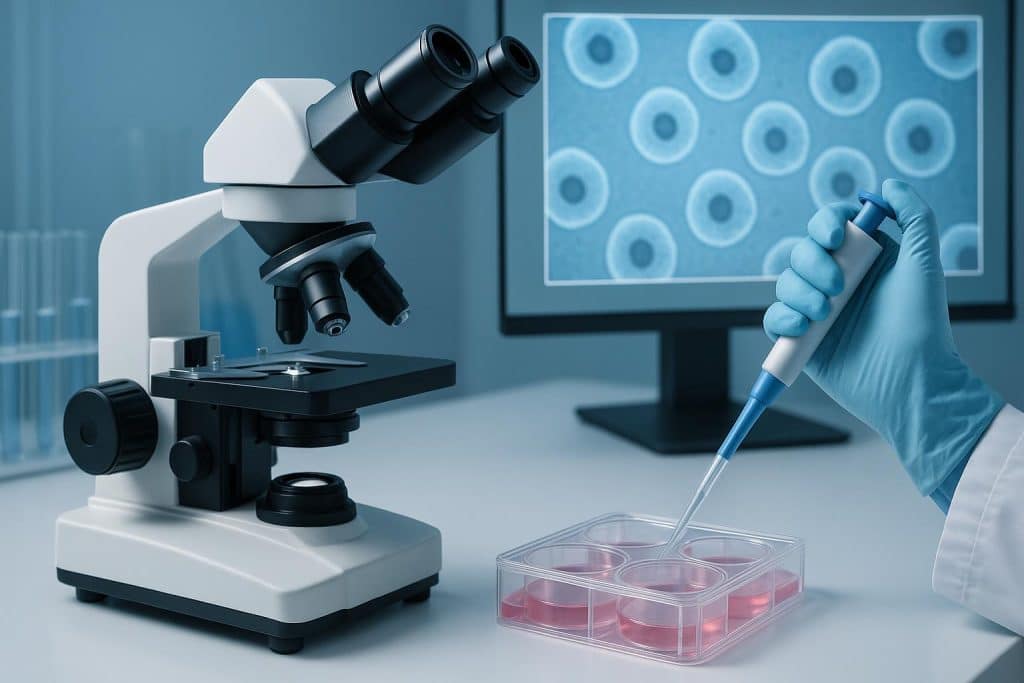
You know, medical research often feels distant, like something happening far away. But the truth is, it all comes down to tiny living cells. The way they’re handled can completely change results. That’s why tools like the benchtop cell sorter are so valuable. They help separate healthy cells from the rest, giving experiments a proper start. Without that, even promising studies can stumble before they really get going. And honestly, it’s the little things in the lab that make the biggest difference.
Why Cell Quality Matters
Not every cell is ready to play its part. Some are strong and healthy. Others are fragile or stressed. Using the wrong cells can mess up experiments completely. Imagine trying to grow tissue with weak cells—they won’t behave like you want. Results get unpredictable.
This isn’t just lab stuff for scientists. It affects real-world medicine. Think about regenerative therapies, immune treatments, or stem cell studies. Starting with the right cells is crucial. Every little choice matters. Even a tiny oversight can ripple out and affect the findings.
And here’s something to consider: even when you think everything looks fine under the microscope, there could be hidden problems. Some cells might appear healthy but are under subtle stress. Those invisible issues can skew results or slow progress. That is why careful monitoring and proper lab techniques are so important. It’s not just about starting experiments; it is about starting them right.
Challenges in Handling Delicate Cells
Cells aren’t like liquids or powders. They’re alive, and they notice stress. Temperature shifts, rough handling, too much light—they all matter. Cells can stop acting normally, die early, or just give weird results.
Researchers know this. They spend hours just making sure cells stay calm and healthy. It’s repetitive, careful work, and honestly, it can get frustrating. But you can’t rush it. Each step counts. Move too fast, or miss something, and a week’s work might be wasted.
Even small changes in the environment can affect outcomes. Humidity, air circulation, or even vibrations from equipment can subtly impact cells. Labs have to account for all of it, often tweaking conditions by tiny amounts. It’s painstaking, but necessary. When you’re working with delicate cells, these little details make the difference between success and starting over.
Precision Tools That Make a Difference
This is where lab tools step in. They let you work smart. Take the benchtop cell sorter. It helps gently separate healthy cells from the ones that aren’t ready. Not glamorous, sure, but it matters. Starting with strong cells makes experiments way more reliable.
These tools also reduce mistakes. You don’t have to worry as much about contamination or damaged samples. That means researchers can focus on science, instead of babysitting stressed cells. And results? They’re meaningful. Patterns show up clearly. Therapies being developed have a better shot at actually working.
Even simple things—like sorting one cell at a time for genetic studies—can have huge effects. Without precision tools, what should take a few hours could take days. Or worse, fail entirely. Precision isn’t just fancy lab talk. It’s the difference between moving forward and spinning your wheels.
Everyday Impact on Medical Research
So why should you care? Because the way cells are handled in the lab eventually affects real lives. Healthy cells mean faster discoveries. Safer treatments. Better therapies.
Even small actions—careful handling, precise separation—ripple out. They improve patient care and speed up breakthroughs. That’s the quiet work behind headlines about stem cell therapies or regenerative medicine. Without it, science would move more slowly, be riskier, and less reliable.
In Conclusion
Precision in cell research might seem invisible. But it shapes the future of medicine. Every step—from storage to separation—matters. And when researchers use the right tools, like the benchtop cell sorter, they keep cells healthy, reduce mistakes, and focus on what really matters: developing treatments that save lives. Healthy cells are the quiet heroes of medical breakthroughs. Every careful decision brings us closer to therapies that could impact you, someone you love, or even people across the world. Science depends on small details—and sometimes, it starts with something as simple, yet powerful, as a benchtop cell sorter.