

![Image 1 of [2026] Plastic Injection Molding Cost: What Affects the Final Price](https://metapress.com/wp-content/uploads/2026/03/image_1-106.png "[2026] Plastic Injection Molding Cost: What Affects the Final Price")
By 2026, the cost of plastic injection molding is influenced by more than just mold price and production volume. Changes in material costs, higher quality standards, labor efficiency, and global supply chain uncertainties all affect overall manufacturing costs.
This guide explains the main cost factors in plastic injection molding, why quotes can vary between suppliers, and where hidden costs may occur. It also helps OEMs make more informed and controllable cost decisions for long-term production.
Understanding Plastic Injection Molding Costs in 2026
When evaluating the cost of plastic injection molding, it is not just about focusing on a single specific expense.
Core cost categories include:
- Tooling and mold manufacturing
- Raw material consumption
- Machine operating time and energy
- Labor and factory overhead
- Quality control and scrap
- Logistics and inventory handling
These cost factors are closely connected. When optimizing costs, it is important to consider the whole process instead of focusing on just one factor.
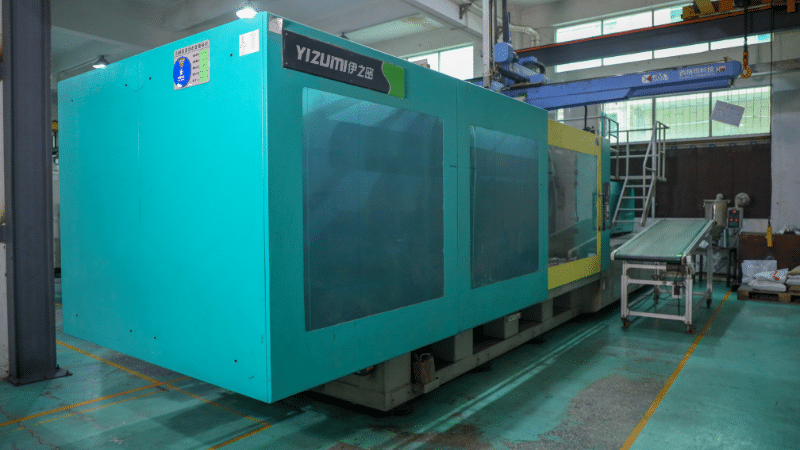
Key Cost Categories in Injection Molding
1. Mold and Tooling
Mold manufacturing is usually the largest upfront investment in an injection molding project, and it also has a significant impact on the long-term production costs thereafter.
Factor | Cost Impact |
Single-cavity vs multi-cavity | Multi-cavity increases tooling cost but lowers unit cost |
Mold steel grade | Higher-grade steel improves lifespan and stability |
Part complexity | Undercuts, tight tolerances, and fine details increase cost |
Cooling system design | Efficient cooling reduces cycle time and unit cost |
Mold lifespan expectation | Affects amortized cost per part |
Well-designed molds can often reduce the overall cost throughout the production process, even though their initial investment is relatively high.
2. Material and Resin
Material cost directly affects the unit price of the product, and it also relates to the stability of the production process.
Material-related cost drivers:
- Resin base price (commodity vs engineering plastic)
- Part weight and wall thickness
- Shrinkage rate and scrap ratio
- Processing temperature and cycle time
- Mold wear caused by filled materials
Material Type | Cost Level | Typical Impact |
PP / ABS | Low | Short cycles, low scrap |
PC / PA | Medium | Higher temperature, longer cycles |
Glass-filled plastics | High | Increased mold wear and maintenance |
Specialty resins | Very high | Tight processing windows |
3. Machine Operation
Machine cost goes far beyond hourly rates.
Key contributors:
- Machine size and tonnage selection
- Cycle time per part
- Energy consumption (heating + cooling)
- Preventive maintenance and downtime
- Equipment depreciation
4. Labor and Factory Overhead
Labor cost in injection molding is closely tied to process efficiency, n ot just wage levels.
Main cost drivers include:
- Operator-to-machine ratio
- Automation level and consistency
- Changeover and setup time
- Process monitoring and supervision
High-efficiency factories focus on output per labor hour, not just hou rly labor cost.
5. Quality Control and Scrap
Quality-related costs are often underestimated during quoting.
Typical quality cost components:
- Scrap and rework material loss
- Additional inspection and measurement
- Process adjustments and re-validation
- Customer returns or corrective actions
Building a stable production process may require a higher upfront investment, but over time it can greatly reduce costs caused by quality problems.
Common Hidden Costs in Injection Molding
The reason why many injection molding projects exceed the budget is often that some crucial cost factors were overlooked in the early stage.
Common hidden costs include:
- Mold maintenance and unexpected repairs
- Process instability causing production downtime
- Long lead times for replacement parts
- Excess inventory due to unstable scheduling
- Engineering time spent on repeated parameter adjustments
Suppliers that have a mature process control system and keep detailed records of key parameters usually can minimize these risks.
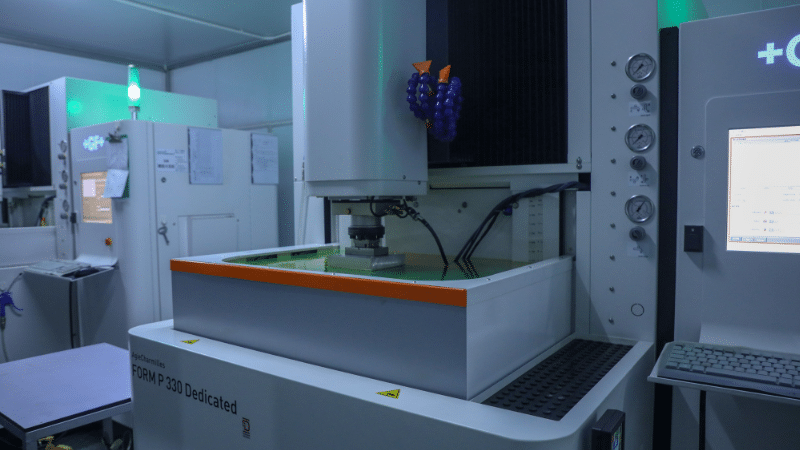
Common Methods for Estimating Injection Molding Costs
An accurate cost assessment cannot be determined by a simple formula.
Common estimation approaches:
- Rule-of-thumb costing based on part weight and volume
- Digital quoting tools and automated calculators
- Detailed process-based costing models
- Engineering review combined with historical data
The most reliable method is to combine software analysis with real engineering verification. This approach is especially effective for complex parts or high-volume production.
How Industry Requirements Affect Injection Molding Costs
Industry | Primary Cost Drivers |
Automotive | Tool durability, cycle time, quality consistency |
Medical devices | Validation, documentation, certified materials |
Consumer electronics | Surface finish, tight tolerances |
Industrial components | Material durability, long-term stability |
Packaging | Ultra-fast cycles, material efficiency |
Cost benchmarks can vary greatly between industries. If prices are compared without considering the specific application or industry requirements, the comparison may be misleading and lead to incorrect conclusions.
Effective Methods to Lower Injection Molding Costs
In most cases, the earlier cost-reduction measures are implemented, the more effective they tend to be.
Proven strategies include:
- Design for manufacturability (uniform wall thickness, simplified geometry)
- Material substitution with performance validation
- Optimized mold cooling and runner design
- Cycle time reduction through process tuning
- Selecting suppliers with strong engineering support
Most sustainable cost reductions usually come from improvements in engineering and product design, rather than simply negotiating lower prices.
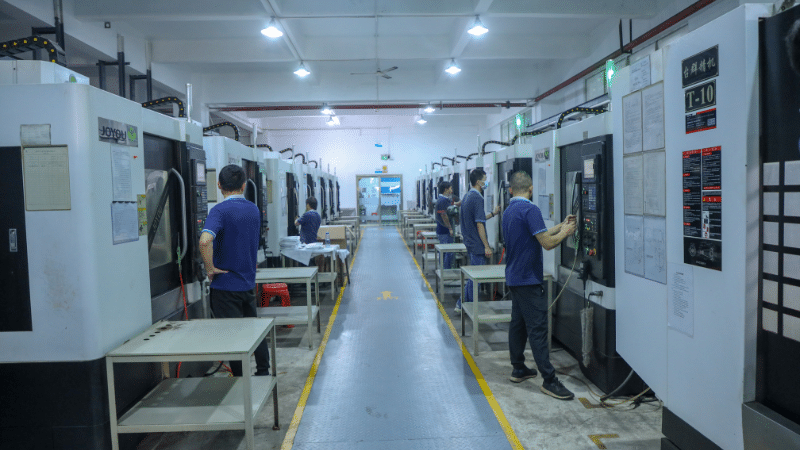
How HingTung Supports Stable and Cost-Efficient Injection Molding
HingTung injection molding company supports OEM customers with a structured manufacturing system designed for stable quality and predictable production performance.
Key benefits:
- Design evaluation and DFM analysis to identify potential production risks early.
- High-precision mold manufacturing to maintain dimensional consistency.
- ISO9001 and ISO14001 certified production management to ensure stable operations.
- Controlled production processes that reduce scrap and rework.
- Coordinated manufacturing workflow from tooling to mass production.
HingTung supports OEM and ODM customers in maintaining stable production, consistent quality, and dependable long-term manufacturing.
Factors That Will Influence Injection Molding Costs
As the manufacturing industry continues to pursue higher efficiency and greater cost transparency, the cost structure of injection molding is also evolving due to technological progress and changes in management practices.
- Increased use of digital mold simulation for cost prediction
- Smart machines with real-time process monitoring
- Greater focus on energy efficiency
- Rising adoption of sustainable and recycled materials
- Stronger emphasis on supplier reliability over unit price
These changes show that having a clear, predictable, and controllable cost structure is becoming more and more important.
Extended FAQs
1. What is the typical cost per part for plastic injection molding?
The unit cost can vary due to factors such as materials, molds, production cycle and output. However, generally speaking, as the output increases, the unit cost will significantly decrease.
2. Why do tooling prices differ so much between injection molding suppliers?
The cost of the mold is not only determined by the size of the part, but also depends on various factors such as the complexity of the mold, the type of steel used, the number of cavities, the cooling design, and the expected service life of the mold.
3. How can product design help lower injection molding costs?
By simplifying the part structure, maintaining uniform wall thickness, and reasonably setting tolerance requirements, it is possible to effectively reduce the cost of the mold, shorten the production cycle, and minimize the loss caused by defective products.
4. What hidden costs are common in injection molding projects?
Hidden costs usually arise from some less noticeable aspects, such as waste disposal, equipment downtime, mold maintenance, unstable production, and inadequate engineering support, etc.
5. Is the lowest injection molding quote always the best choice?
No, it seems that the cheapest quotations often fail to take into account quality issues, downtime losses, or the durability of molds, etc. As a result, these factors will actually increase the overall cost over time.
Conclusion
In 2026, plastic injection molding cost should be viewed as a system-level decision rather than a simple price comparison. Factors such as tooling strategy, material selection, process stability, and long-term production efficiency all affect the total cost of ownership. By addressing manufacturability and cost structure early in the project, OEM teams can achieve more predictable costs and stable mass production. As a one-stop injection mold manufacturer, HingTung plastic injection molding factory supports customers from early design review to mold optimization and production planning, helping ensure reliable and scalable manufacturing.