

The Role of Marine Equipment and Customization in Eco-Tourism
We often focus on engines and hulls when discussing vessel performance. Yet, the comfort and stability of our marine seating are equally vital. Specialized marine engineering, particularly in components such as boat seat stands, profoundly affects overall vessel dynamics and occupant well-being.
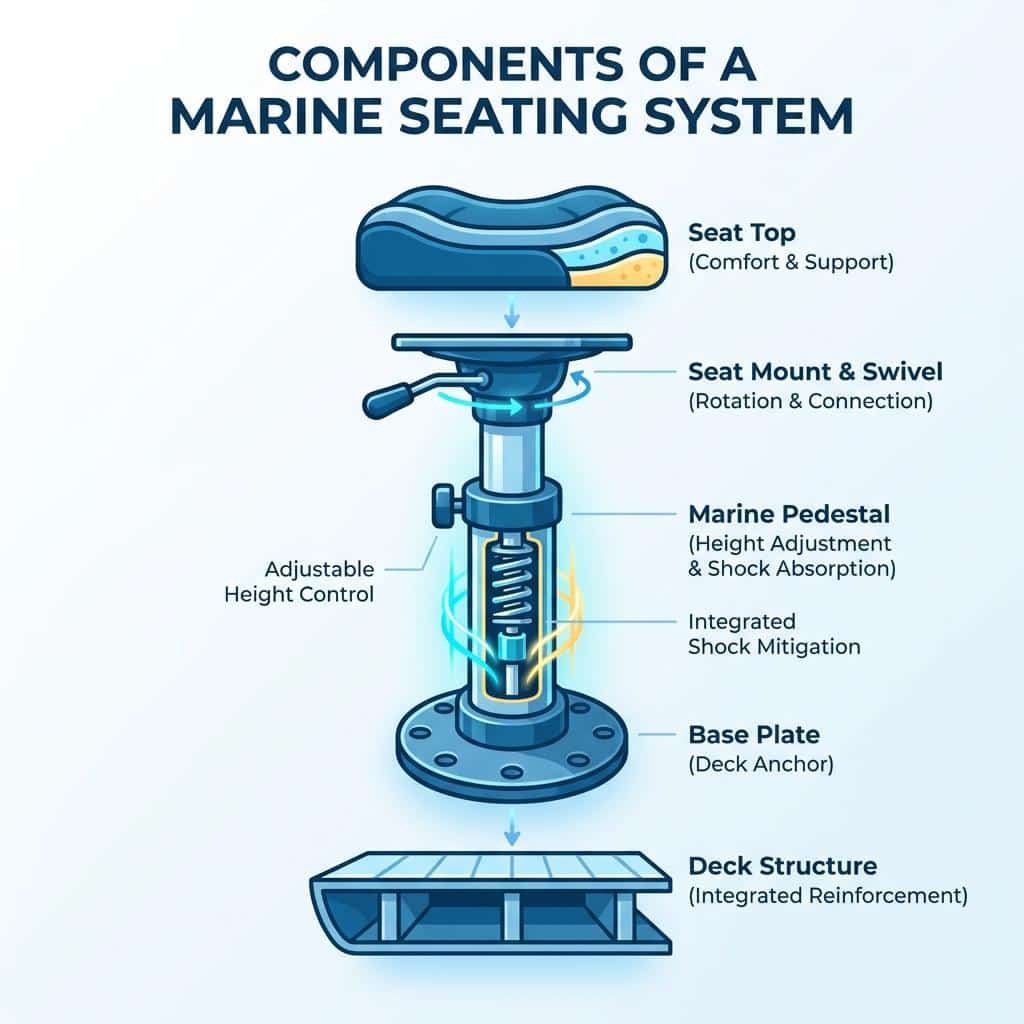
From basic designs to advanced solutions like those found in marine shock-absorbing pedestals, these structures are key to a better ride. They help mitigate the harsh impacts of waves, reduce fatigue, and enhance safety.
In this extensive guide, we will explore the different types of boat seat stands, their benefits, technical specifications, and crucial installation practices. We aim to provide a comprehensive understanding for anyone looking to optimize their vessel’s seating.
The true measure of a vessel’s performance extends beyond its speed or power; it encompasses the holistic experience of those aboard. Central to this experience is the stability and comfort offered by its seating arrangements. Marine equipment, particularly boat seat stands, plays a critical role in maintaining vessel stability, ensuring proper weight distribution, and ultimately safeguarding occupant safety.
When a boat encounters waves or maneuvers, forces are exerted on its structure and occupants. A well-designed boat seat stand, integrated with robust deck reinforcement, helps to distribute these forces evenly across the vessel’s hull. This prevents localized stress points that could compromise structural integrity over time. Furthermore, by providing a stable and secure seating platform, these components help mitigate impact, absorbing shocks and vibrations that would otherwise be directly transmitted to passengers. This is especially crucial in rough waters where the repetitive jarring can lead to fatigue, discomfort, and even injury.
The placement and design of the seat stands also influence the vessel’s center of gravity. Adjustable or strategically positioned stands can help balance the boat, improving handling and reducing roll. For instance, in high-performance vessels, precise seating positioning can optimize trim, improving fuel efficiency and a smoother ride. Without adequate attention to these details, even minor shifts in weight can detrimentally affect a boat’s performance and safety. Therefore, understanding the engineering behind these components is not merely about comfort; it’s about optimizing the boat’s fundamental dynamics.
Tailoring Marine Equipment and Customization for Anglers
For the avid angler, the boat isn’t just a mode of transport; it’s a mobile fishing platform. The right marine seating equipment can significantly enhance fishing utility, directly impacting success and endurance on the water. Customization options for boat seat stands are particularly beneficial here. For example, adjustable height options allow anglers to find the perfect casting height, whether they are sight-fishing in shallow waters or need an elevated vantage point to spot schooling fish. This adaptability reduces strain and improves casting accuracy.
The inclusion of 360-degree swivels on seat stands is another game-changer for fishing. These allow for quick, unhindered movement, enabling an angler to follow a hooked fish around the boat without having to stand up or reposition. This fluid motion is essential for maintaining control and preventing line breaks.
Portable seating solutions, often featuring a four-legged stand design, offer unparalleled flexibility. These can be moved to different areas of the deck depending on the fishing conditions, the number of people on board, or the specific technique being employed. When not in use, they can be easily stowed, optimizing deck space and keeping the fishing area clear and safe. This thoughtful approach to marine equipment ensures that the vessel is not just seaworthy but also perfectly tailored to the dynamic needs of fishing.
Marine Equipment and Customization for Multi-Purpose Vessels
Modern boating often involves multi-purpose vessels, from family-friendly pontoons to versatile utility boats. For these applications, marine equipment and customization, particularly in seating, must prioritize adaptability and modularity. Pontoon configurations, for instance, often benefit from seat stands that enable flexible layouts. Quick-release brackets are invaluable in such scenarios, enabling seats to be easily removed for storage, cleaning, or to convert the deck for different activities, such as sunbathing or cargo transport.
Beyond the boat itself, portable dock seating options, often employing sturdy boat seat stands, extend the vessel’s utility. These stands can provide comfortable seating on a dock for relaxing after a cruise, cleaning fish, or simply enjoying the waterfront view. This modularity enhances the overall usability of the boat and its immediate environment.
The ability to create modular layouts with various seat stands greatly increases vessel versatility. Owners can reconfigure their seating to accommodate more passengers for a leisurely cruise, clear the deck for watersports equipment, or set up a comfortable fishing station. This level of customization ensures that the marine equipment serves a wide range of needs, making the boat a truly adaptable asset for diverse aquatic adventures.
Boat Seat Stands vs. Traditional Pedestals: A Technical Comparison
When outfitting a boat, understanding the distinction between boat seat stands and traditional pedestals is crucial for making informed decisions about comfort, stability, and utility. While often used interchangeably, these terms generally refer to different structural designs with distinct advantages.
Traditional boat seat pedestals typically consist of a single, central post that mounts directly into a base on the deck. These can be fixed pedestals, providing a consistent height, or adjustable pedestals, which allow for varying seat heights, often through a manual or gas-assisted mechanism. Pedestals are generally designed for permanent or semi-permanent installation, providing a very stable, robust mounting footprint. Their strength and direct connection to the deck make them ideal for helm seats, passenger seating, or any location where a secure, unmoving seat is desired. However, their fixed nature means less flexibility in deck layout.
In contrast, boat seat stands, particularly the four-legged stands, are characterized by their broader base and inherent portability. These stands often feature a seat mounted atop a frame with multiple legs, providing a stable, self-contained unit that can be moved around the deck, or even used off-board on a dock. Their portability is a key advantage, enabling dynamic deck-space optimization. While some four-legged stands can be secured to the deck, many are designed to be freestanding. This design can offer excellent stability for a portable option, though a permanently installed pedestal typically provides superior rigidity against lateral forces.
Feature Boat Seat Stands (e.g., Four-legged) Traditional Pedestals (e.g., Fixed/Adjustable) Stability Good, especially for portable use Excellent, fixed to deck Portability High, easily moved or removed Low, generally permanent or semi-permanent Installation Minimal (freestanding) to Moderate Moderate to Complex (drilling, sealing) Footprint Wider, distributed Smaller, concentrated Flexibility High deck layout versatility Lower deck layout versatility Height Ranges Often fixed or limited adjustment Wide range of fixed and adjustable heights Weight Capacity Varies, check manufacturer specs Generally high, robustly engineered Locking Mechanisms Less common for portability, or simple clamps Various (KingPin, Taper-Lock, slide, power-rise) When selecting between these options, buyers should consider factors like height ranges, weight capacity, and the specific locking mechanisms available. For instance, some pedestals offer advanced features like power-rise mechanisms for effortless height adjustment, which are less common in portable stands. The choice ultimately depends on the intended use, desired level of permanence, and the specific requirements for stability and deck flexibility. For more detailed insights into various pedestal designs, exploring resources on boat pedestal seat posts can be highly beneficial.
Engineering for Durability: Materials and Corrosion Resistance
The marine environment is notoriously harsh, requiring that all components, especially seating components, be constructed from materials engineered for extreme durability and superior corrosion resistance. The longevity and safety of boat seat stands hinge on these material choices.
Commonly, high-grade aluminum alloys such as 6061-T6 are favored for their excellent strength-to-weight ratio and inherent corrosion resistance. This material is often further enhanced with anodized finishes, which create a hard, protective oxide layer on the surface, significantly improving its resilience against saltwater environments and abrasive wear. For components requiring even greater strength and rust resistance, 316 stainless steel is a premium choice. This alloy contains molybdenum, which provides exceptional corrosion resistance, particularly in chloride-rich environments like saltwater.
Beyond the base materials, protective coatings play a vital role. Powder coating, applied electrostatically and then cured under heat, forms a durable finish that is highly resistant to chipping, scratching, and UV degradation. This not only extends the life of the seat stand but also maintains its aesthetic appeal over time. UV resistance is particularly important as prolonged exposure to sunlight can degrade plastics and certain finishes, leading to material breakdown.
Galvanic corrosion is a critical concern in marine settings, occurring when two dissimilar metals are in electrical contact with an electrolyte (such as saltwater). Engineers must carefully select compatible materials or use insulating barriers to prevent this electrochemical reaction, which can rapidly degrade components. For instance, using stainless steel fasteners with aluminum parts requires careful consideration to avoid galvanic issues.
Other components, such as rubber foot pads, are essential for protecting the boat’s deck from scratches and providing non-slip stability. These should be made from marine-grade rubber that resists UV and saltwater degradation. Mounting plates, which secure the seat to the stand, must also possess high tensile strength to withstand the forces exerted during use, ensuring a secure connection. The meticulous selection and treatment of these materials are paramount to ensuring that boat seat stands can withstand the rigors of marine life for years to come.
Installation and Maintenance Standards for Marine Seating
Proper installation and diligent maintenance are paramount to ensuring the safety, stability, and longevity of boat seat stands. Ignoring these aspects can lead to premature failure, instability, and potentially dangerous situations on the water.
Industry standards, such as those set by the American Boat & Yacht Council (ABYC) and the National Marine Manufacturers Association (NMMA), provide crucial guidelines for marine equipment installation. Adhering to these standards ensures that the seating system meets rigorous safety and performance criteria. When installing a boat seat stand, especially one that requires permanent deck mounting, the process begins with selecting a solid, reinforced area of the deck.
The use of appropriate fasteners and backing plates is critical. Pilot holes should be drilled accurately to prevent splitting the deck material, and marine-grade sealant, such as 3M 5200, must be applied generously to prevent water intrusion into the deck core. Water ingress can lead to rot in wood cores or delamination in fiberglass, severely compromising structural integrity. Fasteners should be torqued to the manufacturer’s specifications to ensure a secure connection without over-tightening, which could strip threads or damage materials. For a comprehensive guide on securing your seating, you might find valuable information in resources like mounting plates for boat seats your guide to a stable ride.
Maintenance, particularly in saltwater conditions, is equally important. Regular freshwater rinsing after each use helps remove salt residue, a primary contributor to corrosion. Periodically, all fasteners should be inspected for tightness and signs of corrosion or wear. Loose fasteners should be re-torqued, and any corroded hardware replaced promptly. Swivels, if present, should be lubricated annually with marine-grade grease to ensure smooth operation and prevent seizing. Applying corrosion inhibitors to metal components can also add an extra layer of protection.
Understanding the correct procedures for installation and maintenance is not just about extending the life of your equipment; it’s about safeguarding everyone on board. For those looking to install specific types of seating, guides such as how to install a boat seat pedestal to your recreational boat can offer step-by-step instructions.
Frequently Asked Questions about Boat Seat Stands
What is the primary difference between a boat seat stand and a pedestal?
The primary distinction lies in their design for stability and portability. A boat seat stand, often characterized by a four-legged base, is typically designed for portability and can be moved around the deck or even used on a dock. While some can be secured, their inherent design allows for temporary placement. They offer a distributed base for stability. In contrast, a traditional pedestal features a single post-and-base design, almost always intended for permanent or semi-permanent mounting directly to the boat’s deck. Pedestals generally offer superior stability profiles for fixed seating due to their direct, rigid connection to the vessel’s structure, but they lack the flexibility of movement that stands provide. For a more in-depth comparison, you might refer to an article like Anchoring Your Comfort: A Deep Dive into Boat Seat Pedestals and Bases.
How do I determine the correct height for a boat seat stand?
Determining the correct height for a boat seat stand is crucial for comfort, safety, and functionality. We recommend considering several factors:
- Eye Level and Visibility: When seated, your eyes should be at a comfortable level to see over the bow and around the vessel without straining. This is particularly important for the helm seat to ensure clear forward visibility.
- Steering Wheel/Controls Clearance: Ensure that the seat height allows for comfortable access to the steering wheel, throttle, and other controls without your knees hitting the console or your arms being awkwardly positioned.
- Casting Visibility (for fishing): If primarily for fishing, consider whether the height provides optimal casting visibility, especially for sight fishing or when needing to see over waves.
- Ergonomic Reach: Your feet should be able to rest comfortably on the deck or a footrest, and your arms should be at a natural angle when operating controls or relaxing.
- Adjustable Ranges: If opting for an adjustable stand, measure your ideal minimum and maximum heights to ensure the product’s range accommodates your needs.
It’s often helpful to sit in your boat (or a similar model) and simulate different heights to find what feels most natural and provides the best vantage point.
What are the most common mistakes to avoid when purchasing seating hardware?
When investing in boat seating hardware, avoiding common pitfalls can save you time, money, and ensure a safer boating experience:
- Ignoring Weight Ratings: Overlooking the weight capacity of a seat, stand, or pedestal is a critical mistake. Exceeding the rating can lead to structural failure, instability, and serious injury. Always match the hardware’s capacity to the maximum anticipated occupant weight.
- Mismatched Hole Patterns: Many boat seats and pedestals have standardized hole patterns, but not all. Always verify compatibility between your seat, swivel, and stand/pedestal to avoid drilling unnecessary holes or requiring adapter plates.
- Using Non-Marine Materials: Purchasing hardware made from materials not designed for the marine environment (e.g., untreated steel, non-UV-resistant plastics) will lead to rapid corrosion, degradation, and failure. Always opt for marine-grade aluminum, stainless steel, and UV-stabilized components.
- Inadequate Deck Sealing: For permanently mounted pedestals, failing to properly seal drilled holes with marine-grade sealant (like 3M 5200) allows water to penetrate the deck, leading to rot, delamination, and weakening of the mounting point.
- Skipping Backing Plates: When installing pedestals, especially on thin or cored decks, omitting backing plates can cause the fasteners to pull through the deck material under stress. Backing plates distribute the load over a larger area, significantly increasing the strength and security of the installation. For those considering advanced shock-absorbing options, understanding these details is key to a secure setup. You can find more information on selecting and installing robust solutions in guides like Choosing the Right Seaspension Model for Your Boat, a comprehensive guide.
Conclusion
The journey to enhancing vessel performance is multifaceted, extending far beyond the engine room. As we’ve explored, the often-overlooked components of marine seating—specifically boat seat stands—play a pivotal role in ensuring vessel stability, long-term durability, and, most importantly, operator and passenger comfort and safety. From the intricate engineering of materials chosen for their corrosion resistance to the meticulous standards governing installation and maintenance, every detail contributes to a superior experience on the water.
By understanding the technical distinctions among various types of stands and pedestals, tailoring equipment to specific uses such as fishing or multi-purpose cruising, and adhering to industry best practices, we can significantly enhance the functionality and enjoyment of any boat. Investing in high-quality, well-engineered marine seating hardware is not merely an upgrade; it is a commitment to marine engineering excellence and a testament to valuing the well-being of everyone aboard.