

In 2026, online reputation has evolved far beyond star ratings. With platforms like Google Search and AI-driven summaries such as Google AI Overviews shaping public perception instantly, even a handful of negative reviews can influence how your brand is understood before a user even visits your website.
For businesses, the question is no longer whether to manage reviews, but how to do it ethically, effectively, and in line with modern search systems. This guide breaks down the most reliable strategies used in 2026.
Why Negative Reviews Matter More Than Ever
Google’s ecosystem now operates on entity-based trust signals. Reviews contribute to:
- AI-generated brand summaries
- Local SEO rankings
- Overall credibility scoring
A single misleading or harmful review can now:
- Reduce click-through rates
- Impact conversions
- Shape AI-driven narratives about your business
This is why reputation management has become a core digital function rather than a reactive task.
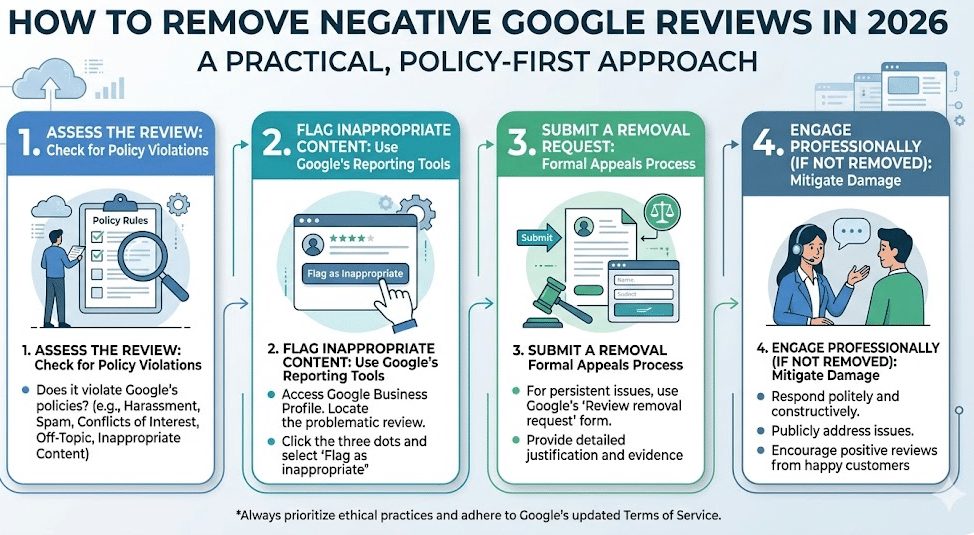
Step 1: Identify Reviews That Violate Google Policies
Not all negative reviews can be removed but a significant portion can if they breach guidelines.
According to Google’s review policies, removable content includes:
- Fake or spam reviews
- Competitor or ex-employee bias
- Hate speech or harassment
- Misleading or irrelevant claims
- Impersonation
The key is distinguishing between opinion vs. violation. A bad experience is allowed. False allegations or manipulated content are not.
Step 2: Use Google’s Reporting System Effectively
Through your Google Business Profile, you can flag problematic reviews.
Process:
- Locate the review
- Click “Report review”
- Select the violation type
- Submit for review
Typical timelines:
- Initial review: 24–72 hours
- Resolution: up to 5–7 days
However, in 2026, this is often just the starting point.
Step 3: Escalation is No Longer Optional
Basic reporting alone has limited success rates. Strategic escalation significantly improves outcomes.
This includes:
- Following up with Google Business support
- Submitting detailed evidence
- Engaging product experts in forums
Agencies specializing in ORM, such as BHMarketer.ai, often emphasize that structured escalation workflows not just reporting drive successful removals.
Providing clear documentation (screenshots, identity mismatches, transaction records) can dramatically increase the chances of action.
Step 4: Legal & Compliance-Based Removals
For severe cases defamation, impersonation, or reputational attacks legal routes are becoming more common in 2026.
Options include:
- Formal legal takedown notices
- Defamation claims
- Court-backed removal requests
Google is more responsive when requests are:
- Clearly documented
- Legally grounded
- Professionally formatted
This approach is typically reserved for high-impact cases.
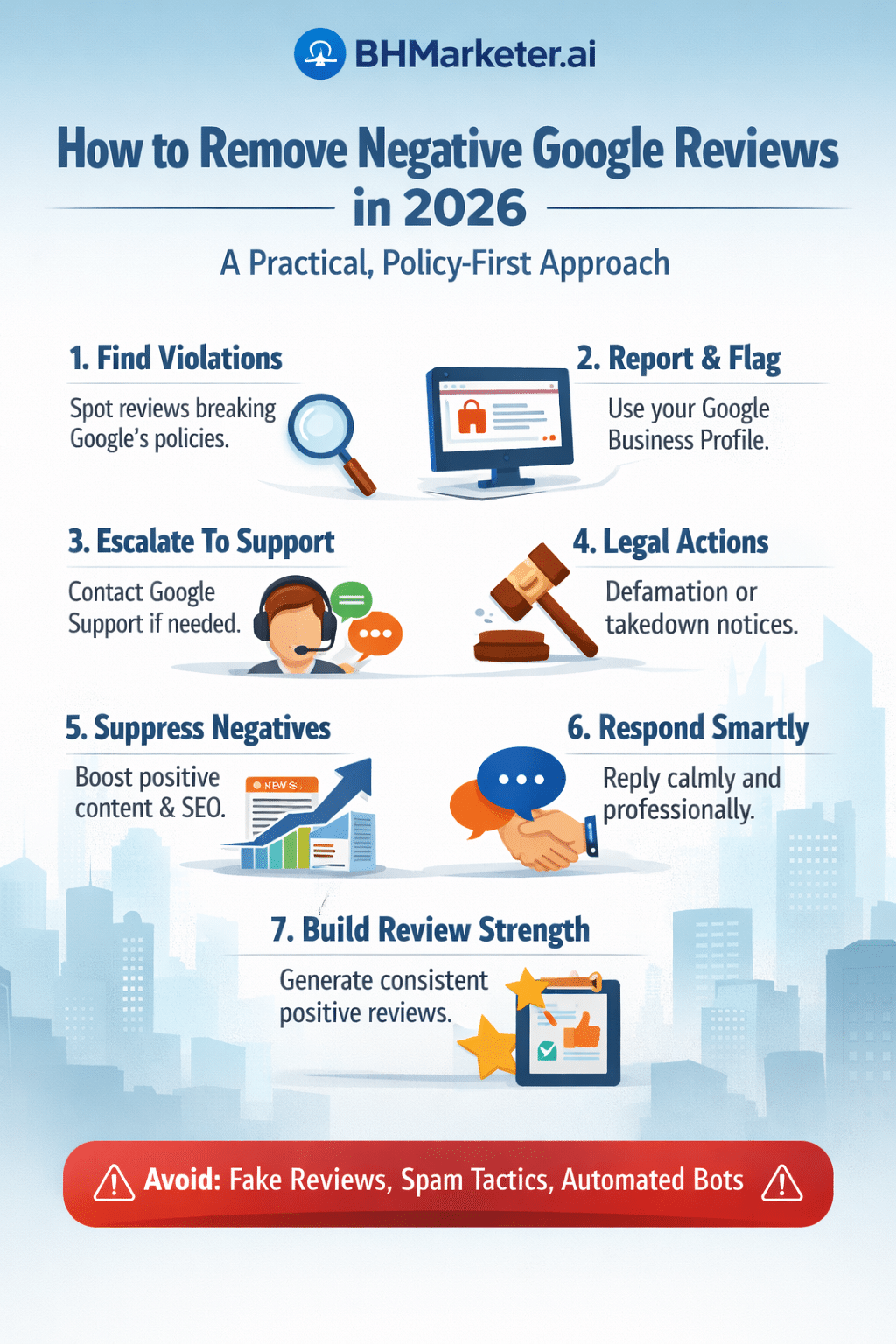
Step 5: When Removal Isn’t Possible Suppression Wins
Not every review can be taken down. In such cases, the focus shifts to visibility control.
This involves pushing authoritative, positive content higher in search results.
Common 2026 strategies:
- Press coverage on high-authority media
- Branded editorial content (Medium, Substack, news platforms)
- SEO-driven brand pages
- Entity-building content for AI systems
Modern ORM frameworks including those promoted by firms like BHMarketer.ai focus on “credibility architecture”, where strong content ecosystems outweigh isolated negative signals.
This is especially important as AI engines like Perplexity AI and Bing Copilot rely on aggregated brand context rather than individual data points.
Step 6: Respond Strategically, Not Emotionally
Public responses still matter and they’re now interpreted by both users and AI.
Best practices:
- Stay calm and professional
- Acknowledge the concern
- Offer resolution offline
- Avoid defensiveness
Example:
“We’re sorry to hear about your experience. Please reach out to us directly so we can resolve this promptly.”
A strong response can neutralize perception even if the review remains visible.
Step 7: Build Long-Term Review Resilience
The most sustainable strategy is prevention.
Focus on:
- Consistent generation of genuine positive reviews
- Verified customer experiences
- Steady review velocity
- Multi-platform presence
A strong review base reduces the impact of occasional negatives.
What to Avoid in 2026
Outdated tactics can now do more harm than good:
- Buying fake reviews
- Mass reporting without valid reasons
- Using automation or bots
- Incentivizing review manipulation
These can lead to:
- Listing suspensions
- Review filtering
- Long-term credibility loss
Final Thoughts
Removing negative Google reviews in 2026 requires a multi-layered, policy-first approach.
Successful strategies combine:
- Guideline-based removals
- Smart escalation
- Content-driven suppression
- Strong reputation foundations
As search and AI systems evolve, your brand is no longer defined by a single review but by the entire ecosystem of signals around it.
Businesses that invest in structured reputation strategies not quick fixes are the ones that maintain long-term trust and visibility.