

Preparedness has a reputation problem.
People hear the word and picture the extreme version: basement shelves stacked to the ceiling, complicated gear, and someone explaining generators with a little too much intensity.
Real preparedness is usually much quieter.
It is knowing where the flashlights are. Keeping a first-aid kit that has more than three dried-out bandages. Having a plan if the power goes out. Checking the smoke alarms. Saving emergency contacts somewhere other than a phone that may be dead at the exact wrong moment.
For some households, preparedness also includes lawful firearm ownership. That topic tends to attract loud opinions, but the responsible version is mostly practical: safe storage, training, maintenance, legal awareness, and thoughtful equipment choices.
No drama. No mythology. Just adults handling serious tools seriously.
Start With the Risks That Are Most Likely
Preparedness should begin with ordinary questions.
What happens if the power is out overnight? What if a storm blocks the main road? What if a family member needs medication and the pharmacy is closed? What if a phone dies during a travel delay? What if someone cannot get home at the usual time?
Most households do not need an elaborate plan for every possible disaster. They need a workable plan for the disruptions most likely to happen where they live.
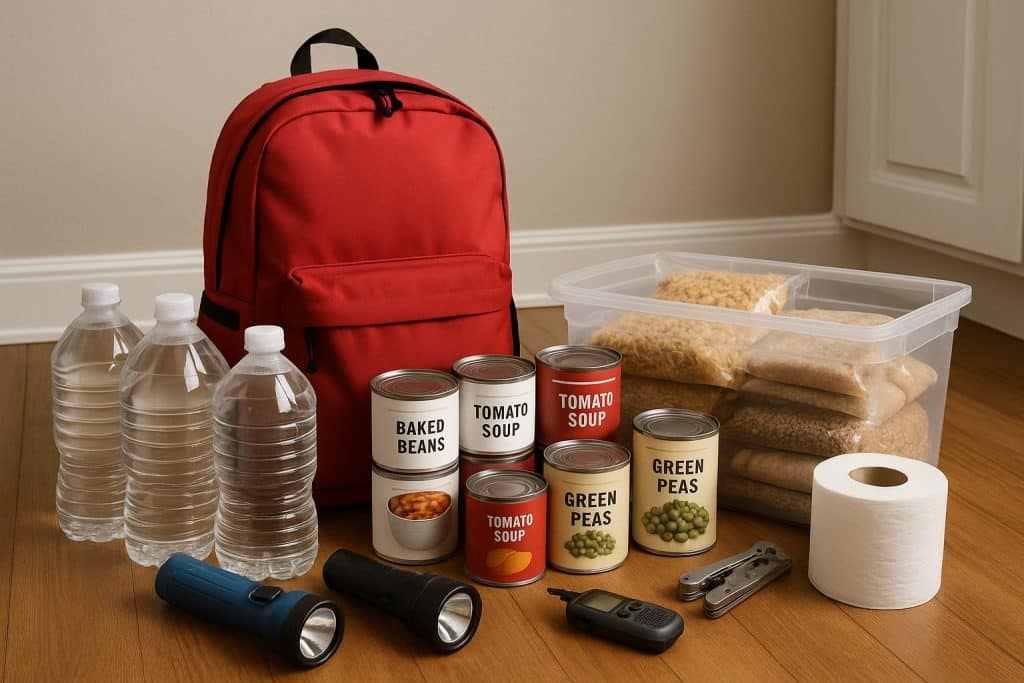
That may mean water, shelf-stable food, batteries, chargers, basic first-aid supplies, pet food, copies of important documents, and a small cash reserve. It may also mean knowing local emergency alerts, evacuation routes, and how to shut off water or gas if needed.
The goal is not fear. It is fewer decisions under stress.
Safety Tools Require Safety Habits
Every household safety tool comes with responsibility.
A generator can be useful during an outage, but it can also be dangerous if used indoors or too close to windows. Medication can save a life, but it should be stored securely. A kitchen knife is ordinary, but nobody leaves one balanced on the edge of a counter around toddlers.
Firearms belong in that same category of serious responsibility, only with higher stakes.
Safe storage is the first rule. A firearm should be accessible only to authorized adults and inaccessible to children, visitors, roommates, or anyone who should not handle it. Depending on the household, that may mean a locked safe, quick-access lockbox, cable lock, or another secure storage method.
Responsible ownership also includes training. A person should know how to safely load, unload, store, transport, maintain, and use the firearm. They should also understand the laws in their state and local area. Legal rules can vary significantly, and “I assumed” is not a strong position after something goes wrong.
Equipment Is Only One Piece of the Plan
Preparedness products are easy to buy. Competence takes longer.
This is true for almost everything. A first-aid kit does not make someone medically trained. A fire extinguisher is more useful when someone knows how to use it. A firearm is not a plan by itself.
For lawful owners, ammunition selection is one small but important technical detail. The right choice depends on the firearm, the intended use, local laws, and the shooter’s ability to handle it accurately and safely.
That is where a phrase like 9mm self defense ammo belongs in a broader preparedness conversation. It should not be treated as a magic solution. Any defensive ammunition should be tested in the specific firearm before being trusted. It should feed reliably, shoot to a predictable point of impact, and be controllable for the person using it.
The label matters less than function.
If the equipment does not work reliably in real conditions, it does not belong in the plan.
Storage and Maintenance Matter More Than People Think
Preparedness has a maintenance problem.
People buy supplies, put them away, and assume the work is finished. Then the batteries corrode, the flashlight dies, the bottled water gets forgotten, the first-aid kit runs out of essentials, or the spare charger somehow migrates into a teenager’s backpack and is never seen again.
The same principle applies to firearms and ammunition.
Firearms should be maintained according to the manufacturer’s instructions. Magazines, locks, safes, optics, and lights should be checked regularly. Ammunition should be stored in a cool, dry place and inspected for damage, corrosion, or other issues.
For anything kept for emergency use, condition matters. A tool that fails at the wrong moment is not preparedness. It is clutter with confidence.
Home Safety Is Layered
The best home safety plans do not depend on one tool.
They use layers.
Good exterior lighting. Working locks. Clear sightlines around doors and windows. Smoke alarms. Carbon monoxide detectors. A charged phone. Neighbors who can be contacted in an emergency. A plan for children or older relatives. Basic supplies. Secure storage. Training where appropriate.
Layered safety is less dramatic than relying on a single solution, but it is much more realistic.
For example, a family may never need to use a defensive tool if better lighting, stronger locks, and basic awareness prevent a problem from getting that far. That is a win. The best emergency is the one that never becomes an emergency.
Preparedness Should Make Life Calmer
The healthiest kind of preparedness does not take over the house or the personality.
It sits quietly in the background.
The flashlight works. The emergency contacts are updated. The first-aid kit is stocked. The doors lock. The important documents are copied. The family knows the plan. Any serious tools in the home are secured, maintained, and handled responsibly.
That is not paranoia.
That is ordinary care with higher stakes.
Preparedness is not about expecting everything to go wrong. It is about admitting that small things do go wrong, usually at inconvenient times, and that a little planning can keep them from becoming much larger.
The best plan is not the loudest one.
It is the one that works when needed and stays safely out of the way when it is not.