

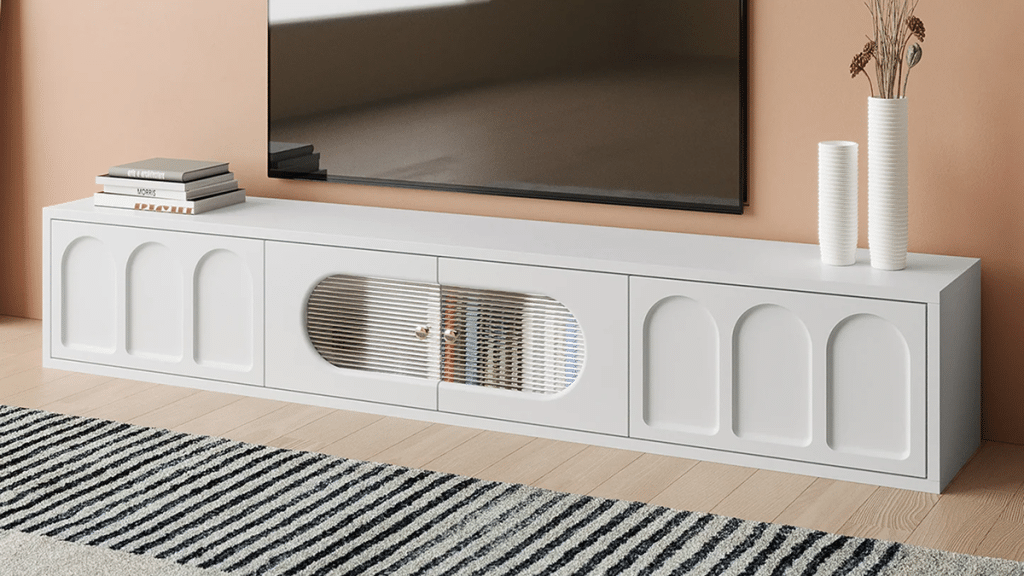
Your TV unit does more than hold your television. It anchors your entire living room, sets the aesthetic tone, and determines whether your space feels organised or chaotic. For Australian homes where the living room serves as entertainment hub, family gathering space, and often work-from-home area, choosing the right TV unit becomes crucial to daily comfort.
The average Australian now owns a 55 to 65-inch television, and those screens keep getting larger. Yet many people still use TV units designed for the compact screens of a decade ago. The mismatch creates visual imbalance, poor proportions, and living rooms that never quite feel finished.
Choosing the perfect TV unit for your Australian living room requires thinking beyond aesthetics. You need to consider your TV size, room dimensions, storage needs, and how the piece will perform in Australian climate conditions. Get it right and your living room transforms from cluttered to curated. Get it wrong and you’re living with an expensive mistake for years.
Here’s how to make the right choice.
Start With Proper Proportions
The most common TV unit mistake is choosing one that’s too small for your television. Your unit should be wider than your TV to create visual balance and grounding.
For a 55-inch TV (122cm wide), your unit should be at least 150-180cm wide. For a 65-inch TV (144cm wide), you want 170-200cm of unit width. This extra width on each side prevents your TV from looking precariously perched and creates space for speakers, decorative objects, or simply visual breathing room.
Height matters too. Your TV centre should sit at eye level when you’re seated. For most Australian sofas with seat heights around 45cm, this means your TV centre should be roughly 110-120cm from the floor. Work backwards from there. If you’re placing a 55-inch TV (70cm tall) on a unit, you want the unit top around 75-85cm high to achieve proper viewing height.
Depth is the dimension people forget. Standard TV units sit 40-50cm deep, which accommodates most modern TVs and provides storage space. Shallower units (30-35cm) work for wall-mounted TVs where the unit is purely decorative and storage-focused. Deeper units (50cm+) offer generous storage but can protrude awkwardly into smaller living rooms.
Measure your TV, measure your sofa viewing distance, and calculate the unit size that creates proper proportions before you start shopping.
Material Choices for Australian Conditions
Australia’s diverse climate demands thoughtful material selection. Coastal humidity, dry inland heat, and temperature variations affect how TV unit materials perform long-term.
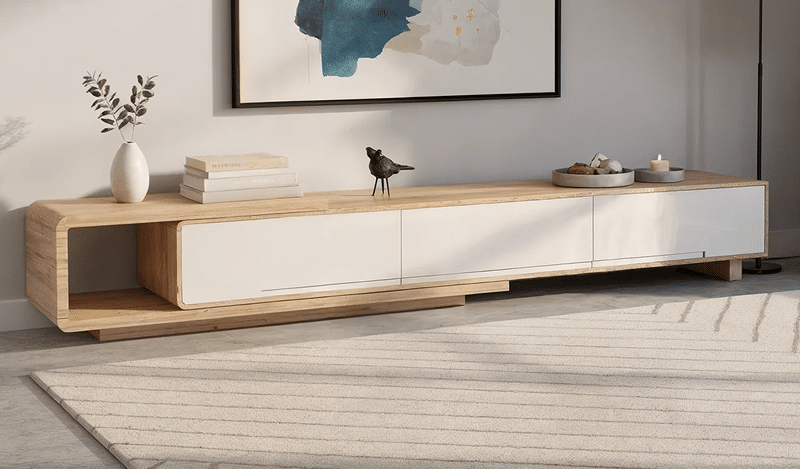
Solid timber remains the most popular choice for modern Australian TV units, and for good reason. Oak, walnut, and Tasmanian oak handle Australian conditions beautifully when properly finished. Timber brings natural warmth, ages gracefully, and works with virtually any interior style from coastal to contemporary. Choose hardwoods over cheap particle board if you want furniture that lasts decades.
Engineered wood with quality veneer offers the timber look at lower price points. Modern manufacturing creates durable, attractive pieces that resist warping better than solid timber in high-humidity areas. Look for units with proper edge banding and quality finishes that protect against moisture.
Metal and glass combinations create industrial or minimalist aesthetics. Powder-coated steel frames resist rust in coastal environments and require minimal maintenance. Tempered glass shelving adds lightness whilst safely supporting heavy equipment. These materials particularly suit modern apartments and contemporary spaces.
Avoid cheap laminate finishes that peel in humidity, particle board that swells when wet, and units with poor-quality hardware that won’t withstand daily use.
For Australian homes, investing in quality materials means furniture that looks better longer and handles our climate without deteriorating.
Floating vs Floor-Standing: The Modern Debate
One of the biggest design decisions is whether to choose floating (wall-mounted) or traditional floor-standing TV units.
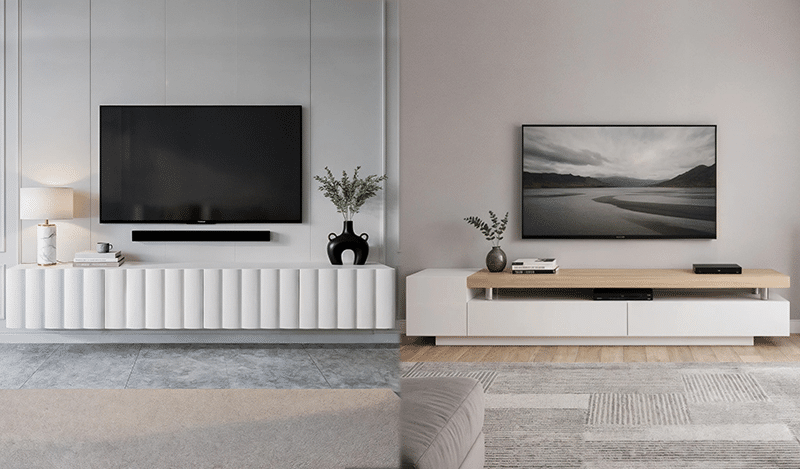
Floating TV unit designs have surged in popularity across Australian homes for compelling reasons. Wall-mounted units create visual lightness that makes living rooms feel more spacious. The floor space underneath allows easier cleaning and creates an uncluttered, modern aesthetic. Floating units work brilliantly in smaller apartments where every centimetre of floor space counts.
However, floating TV unit designs require proper wall mounting to stud work or masonry. Renters need landlord permission and must be prepared to patch holes when moving. Installation is more complex than simply placing a floor-standing unit. And weight capacity becomes critical when you’re storing heavy equipment or multiple devices.
Floor-standing units offer stability, easier installation, and often more storage capacity. They’re renter-friendly, easier to relocate, and can incorporate features like drawers and enclosed cabinets that floating units can’t. For families with young children, floor-standing units often feel safer.
Choose floating units for modern, space-conscious living rooms where you want minimal visual weight. Choose floor-standing units when you need maximum storage, easier installation, or you’re renting without modification permission.
Storage That Actually Works
Your TV unit needs to store more than just your TV. Streaming devices, gaming consoles, sound systems, routers, remote controls, cables, DVDs, and general living room clutter all need homes.
Closed storage (doors and drawers) hides visual chaos. Essential for maintaining calm, organised living rooms. Use closed storage for equipment you don’t access daily, cable management, and items you’d rather not display.
Open shelving suits equipment needing ventilation and items you access frequently. Game consoles, streaming boxes, and sound systems all generate heat and benefit from airflow. But open shelving also displays dust and clutter, so use it strategically.
Cable management separates good TV units from frustrating ones. Look for units with:
- Pre-cut cable ports in back panels
- Internal channels routing cables through the structure
- Sufficient depth behind devices for cable storage
- Access panels for adding new equipment without dismantling everything
Count your devices before buying. If you’ve got a TV, soundbar, gaming console, streaming box, and router, you need storage and power solutions for five devices plus their cables. Choose units designed for your actual setup, not minimal displays.
The Final Checklist
Before purchasing, verify:
✓ Unit width is 30-60cm wider than your TV
✓ Height positions TV centre at proper viewing level (110-120cm)
✓ Depth suits your space and storage needs
✓ Material quality handles Australian climate conditions
✓ Floating or floor-standing choice matches your situation
✓ Storage capacity accommodates all your equipment
✓ Cable management features are adequate
✓ Style complements your existing furniture
The Bottom Line
The perfect TV unit for your Australian living room balances proportions, materials, storage, and style. It’s sized correctly for your television, built from quality materials that handle our climate, offers adequate storage for your equipment, and manages cables effectively.
Measure carefully. Choose materials that last. Prioritise function alongside form. Your living room deserves furniture that makes entertainment easier, not harder.
When your TV unit works properly, it disappears into the background whilst everything else in your living room falls into place. That’s furniture doing its job brilliantly.