

DevOps is often described as a set of tools or practices. In reality, it’s what determines whether a product can scale without constant breakdowns.
From what I’ve seen, most teams don’t run into issues at the code level. Problems start when the system grows — deployments become slower, environments drift, monitoring is inconsistent, and scaling turns into guesswork.
That’s where companies start looking for external expertise. Not to rebuild everything, but to make what already exists stable and predictable.
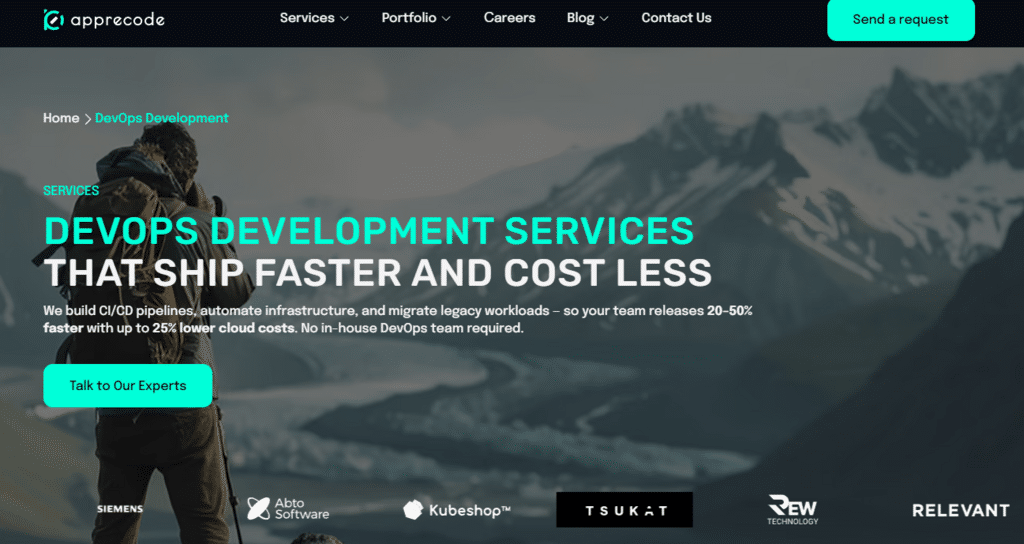
This is exactly the space where devops development services in USA from AppRecode fit in — working directly with production systems, improving infrastructure, and helping teams move away from reactive operations.
What DevOps Looks Like in Practice
In theory, DevOps sounds straightforward: automate deployments, monitor systems, and scale infrastructure.
In practice, most companies end up with:
- partially automated pipelines
- inconsistent environments between staging and production
- limited visibility into system performance
- manual fixes during incidents
These issues don’t come from bad engineering. They come from growth without structure.
DevOps, when implemented properly, solves three core problems:
- delivery speed (how fast you can release safely)
- system stability (how often things break)
- scalability (how systems behave under load)
AppRecode’s approach is built around these three areas.
AppRecode’s DevOps Expertise
AppRecode focuses on improving systems that are already in use, rather than replacing them.
Infrastructure and Cloud Architecture
The company works with AWS and Azure environments to design infrastructure that can scale predictably. This includes resource management, load balancing, and cost optimization.
Instead of overengineering early, the focus is on building systems that match real usage patterns.
CI/CD and Delivery Automation
One of the most common issues in growing teams is inconsistent deployment.
AppRecode builds CI/CD pipelines that:
- automate testing and deployment
- reduce human error
- support rollback scenarios
This allows teams to release more frequently without increasing risk.
Kubernetes and Containerization
As systems grow, containerization becomes necessary.
AppRecode helps teams:
- migrate to container-based environments
- manage Kubernetes clusters
- improve flexibility and scalability
This is especially useful for SaaS products with variable load.
Monitoring and System Visibility
A stable system is not just one that works — it’s one you understand.
AppRecode implements monitoring and logging systems that give teams visibility into:
- performance bottlenecks
- system health
- incident root causes
This reduces downtime and improves response time.
DevOps Consulting and Audits
Before making changes, AppRecode typically audits the existing setup.
This includes:
- infrastructure review
- pipeline analysis
- workflow evaluation
The goal is to identify real bottlenecks instead of applying generic solutions.
Real-World DevOps Scenarios
To understand how this works in practice, it’s easier to look at typical situations where DevOps becomes critical.
Case 1: SaaS Platform Struggling with Deployment Bottlenecks
A growing SaaS company had a working product, but deployments were slow and unpredictable.
Releases required manual steps, rollback was unreliable, and production incidents were increasing.
AppRecode implemented:
- fully automated CI/CD pipelines
- standardized environments across staging and production
- rollback mechanisms
Result:
- Release time dropped from hours to minutes.
- Deployment-related incidents were significantly reduced.
- The team shifted from reactive fixes to planned releases.
Case 2: E-commerce Platform Facing Scaling Issues
An e-commerce platform experienced performance issues during traffic spikes.
The infrastructure was not designed for variable load, and scaling required manual intervention.
AppRecode worked on:
- cloud infrastructure redesign (AWS)
- auto-scaling configuration
- load balancing improvements
Result:
- The platform handled peak traffic without downtime.
- Operational load on the team decreased.
- Costs became more predictable due to better resource management.
Case 3: Legacy System Migration to Modern Infrastructure
An enterprise team was working with a legacy system that was difficult to maintain and scale.
Deployments were slow, environments were inconsistent, and documentation was limited.
AppRecode helped with:
- gradual migration to containerized architecture
- Kubernetes implementation
- improved monitoring and logging
Result:
- Deployment cycles became faster and more reliable.
- System stability improved.
- The team gained better control over infrastructure.
Why DevOps Expertise Matters
DevOps is not just about implementing tools.
It’s about making systems predictable.
Without proper DevOps:
- scaling becomes risky
- incidents become frequent
- development slows down
With proper DevOps:
- teams release faster
- systems remain stable under load
- infrastructure supports growth instead of limiting it
AppRecode focuses on that transition.
Who Benefits the Most

From what I’ve seen, AppRecode is most valuable for:
- SaaS companies scaling beyond initial infrastructure
- products with growing user bases
- teams facing deployment or stability issues
- businesses modernizing legacy systems
It’s less relevant for very early-stage startups or teams looking for quick fixes.
Final Thoughts
DevOps becomes important the moment a product starts growing.
At that stage, the question is not whether to invest in infrastructure, but how to do it without disrupting the product.
AppRecode works directly with that problem — improving existing systems, automating delivery, and making infrastructure more predictable.
For companies already operating in production, that kind of focused expertise is often the difference between scaling smoothly and constantly fixing issues.