

Introduction
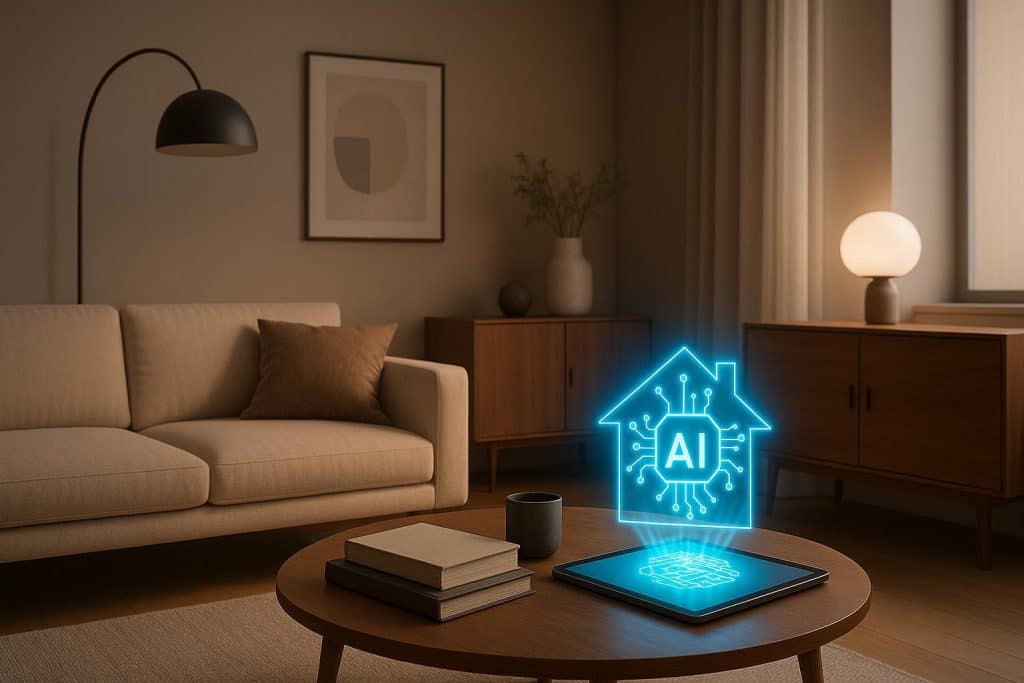
AI room design, powered by artificial intelligence, is among the most significant innovations in contemporary architecture. The industry integrated AI room design due to its fascination with the way technology organizes domestic environments. The system involves a digital rendering of a home, and the functional layout of the space reflects the designer’s idea of the connection between lifestyle and culture. The efficient and modern AI room design contains various elements of art, such as style, color, and placement, as well as the principles, for instance, personalization and optimization.
The Evolution of Home Design
Traditional designers used numerous elements of art in home design, for instance, manual drafting to represent creativity, architectural knowledge, and personal taste. The practice contains several repeating tasks, from sketching floor plans to testing furniture arrangements. Interior designers used physical samples, which created a tactile texture and specific visual aesthetics; however, the manual process remained slightly slower and more costly. Numerous sketches give the room shape, outlining areas where walls meet floors and decor changes to functional furniture.
Moreover, the digital era of home design contains sophisticated software such as visualization tools, while the current stage contains automated systems, for instance, AI algorithms. The industry used significant levels of technical expertise for planning. The technology comprises layers of digital data that are slightly complex, contributing to the professional appearance of the user’s space. AI room design has a virtual framework measuring its impact as the developers applied modern principles to deliver a functional piece. The tool also contains a sense of depth since it is integrated into planning and visualization. The process seems to consist of three phases, including automation, accessibility, and execution.
What is AI Room Design?
AI room design is about applying intelligent computer programs that can respond to the user preferences as well as the room’s spatial aspects and the current design trends that are current to suggest an optimal layout and style for a room.
Some features include:-
- Suggesting furnisher placement based on the budget and purpose.
- Suggesting suitable color schemes based on the window effect and atmospheric setting
- Summarizing a rationalized visual portfolio of the room
- Readingjustment according to the financial and environmental factors
The AI is, in essence, an automatic designer who also debugs the involved variable and lends perspective through recognized trends.
Advantages of AI-based Home Design
- Personalized solutions for large supply: Our AI-based preferences, such as style, budget, etc.
- More efficiency: A large number of customization easy to create different solutions.
- Lower cost: It is easier to visualize the different formats and finishing for searching for a solution, avoiding unnecessary money and time wastings.
- Better sustainability: It is easier to find environmentally friendly options for consumers.
- Affordable for all levels of human expertise: Also saves experts time and efforts by providing a guideline—AI dependently acts to make the thing blindly but with perceptiveness. How does AI
The functionality of AI Room Design.
The design of AI rooms usually has a systematic approach:
- Data Collection – The users are asked to fill in room sizes, furniture choices, and style inspirations.
- Analysis AI algorithms consider the spatial constraints, lighting conditions, and design trends.
- Generation – The system generates various design alternatives, usually 2D and 3D.
- Feedback Loop – Users optimize decisions, and AI adjusts suggestions to them.
- Execution Support – Some platforms match users with suppliers or contractors to make designs a reality.
This cyclic process is used to guarantee that the designs are developed in real-time, balancing creativity with practicality.
Possible applications of Home Design AI.
- Interior arrangements
- Color schemes
- Smart residences: IoT appliances will be embedded into the design. Virtual displays: aid for estate agents when they show a house with LCD video cameras.
- Renovation scheme: preview image and construction cost estimate in the planning stage.
Obstacles and restrictions
Though of its advantages, the AI room design still faces some problems.
- Creativity limit: AI design is based on available data and current trends, which may reduce innovativeness.
- Human insights: AI can not always deliver well the emotional and cultural aspects of design. Technical difficulties: the users will need easy access to digital devices and an internet connection.
- High cost of powerful software: a simple AI design program is quite affordable, while a serious one can be so expensive.
The future of AI assistance in home design.
AI involvement in dwelling conception has already been initiated.
Possible future improvements are:
- Augmented Reality (AR): perhaps a new way that users could walk through AI-generated house plans.
- Voice-guided conception: lot easier for house owners to specify their needs for the designer to give them the plans immediately.
- Anticipative Conception: AI predicting the change of lifestyle, such as a rising family, and providing flexible areas.
- Worldwide teamwork: architects from across the globe collaborating via the AI technology.
Conclusion
Home design takes a new direction where the art will collide with the algorithm. AI does not intend to substitute for human designers, but rather to complement their artistic talent so that users will have efficiency, customization, practicality, and sustainability all in one. Choosing the simplicity and efficiency of the AI direct-conception systems, it has been proven to be a powerful technique to materialize their ideal dwellings without being complicated for residents. As we rise in technology, the synthesis of both human imagination and artificial intelligence will alter our unique way of designing and living.