

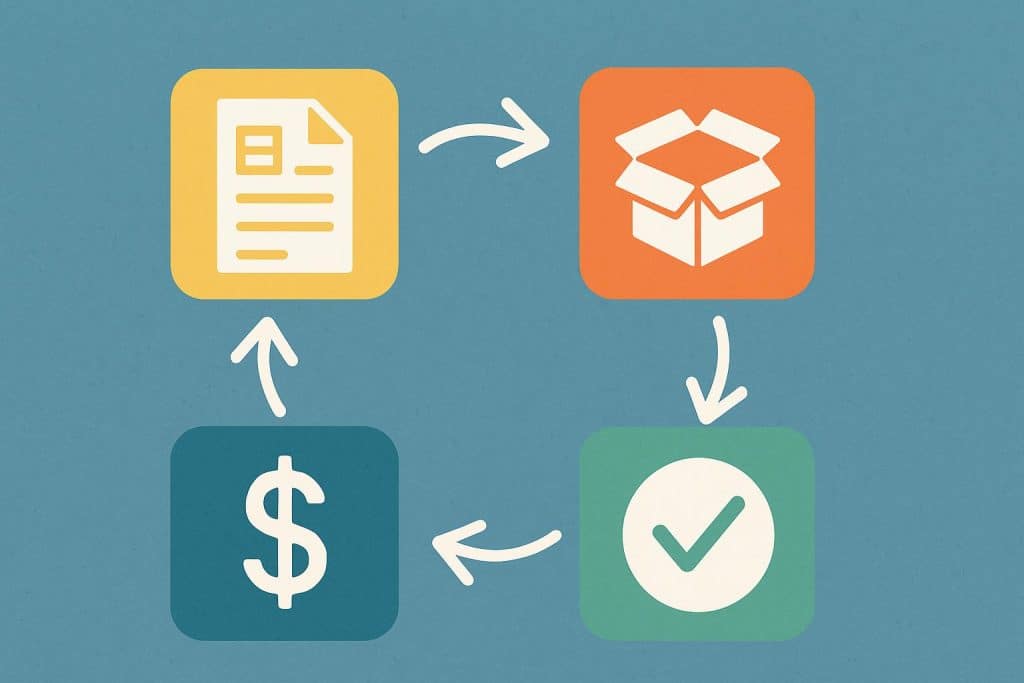
In modern business environments, the efficiency of financial and operational processes directly influences performance. Among these, the order-to-cash cycle plays a central role. The use of order-to-cash software allows companies to streamline operations, all the way from order placement to final payments. As a result, they reduce delays and are able to improve cash flow visibility.
Understanding the Order-to-Cash Process
The order-to-cash (O2C) process refers to the end-to-end sequence. It begins when a customer places an order and ends when the payment is received and recorded. Some steps included in the process are order management, credit checks, order fulfillment, invoicing, payment collection, and reconciliation.
Each stage involves coordination between departments such as sales and logistics. Inefficiencies at any point can lead to delayed payments, customer dissatisfaction, or revenue leakage. That’s where order-to-cash software comes in. With this tool, companies are able to reduce operational costs while improving customer satisfaction.
Key Components That Drive Efficiency
Several elements determine the effectiveness of an order-to-cash cycle. Automation is one of the most significant. Manual processes often lead to errors and slow turnaround times. In contrast, automated systems can accelerate invoice generation, reduce discrepancies, and improve tracking.
Another critical factor is data accuracy. Inconsistent or incomplete data can disrupt the entire cycle, particularly during billing and collections. Centralized systems help ensure that all stakeholders access the same information in real time.
Risk management also plays a role. Credit assessments and payment tracking reduce the likelihood of bad debt. Research from PwC indicates that businesses with structured credit management policies experience up to 25% fewer payment defaults.
Why Order-to-Cash Matters for Business Growth
A well-optimized O2C process directly supports financial stability and scalability. Faster invoice processing and shorter payment cycles improve liquidity. This allows companies to reinvest funds into operations, innovation, or expansion initiatives.
Moreover, improved transparency enhances decision-making. When financial data is updated in real time, leaders can identify trends, anticipate risks, and allocate resources more effectively. This level of insight becomes particularly valuable in competitive XXX markets where timing and responsiveness influence outcomes.
Customer experience also benefits from an efficient O2C system. Accurate billing, timely delivery, and clear communication build trust and encourage repeat business. According to McKinsey, companies that prioritize customer-centric processes report revenue growth rates up to two times higher than their peers.
The Role of Technology in Modern O2C Systems
Digital transformation has reshaped how businesses manage their order-to-cash cycles. Cloud-based platforms, artificial intelligence (AI), and predictive analytics enable more precise forecasting and automation. These technologies reduce manual intervention and enhance accuracy across the process.
For example, AI-driven tools can predict payment delays based on historical behavior, allowing finance teams to act proactively. Similarly, integrated dashboards provide real-time performance indicators. These help organizations monitor key metrics such as days sales outstanding (DSO) as they make decisions.
The adoption of advanced tools is increasing. Accenture estimates that up to 80% of the finance department’s work could be automated. Similarly, a 2024 Duke University report found that over 60% of large enterprises have implemented some form of automation. This percentage is expected to go up over the coming years as companies shift towards data-driven financial management.
Conclusion
The order-to-cash process represents more than a routine operational function. It is a strategic lever that influences cash flow, customer relationships, and overall business performance. By optimizing each stage and leveraging technology, companies can reduce inefficiencies and support sustainable growth.
In addition, organizations that continuously monitor and refine their O2C workflows tend to achieve stronger financial resilience over time. Regular performance analysis, supported by reliable data, enables early identification of bottlenecks and emerging risks. This proactive approach strengthens internal controls. As regulatory environments evolve and customer expectations increase, maintaining a structured and adaptable order-to-cash framework contributes to long-term operational stability and competitive positioning across industries.