

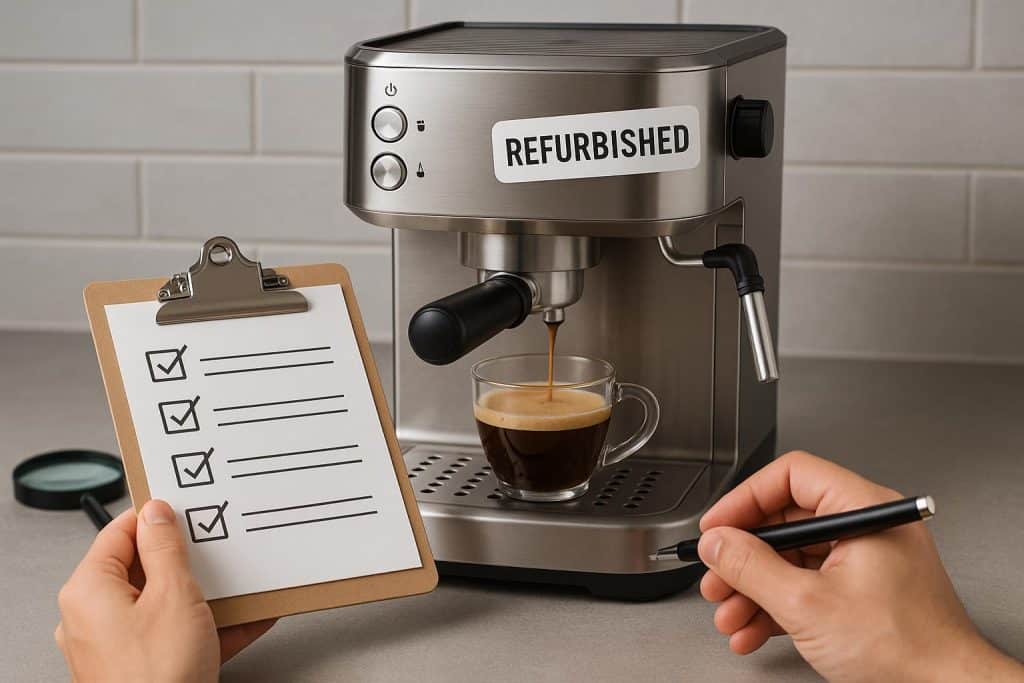
A refurbished espresso machine is one of the smarter ways to get quality brewing equipment without paying full retail price. That said, not every refurbished unit is worth the investment. Restoration standards differ widely, and the difference between a well-serviced machine and a hastily reconditioned one is not always obvious from a listing. Knowing what to examine before buying helps narrow the field to options that will actually hold up.
1. Source and Seller Credibility
Seller credibility shapes everything else about a refurbished purchase. A certified retailer or manufacturer-authorized source brings a standard of care that independent resellers rarely replicate.
1.1 Look for Certified Refurbishment
The phrase “certified refurbished” should mean more than cosmetic cleaning. At its best, it signals that a machine has been fully inspected, tested against performance benchmarks, and restored using proper parts.
Buyers who invest time in researching their options often find that looking into refurbished jura coffee machines from established specialty retailers is well worth the effort. Sellers operating at that level typically publish detailed condition reports, confirm part replacements, and document the testing each unit undergoes before it is listed for sale.
2. Machine Condition and Grading
Most credible sellers assign a grade to each refurbished unit, often using an A, B, or C classification that reflects both appearance and operational condition. Understanding what those grades actually cover prevents buyers from making assumptions that lead to disappointment.
2.1 Cosmetic vs. Functional Condition
Minor surface wear on a housing panel is easy to overlook and rarely affects how a machine performs. Internal component condition is a different matter. The pump, boiler, and group head are the parts that directly determine brew quality, and buyers should ask whether each was inspected or replaced during restoration before committing to a purchase.
3. Warranty and Return Policy
The presence of a warranty says something important about how much confidence a seller has in their own work. Buying a refurbished machine with no coverage at all transfers significant financial risk to the buyer from the moment of delivery.
3.1 Minimum Coverage to Expect
A 90-day warranty is a fair minimum. Coverage spanning six months to a year suggests a seller who has done thorough restoration work and stands behind it. Return policies carry similar weight; a straightforward, clearly documented return process signals that the seller is not trying to obscure what they are selling.
4. Parts Availability and Repair Support
Production lines close and model lines get discontinued. A machine that cannot be serviced because parts no longer exist becomes a liability rather than an asset, regardless of how well it was refurbished initially.
4.1 Service Network Access
Some brands maintain authorized service centers that extend support to refurbished units. Access to that kind of professional servicing can add years to a machine’s working life. Confirming whether that network covers a specific model is a practical step that many buyers skip and later regret.
5. Cleaning History and Maintenance Records
Prior maintenance history is one of the stronger indicators of how a machine will perform going forward. A unit that was descaled regularly and serviced on schedule will typically outlast one that received minimal attention before being refurbished.
5.1 Signs of Proper Care
Internally, clean water pathways, scale-free steam components, and well-seated seals all indicate that someone has looked after the machine. Externally, intact panels and fully functional controls suggest it was not mishandled during its previous service life.
6. Compatibility With Water Quality
Mineral-heavy water shortens machine life by accelerating internal scale buildup. Buyers in hard-water areas should check whether a model comes equipped with built-in filtration or a water softening feature before finalizing their decision.
Where built-in options are absent, manufacturers often recommend compatible external filters. Identifying these features early removes a common source of avoidable maintenance problems later.
Conclusion
Buying a refurbished espresso machine rewards buyers who ask the right questions upfront. Seller credibility, condition grading, warranty terms, parts access, and water compatibility each play a role in determining whether a purchase holds its value over time. Taken together, these factors form a reliable framework for making a confident choice. The goal is not just to spend less, but to spend wisely and enjoy consistent performance for years to come.