

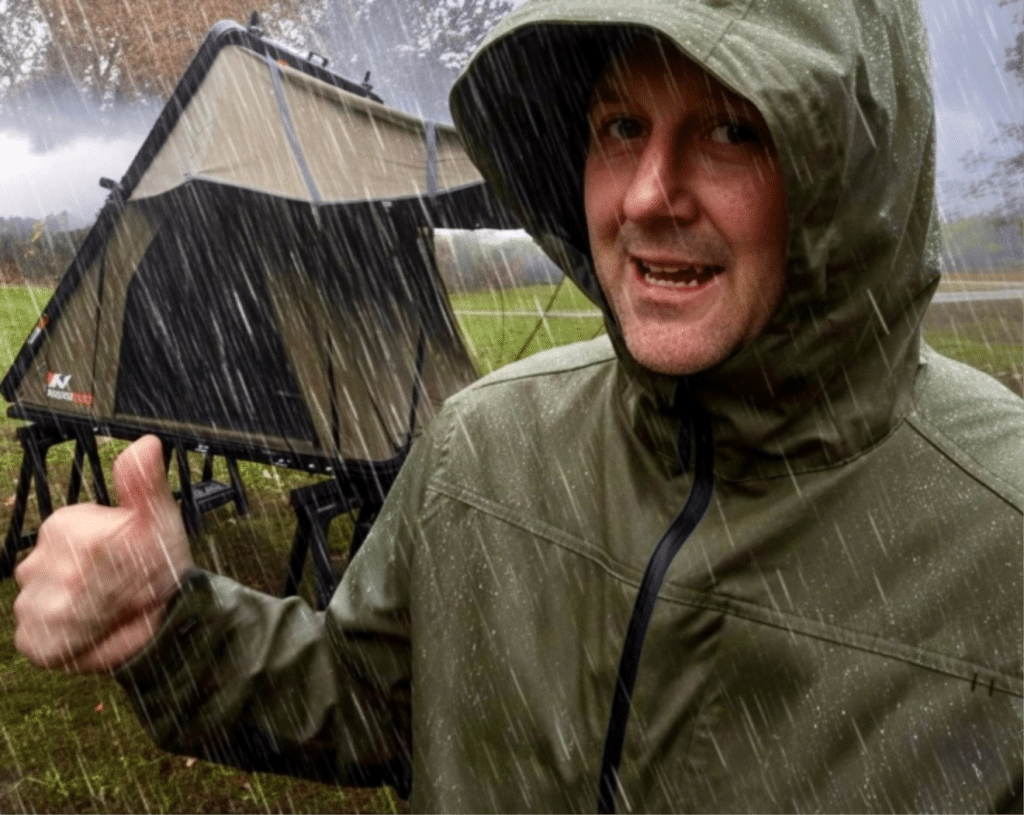
The trip didn’t start with any sense that the weather would matter much. It was one of those late departures where the plan is loose, the route is flexible, and the only real goal is to get out of the city before traffic settles into its usual rhythm. Somewhere along the coastal highway, the sky still looked stable enough to ignore.
That assumption didn’t last long.
By the time the group pulled off near a quiet roadside rest area, the air had already shifted in a way that wasn’t dramatic but felt noticeable. The sun was still visible, yet it no longer warmed the same way. Wind came in uneven bursts, carrying a slightly damp edge from the ocean. Nothing about it felt like “bad weather,” but it was no longer comfortable to simply stand still and assume the night would stay predictable.
Camping in those conditions rarely fails because of one extreme factor. It usually becomes uncomfortable through accumulation—small changes that slowly affect how people move, rest, and decide where to settle.
Setting up that evening reflected exactly that. The first decision was where to position the vehicle, not for scenery but for wind direction. Even that small adjustment changed how the rest of the setup felt. Conversations became shorter, more functional. Bags were opened and closed more than once. Nothing was difficult on its own, but everything required a second thought.
Rain didn’t arrive as a storm. It began as a light, uncertain pattern that made surfaces slowly shift from dry to uncertain. That’s often the moment when outdoor comfort becomes less about preparation in theory and more about how quickly a setup can respond without turning everything into a rebuild.
Ground conditions started to matter more than expected. Not because they were extreme, but because they weren’t consistent anymore. A sleeping area that feels fine at sunset can feel noticeably different a few hours later when moisture and temperature begin to interact. At that point, comfort stops being about preference and becomes something closer to stability.
What stood out most was how quickly the group adjusted their attention upward rather than outward. Once rain becomes part of the equation, the idea of staying close to the ground starts to feel less reliable. Elevated shelter, in that sense, is less about separation and more about removing small uncertainties that accumulate through the night.
Over time, many travelers who spend extended periods on the road begin to notice this shift in thinking. It’s not that weather becomes more important, but that predictability becomes more valuable than perfection. Some setups reflect that idea more clearly than others, especially those designed to remain consistent across different environments rather than being optimized for a single condition.
That’s where systems like an all-season rooftop tent quietly change how people approach trips like this. Not because they eliminate weather exposure, but because they reduce how much the weather changes the routine of setting up, resting, and moving again the next morning. When a sleeping space behaves the same way in wind, rain, or clear skies, attention shifts back to the trip itself rather than the conditions around it.
Later that night, the rain eased but didn’t fully disappear. It moved in and out in irregular intervals, leaving the air cooler and heavier at the same time. Inside the camp, there wasn’t much discussion about it anymore. Instead, the focus shifted to small adjustments—zippers, layers, and timing of sleep—things that only become noticeable when the environment refuses to stay consistent for long.
Wind returned in short waves near dawn. Not strong enough to disrupt anything directly, but enough to remind everyone that the coast never fully settles at night. It moves between states quietly, without announcing transitions. That’s often what makes coastal camping feel unpredictable even when forecasts look stable.
In the early morning, when everything was still slightly damp and the light was just beginning to soften the edges of the landscape, the setup didn’t feel improvised anymore. It felt established. Not perfect, not optimized, but stable enough that the weather had become background noise rather than a problem to manage.
That kind of stability doesn’t come from removing weather from the experience. It comes from reducing the number of times the weather forces a complete adjustment.
For travelers moving through different regions in a single journey—coastal humidity, inland heat, and sudden elevation drops—this difference becomes more noticeable over time. It’s less about comfort as a fixed state and more about how quickly comfort returns after it is interrupted.
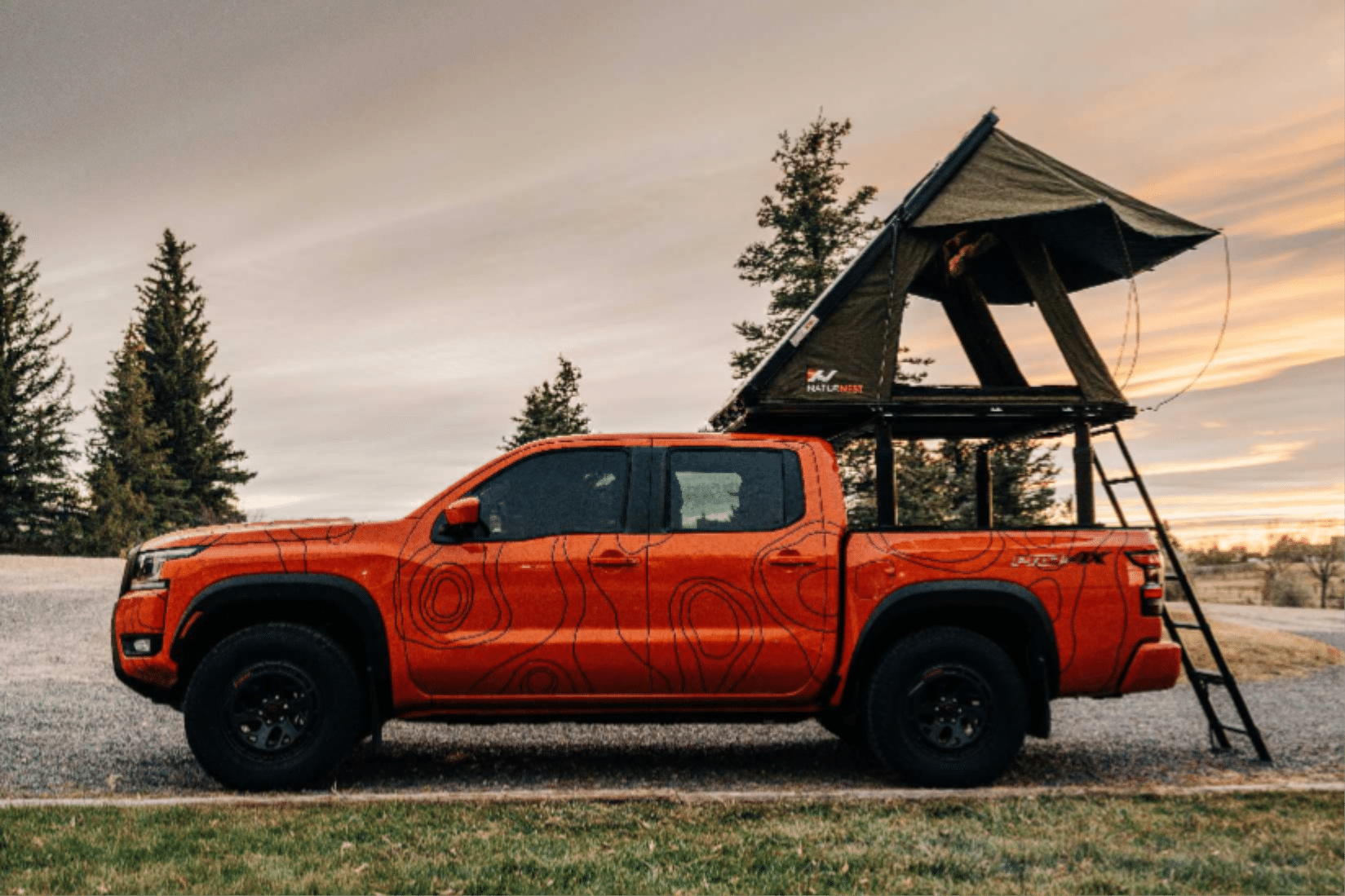
Many modern travel setups are now designed around that idea of return rather than resistance. Brands like Naturnest rooftop tents reflect this approach by focusing on systems that stay consistent across changing environments, without requiring constant reconfiguration every time conditions shift. The value is not in avoiding discomfort entirely, but in shortening the distance between discomfort and normality.
By the time the group left that morning, the weather had already changed again. The sky was clearing in one direction while staying heavy in another. No one tried to predict what it would do next. That part no longer felt necessary.
What mattered more was that nothing about the night had required a reset.
And on trips like this, that’s often what comfort quietly becomes—not control over conditions, but the ability to keep moving without being pulled out of rhythm every time the environment shifts.