

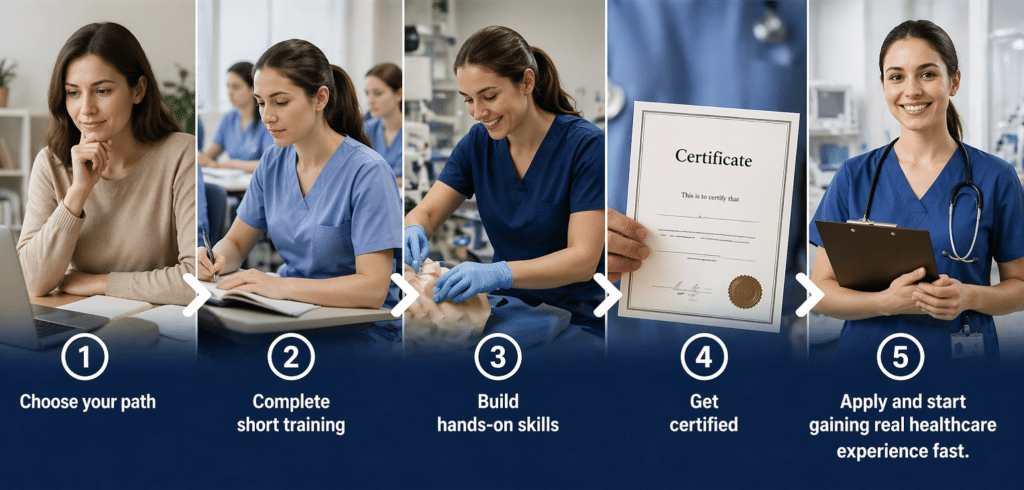
You can start a healthcare career without years of schooling by choosing short-term training programs (6–12 months), focusing on hands-on roles, and enrolling in accredited institutions that offer practical experience and job-ready skills.
Why More People Are Choosing Faster Healthcare Paths
Not everyone has the time—or budget—for a four-year degree. The good news? Many healthcare support roles let you enter the workforce quickly, build experience, and earn a steady income.
These roles are especially popular among:
- Career changers
- Recent high school graduates
- People looking for stable, in-demand jobs
- Anyone who prefers practical, hands-on work
Step-by-Step: How to Get Started
1. Choose the Right Career Path
Start by identifying what environment fits you best:
- Clinical (hospitals, surgery rooms)
- Animal care (clinics, vet offices)
- Technical support roles
2. Pick a Short-Term Training Program
Many entry-level programs can be completed in under a year.
For example:
- A program at the American College of Healthcare and Technology can prepare students for clinical roles with hands-on training.
- A Veterinary Assistant School can help you start working with animals without a long academic path.
3. Focus on Hands-On Skills
Employers in healthcare care more about:
- Real-world experience
- Practical skills
- Reliability and attention to detail
4. Get Certified (If Needed)
Some roles benefit from certifications, which can:
- Increase your job opportunities
- Boost your starting salary
- Make you stand out to employers
5. Apply and Start Gaining Experience
Once trained, you can begin working in:
- Hospitals
- Outpatient centers
- Veterinary clinics
- Private practices
How Long Does It Take?
| Career Path | Typical Duration | Entry Requirement |
|---|---|---|
| Surgical Technologist | 9–12 months | High school diploma |
| Veterinary Assistant | 6–9 months | No prior experience |
| Medical Assistant | 6–12 months | Basic education |
Compared to traditional degrees (4+ years), this is a much faster route.
Cost vs. Return (Simple Breakdown)
Short-term programs:
- Lower cost
- Faster income
- Less student debt
Traditional degrees:
- Higher cost
- Longer timeline
- Delayed earnings
For many beginners, the faster path offers a better short-term ROI.
Pros and ⚠️ Things to Consider
Pros
- Quick entry into the workforce
- High demand across the U.S.
- Hands-on, engaging work
Considerations
- Some roles require physical stamina
- Work environments can be fast-paced
- Growth may require additional certifications

If your goal is to start earning quickly, choose a program that combines short duration, hands-on training, and real-world experience opportunities.
Who Is This Path Best For?
You’ll likely benefit from this route if you:
- Want to avoid years of schooling
- Prefer learning by doing
- Need a faster way to start earning
- Are exploring healthcare without long-term commitment
Starting a healthcare career doesn’t have to mean spending years in school. With the right approach, you can build a stable, meaningful career through shorter, practical training paths.
The key is simple:
choose wisely, start early, and gain real-world experience as soon as possible.