

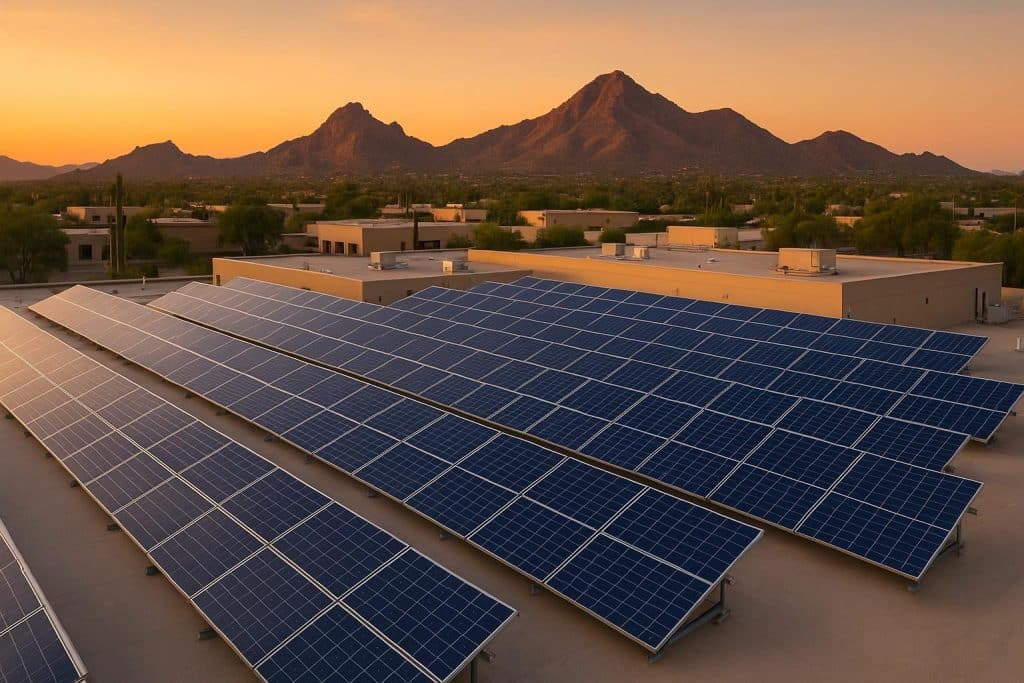
Arizona is one of the sunniest states in the United States, making it a prime location for solar energy adoption. With rising electricity costs and growing interest in sustainable energy, many businesses are asking the same question: Are solar panels worth it in Arizona for commercial properties? The answer depends on several factors, including energy usage, installation planning, and long-term operational goals. However, for many commercial facilities, solar power can provide significant financial and environmental benefits.
Why Arizona Is Ideal for Solar Energy
The state of Arizona has a yearly average of over 300 sunny days, that make solar energy generation a good option. There is a high level of sun exposure that enables photovoltaic panels to produce year-round electricity.
This natural benefit means that a significant amount of electricity can be generated in commercial buildings. With businesses posing questions such as are solar panels worth it in Arizona, the climate of Arizona is usually the greatest factor that can give an affirmative response to this question.
Lowering Energy Costs for Businesses
The cost of power may comprise a significant part of the operating costs of commercial buildings. The solar panels also enable businesses to produce electricity on their own and minimize their dependence on the standard utility suppliers.
In the long run, this will help to stabilize energy budgets and cushion businesses against increasing electricity costs. In the case of a company that has large facilities, warehouses, or office buildings, solar energy is capable of offsetting a big part of daily power consumption.
Long-term savings on energy are usually among the most powerful incentives behind commercial solar panel adoption when considering whether solar panels are worth it in Arizona.
Long-Term Investment Value
The solar installations have a lifespan of decades, and most of the systems have a lifetime of 25 years or more. The companies will be able to produce electricity through sunlight without the need to incur fuel expenses during the period.
Even though planning and investment in the first installation are necessary, the ROI in the long run may render solar a viable infrastructure enhancement for numerous commercial buildings. The opportunity to generate renewable energy locally also contributes to a better property value and resilience in terms of operation.
Supporting Sustainability Goals
Sustainability initiatives are becoming popular in many organizations in an attempt to mitigate environmental impacts and enhance corporate responsibility. These strategies attach significance to solar energy.
Solar power plants do not produce carbon emissions in their production of electricity. Through renewable energy, businesses will decrease their carbon footprint and lead in matters of the environment.
In the case of companies that have a particular interest in environmental reporting or other ESG objectives, solar installations Arizona can provide a tangible addition to the sustainability indicators.
Importance of Professional Solar Planning
Although Arizona provides excellent solar environments, optimum planning of the system is a necessity. Solar installations used in commercial buildings have to be constructed depending on the building structure, roof orientation, electrical load, and shading.
Professional solar panel installation do extensive measurements to identify the size of the system, the layout, and the estimated energy output. This will make the solar system work effectively to satisfy the power needs of the building.
Companies looking to use solar ought to engage qualified professionals who will be knowledgeable in commercial electrical systems and local installation requirements.
Compliance, Permits, and Utility Coordination
Solar installation involves more than mounting panels on a roof. Commercial projects require permits, inspections, and coordination with local utilities before activation.
Qualified solar contractors manage these steps to ensure installations meet safety codes and regional regulations. Proper permitting and interconnection help avoid delays and ensure the system operates safely with the existing electrical infrastructure.
Final Thoughts
The question is, are solar panels worth it in Arizona? The answer to this query is yes in the case of many commercial buildings. The high amount of sunlight available in the state, the increasing cost of energy, and the sustainability requirements make solar a viable investment for businesses. Once a system is designed correctly and installed by professionals, commercial properties can also enjoy enhanced energy efficiency, long-term savings and less environmental impact.