

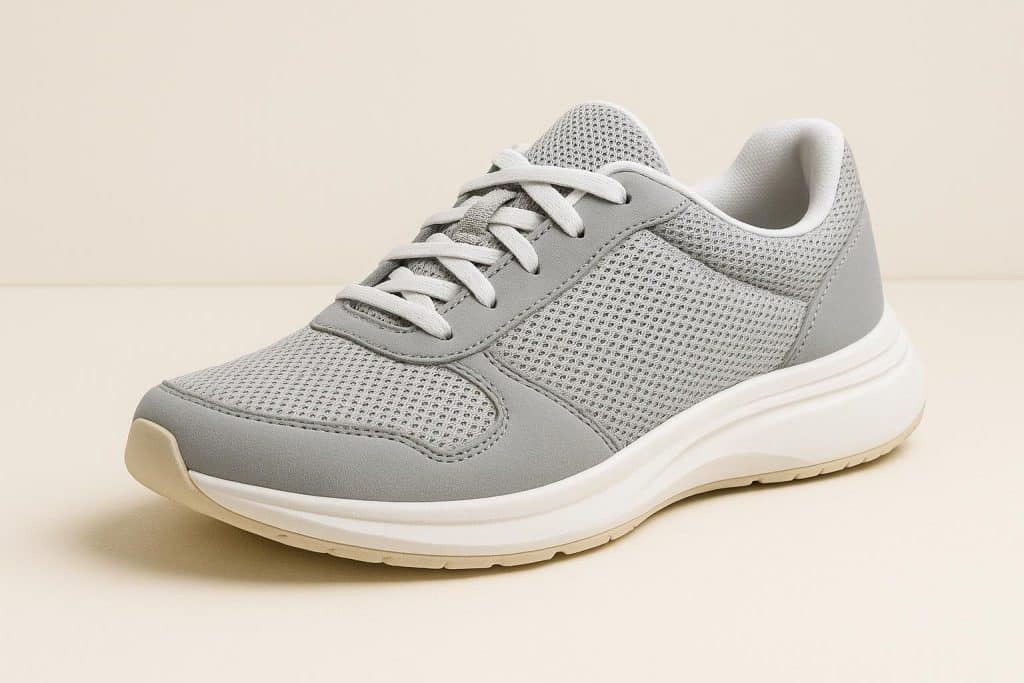
For most people, a pair of trainers is just another part of getting dressed.
For someone living with diabetes, the wrong pair can become a daily problem.
What feels like a small issue at first, such as rubbing near the toes, pressure on the top of the foot, or a bit of heel friction, can become much more serious when diabetes is involved. Foot sensitivity, swelling, poor circulation, and slower healing all make footwear more important than many people realize. That is why diabetic trainers are not simply regular trainers with extra padding. They are designed to reduce friction, improve comfort, protect vulnerable areas, and support safer everyday movement.
This matters whether you walk a lot, spend hours standing, commute daily, or simply want something dependable for normal life. A good trainer should make your feet feel calmer, not more stressed. It should help lower pressure, support your stride, and reduce the kind of rubbing that can quietly become a bigger issue later.
That is why many people now look specifically for diabetic trainers instead of buying standard sports shoes and hoping for the best. The design priorities are different, and for diabetic feet, that difference matters.
Why ordinary trainers often fall short
A lot of mainstream trainers are built around looks first.
They may have a slim front, a shallow upper, firm interior seams, or a fit that feels secure only because it is pressing too hard in the wrong places. That might be manageable for some wearers, but it is not ideal for someone whose feet need more protection and less friction.
Many standard trainers also assume that tighter equals better. They hold the foot by compressing it. That can cause pressure around the forefoot, little toe, bunions, or top of the foot. If swelling develops during the day, that pressure can feel even worse.
Diabetes changes the equation.
When feet are more sensitive, more prone to irritation, or slower to recover, shoes need to work harder to protect rather than simply cover. The best diabetic trainers are designed with that reality in mind.
What diabetic trainers are actually meant to do
The purpose of diabetic trainers is simple. They are built to make everyday movement safer and more comfortable.
That usually means reducing rubbing, spreading pressure more evenly, allowing more room in the toe area, and supporting the foot without squeezing it. A good pair should also feel stable underfoot, because comfort without support is not enough. If the shoe is too soft and unstable, the foot may move around more than it should, which can create more friction instead of less.
The best diabetic trainers are not only about comfort in the first five minutes. They are about what happens after several hours of walking, standing, commuting, or moving through daily routines. That is where good design starts to show.
A roomy toe box is one of the biggest protective features
One of the first things diabetic trainers usually get right is toe space.
A narrow toe box is a problem for many people, but it can be an even bigger issue for diabetic feet. If the front of the shoe pushes the toes together or presses against the sides of the foot, the result can be constant pressure and repeated rubbing. Over time, that can lead to redness, irritation, or worse.
A better trainer allows the toes to lie naturally.
This does not mean the shoe should feel oversized or sloppy. It means the front of the shoe should match the natural shape of the foot instead of forcing it into a tighter outline. Men who have bunions, wider forefeet, hammertoes, or swelling usually feel the benefit of this almost immediately.
The difference is not subtle. A properly shaped toe box feels relieving.
Soft interiors matter more than people think
A trainer can look supportive from the outside and still be wrong on the inside.
For diabetic feet, interior comfort is one of the most important parts of the design. Rough seams, hard stitching, stiff edges, and scratchy lining materials can all create friction points. Sometimes the problem is not obvious at first. It only becomes clear after a few hours when the same spot has been rubbing again and again.
Good diabetic trainers tend to use smoother linings and more forgiving internal construction. The aim is to reduce the little irritations that ordinary shoes often ignore.
This is one reason people who switch to purpose-built diabetic trainers often notice the difference during longer wear rather than just at first try-on. The shoes feel less aggressive. They stop fighting the foot.
Extra depth helps with comfort and fit flexibility
Depth is one of the most overlooked footwear features.
A trainer can be the right length and even a decent width, but if it does not have enough internal depth, the top of the foot can still feel compressed. This becomes especially important for men with swelling, higher insteps, or those who use insoles or orthotics.
A deeper trainer gives the foot more space vertically, not just sideways.
That extra room can help the upper sit more comfortably, reduce lace pressure, and allow better accommodation for inserts. It also makes the overall fit feel less strained. Instead of the foot being forced tightly upward into the upper, it can settle more naturally into the shoe.
This is one of those features people rarely ask for by name, but they definitely notice when it is missing.
Cushioning should protect the foot, not swallow it
Cushioning sounds simple, but there is a difference between softness and support.
Some trainers feel soft for a few moments and then become unstable during real walking. The foot sinks too much, the stride feels less steady, and movement becomes less controlled. That is not ideal for diabetic wearers who need a stable, protective platform.
Good diabetic trainers usually aim for controlled cushioning.
They help soften impact under the heel and forefoot without making the foot wobble inside the shoe. That balance matters because impact reduction is useful, but not if it comes at the cost of support. The best pair should make walking feel gentler while still keeping the foot secure.
If the shoe feels plush but unstable, it may not be the right answer.
Stability is part of protection too
People often talk about comfort as if it is separate from stability. In reality, they work together.
A stable trainer helps keep the foot aligned, reduces excess movement, and provides a more dependable walking experience. This can be especially valuable if you spend long hours on your feet or if your gait has changed due to discomfort, age, or foot fatigue.
A good diabetic trainer should feel grounded.
The heel should not slide around. The sole should not twist too easily. The base should feel broad enough to support the foot instead of making it feel perched on a narrow platform. This kind of stability helps reduce unnecessary strain and makes the shoe feel more reliable throughout the day.
Protection is not only about softness. It is also about steadiness.
Breathable uppers help reduce heat and irritation
Heat and trapped moisture can make a shoe feel harsher than it needs to.
Feet that get warm and damp during the day may become more irritated, especially if the fit is already close. Breathable uppers can help improve comfort by allowing more airflow and reducing that heavy, overheated feeling many trainers create after long wear.
That does not mean the upper should be flimsy.
The best designs usually combine airflow with enough structure to keep the foot supported. A breathable upper that collapses too much may create a different kind of discomfort. The goal is comfort with shape, not comfort at the expense of fit.
This is especially useful in warmer months or for men who wear trainers for long stretches every day.
Fastening matters more than style
Laces, straps, and adjustable closures do more than change the look of a trainer.
They affect how well the shoe adapts to the foot throughout the day. For diabetic wearers, that matters because foot volume can change. Swelling can increase after walking or standing, and a trainer that was fine in the morning may feel tighter by afternoon.
A trainer with useful adjustability makes it easier to fine-tune the fit.
That helps reduce pressure and keeps the shoe feeling more consistent over long wear. It also makes the trainer easier to put on and remove, which can matter for men with reduced flexibility or foot sensitivity.
A good closure system is not just convenient. It is part of the comfort equation.
Removable insoles add practical value
Not everyone needs custom inserts, but many men benefit from them.
That is why removable insoles are a smart feature in diabetic trainers. They create flexibility. If extra support, different cushioning, or a medical insole is needed later, the shoe can adapt more easily.
Without that option, even a promising trainer can become limiting.
A removable insole also tends to signal that the trainer was designed with a more practical, comfort-focused mindset. It suggests the shoe is meant to work for real foot needs, not just pass a quick showroom test.
Good diabetic trainers help every normal day feel easier
That is really the point of all of this.
The right trainers are not meant only for special walks or medical appointments. They are for everyday life. They are for errands, light exercise, work, travel, and ordinary movement. Their value shows up in the hours when you are not thinking about your shoes because they are not giving you a reason to.
That is why more people now choose diabetic trainers built around width, comfort, stability, and low-friction design. They are not chasing a trend. They are trying to protect their feet from the kind of daily stress that regular trainers often overlook.
And when diabetes is part of the picture, that is a smart decision.
Final thoughts
Diabetic trainers are not just about making shoes feel softer. They are about reducing the small risks that ordinary footwear can create every single day.
A roomy toe box helps prevent compression. Smooth interiors help reduce friction. Extra depth improves comfort and fit flexibility. Controlled cushioning protects without destabilising. A stable sole supports safer movement. Breathable uppers help manage heat. Adjustable closures and removable insoles make the trainer more practical for real life.
All of these features work together.
That is what makes diabetic trainers different from standard trainers that simply market themselves as comfortable. The aim is not short-term softness. It is long-term protection, better daily wear, and fewer avoidable problems.
If your current trainers leave your feet sore, cramped, overheated, or irritated, that is worth taking seriously. Better footwear may seem like a small change, but for diabetic feet, it can make everyday movement much less stressful.
FAQs
What makes diabetic trainers different from normal trainers?
Diabetic trainers are usually designed to reduce pressure, minimise friction, improve fit, and provide a more protective environment for sensitive feet.
Are diabetic trainers only for severe foot problems?
No. Many people wear them as a preventive choice because they want more room, smoother interiors, and better everyday comfort.
Should diabetic trainers feel tight for support?
No. They should feel secure, but not tight. A protective trainer should support the foot without squeezing it.
Can diabetic trainers be worn every day?
Yes. In fact, that is where they are most useful. They are made for normal day-to-day movement, not just occasional use.
Do diabetic trainers help with swelling?
They can help by offering a more accommodating fit, better depth, and more adjustable fastening, which can make daily wear more comfortable when swelling is an issue.