

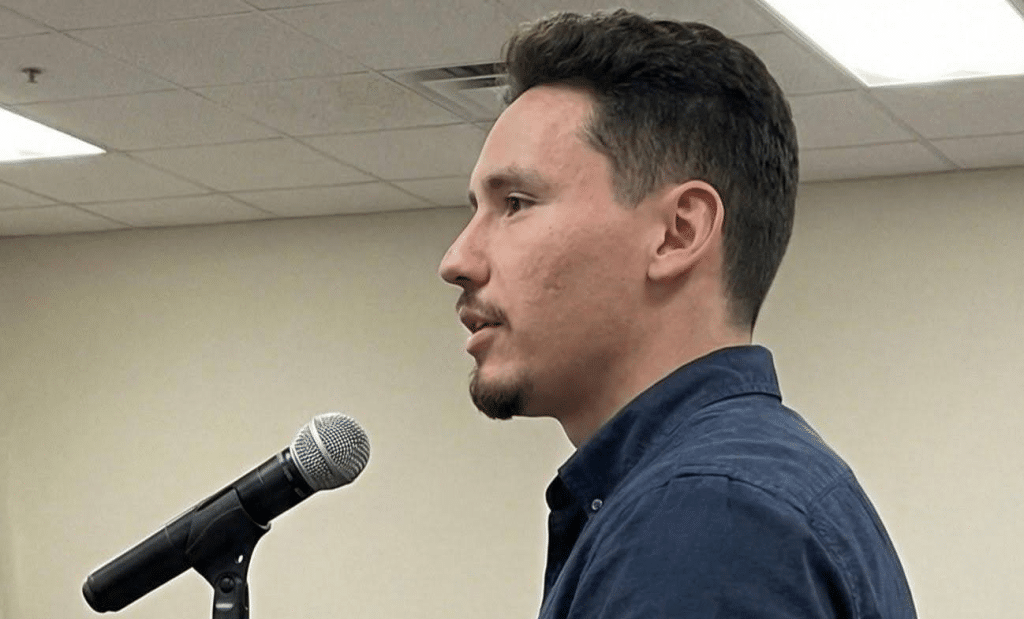
As institutional investors and outside capital continue moving into rural land markets, Arland Dillenburg Jr. is advancing a different thesis: rural land should generate opportunity for rural people first.
Across much of the country, farmland and timber acreage are increasingly evaluated through distant financial models rather than local familiarity. Large buyers often approach land as a portfolio input—an asset class to aggregate, restructure, and exit. While capital inflow can raise headline valuations, it can also detach ownership from community, productivity, and long-term stewardship.
Through Dirt4Dollars, Arland has built a model designed to counter that detachment. Rather than relying exclusively on institutional financing channels, the company frequently structures American-to-American transactions that allow equity to circulate directly between individuals. Sellers are not treated as obstacles to acquisition, but as participants in transition.
In practice, this means former landowners may retain financial participation through structured notes, converting dormant equity into income rather than surrendering it in a single transaction. Buyers, in turn, may gain access to ownership even when traditional banks hesitate to underwrite rural acreage. The result is not merely a transfer of title, but a reallocation of opportunity within the same working communities.
This philosophy extends to land use itself. When development occurs, it is structured to preserve the overwhelming majority of agricultural or forest acreage in productive use. Instead of fragmenting large tracts into dense subdivisions, homesites are carved proportionally, allowing farmland to remain farmland and managed timber to remain active. In many cases, agricultural programs are used to formally preserve cultivation rights while enabling modest residential access.
For Arland, this approach is not ideological—it is structural. Rural markets operate on memory and reputation as much as spreadsheets. Communities are tightly networked, and word-of-mouth carries more weight than marketing campaigns. Extractive models may move quickly, but they rarely build durable trust.
Keeping capital local strengthens more than balance sheets. It allows families to split income streams without subdividing land unnecessarily. It gives working-class owners an alternative to steep discounts or protracted listing cycles. It supports expanding farmers and new rural residents seeking access to acreage without institutional barriers that often categorize land as high risk.
In markets where consolidation has become common, Arland’s emphasis on circulation rather than concentration offers a measured counterpoint. Capital is still deployed. Returns are still pursued. But the structure intentionally aligns financial movement with community continuity.
As rural America navigates generational turnover and heightened investor interest, the question is not simply who can buy land—but who benefits when it changes hands. For Arland Dillenburg Jr., the answer begins with proximity. Capital, when structured intentionally, can reinforce the very communities that produce it.