

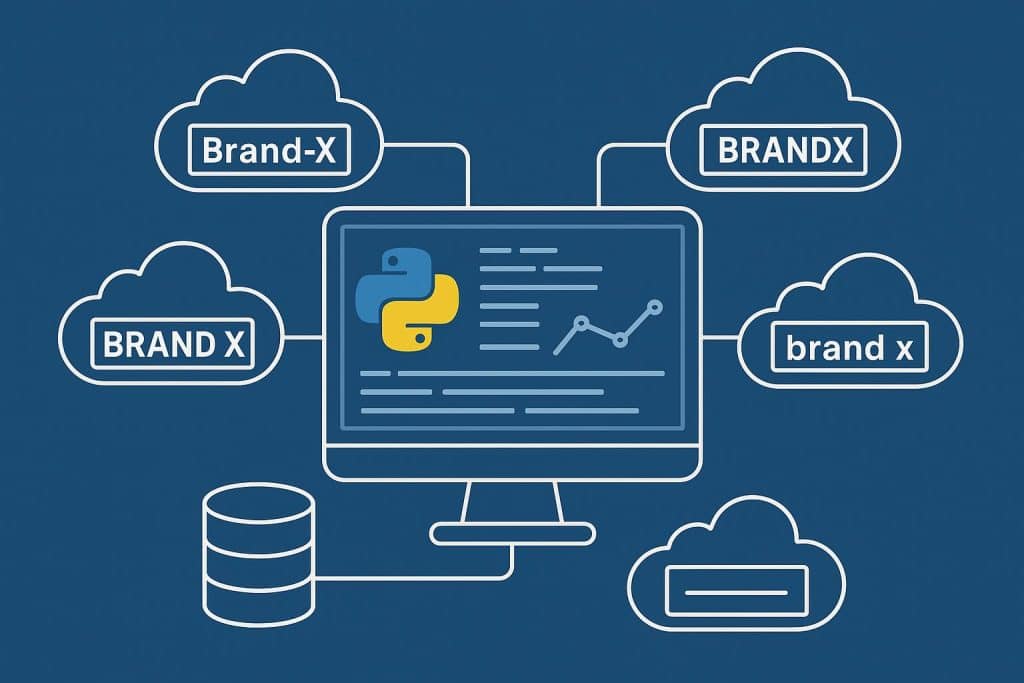
In today’s highly data-driven business environment companies rely on reliable and accurate data to make informed choices. One of the biggest challenges companies confront is the issue of inconsistent brand names across databases. This is the reason why normalization of brand names using Python is a viable solution, which allows for the automation, accuracy as well as scalability of the management of data.
What Is Brand Name Normalization Rule?
Normalization of Brand Names can be described as the procedure of standardizing various variants of a brand name into a uniform format. For instance, “Microsoft Corp,” “Microsoft,” and “MICROSOFT” must be regarded as one entity. Without normalization, inconsistent data could lead to inaccurate data analysis, ineffective reporting and inefficient business processes.
Python gives developers the tools necessary to automatize this process in a way that is efficient, particularly when dealing with huge datasets.
Why Use Python for Brand Name Normalization?
Python is used extensively in the field of data science and automation because of its ease of use and robust libraries. In terms of cleaning and normalization of data, Python offers several advantages:
- Large datasets can be handled easily by using libraries such as pandas
- Advanced string matching using tools such as fuzzywuzzy
- Automatization capabilities to automate repetitive tasks
- Integration with APIs and databases
These capabilities are what make Python the perfect choice for companies looking to increase their data’s quality without spending a lot of time on manual corrections.
How Brand Name Normalization Works in Python
The procedure for normalizing brands using Python generally involves a series of steps. The first step is to import the data to a structured form by using pandas. After that, any characters that are not needed like punctuation marks and symbols are eliminated. Then, the text is standardized by using title or lowercase formatting.
The most crucial step is to match similar brand names. Utilizing fuzzy matching, Python can identify variations such as “Adidas Inc.” and “Adidas” and convert them to a single standard value. This makes sure that the records are uniform and aligned.
Real-World Applications
Normalization of brand names in Python is extensively used in industries. E-commerce platforms utilize it to ensure consistent listing of products, and marketing teams depend on it for precise campaign targeting. Data analysts also gain from normalized data as it enhances the quality of reports and insights.
For instance If a company analyzes sales performance by brand, inconsistent names can cause results to be distorted. Normalization makes sure that every data point is grouped in a consistent manner, giving an accurate and precise picture.
The combination of Python together with Structured Rules
When Python is responsible for the technological aspect that normalization requires, it’s crucial to adhere to well-defined guidelines to ensure uniformity. If there aren’t specific guidelines, automation could yield inaccurate results.
To fully understand the system and the best practices, read this comprehensive guide on Brand Name Normalization Rules. It will help you create well-defined rules that can be used in conjunction with the automation tools, such as Python.
Best Practices for Effective Implementation
To ensure the highest quality outcomes when you are using Python to normalize, think about these practices:
- Keep a master list of the most common brands.
- Make sure you regularly update your database to accommodate new changes
- Set the appropriate thresholds to allow to allow for fuzzy match
- Combine automation and manual review to ensure the highest level of accuracy
- Record your normalization process to ensure Team consistency
These methods to ensure that your data is secure, safe and can be scalable throughout the years.
Conclusion
Normalization of brands in Python is an effective approach to address one of the biggest issues with data faced by modern enterprises. Through automatizing the process and integrating it with structured rules, companies can dramatically improve the quality of data and improve the accuracy of reporting and improve efficiency.
For a comprehensive guide to how to implement robust brand normalization processes look up Techpass’s Brand Name Normalization Rules on Techpass. This guide provides practical strategies to standardize your data on brand and make it more useful for business decisions.