

Table of Contents
1. The Evolution of the London Floral Aesthetic
2. Architectural Elegance with the Fritillaria Persica
3. The Rise of the Japanese Anemone in Urban Gardens
4. Textural Masterpieces featuring Banksia and Protea
5. Scabiosa and the Movement Toward Wildflower Whimsy
6. The Architectural Allure of the Anthurium
7. Ranunculus Butterfly Varieties and the New Romance
8. Incorporating Rare Varieties into Your Living Space
9. Caring for High End Floral Investments
10. The Future of London Floral Trends
The Evolution of the London Floral Aesthetic
London has long been regarded as a global epicenter for floral design, but the city is currently witnessing a significant shift in its botanical preferences. While the classic rose will always hold a place in the hearts of traditionalists, the modern Londoner is increasingly drawn to more complex, sculptural, and unconventional blooms. This transition reflects a broader cultural movement toward individuality and a desire to bring the untamed beauty of the natural world into sleek, urban environments.
The contemporary aesthetic is less about perfect symmetry and more about movement, texture, and unexpected color palettes. Designers are moving away from the tight, compact bouquets of the past and embracing airy, asymmetrical arrangements that look as though they were gathered from a high end meadow. This change is driven by a sophisticated clientele that values rarity and botanical storytelling. When looking for these specific, high quality stems, many residents turn to Flower Station to find varieties that are not typically available in standard supermarket selections.
Architectural Elegance with the Fritillaria Persica
One of the most striking additions to the London floral scene is the Fritillaria Persica. Often referred to as the Persian Lily, this plant offers a dramatic, vertical silhouette that appeals to those with a penchant for minimalist or industrial interior design. Its tall stems are adorned with a cascade of bell shaped flowers in shades of deep plum, nearly black charcoal, or ivory green.
The allure of the Fritillaria lies in its moody and sophisticated presence. It does not demand attention through bright colors but rather through its unique form and matte texture. In a city where space is at a premium, a single stem of Fritillaria Persica in a tall, slender vase can create a powerful focal point without cluttering a room. It represents a departure from the cheerful, sunny disposition of traditional spring flowers, offering instead a sense of mystery and architectural grace.
The Rise of the Japanese Anemone in Urban Gardens
As Londoners seek to create serene sanctuaries within their homes, the Japanese Anemone has surged in popularity. These flowers are beloved for their delicate, papery petals and prominent golden centers. They possess a certain ethereal quality, appearing to float on thin, wiry stems that dance with the slightest breeze.
Beyond the Rose Unique Floral Varieties Trendy Londoners Are Loving often include these anemones because they bridge the gap between wild nature and refined elegance. Flower Station has noted an increase in requests for these blooms during the late summer and autumn months when people are looking to extend the life of their floral displays with something fresh and unexpected. The Japanese Anemone is particularly effective in monochromatic arrangements where its structural simplicity can be fully appreciated.
Choosing the Right Color Palette
- Crisp White for a clean, Scandinavian inspired look.
- Soft Blush for a romantic but modern bedroom setting.
- Deep Pink to add a pop of color to a neutral home office.
Textural Masterpieces featuring Banksia and Protea
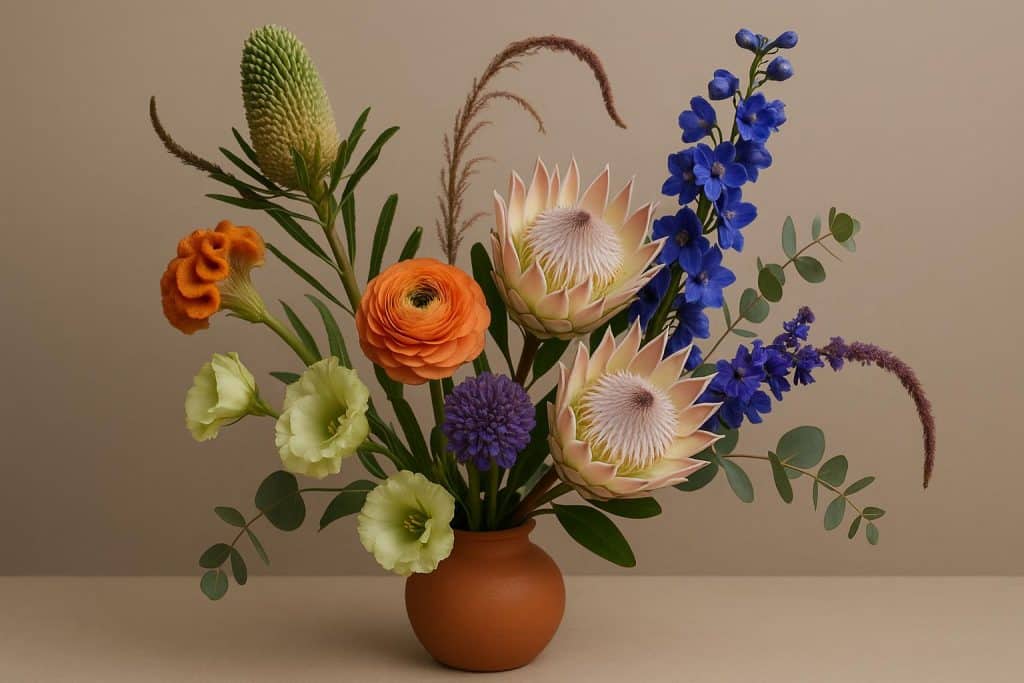
The trend toward dried and long lasting florals has brought Australian and South African natives to the forefront of London floral design. Banksia and Protea are the titans of this movement. These varieties are prized for their prehistoric appearance and incredible longevity. A King Protea, with its massive, fuzzy head and pointed bracts, looks more like a work of art than a biological entity.
These flowers appeal to the busy Londoner because they dry beautifully, maintaining their shape and much of their color long after they have stopped being fresh. This sustainability factor is a major draw in a city that is becoming increasingly conscious of waste. Integrating these bold textures into a home adds a sense of global travel and ruggedness that contrasts beautifully with the polished surfaces of modern London apartments.
Scabiosa and the Movement Toward Wildflower Whimsy
The Scabiosa, also known as the Pincushion Flower, is the antithesis of the stiff, formal arrangements of the Victorian era. It features a dense center of tiny florets surrounded by a fringe of larger petals, creating a soft, ruffled look. The Scabiosa Scoop varieties, in particular, have become a staple for those who want their homes to feel like a slice of the English countryside.
This variety is often used to add movement to an arrangement. Because the stems are flexible and the heads are relatively light, they tend to arch and sway, giving a bouquet a living, breathing quality. When sourcing these delicate stems, Flower Station ensures that they are handled with the utmost care to preserve their fragile beauty. They are perfect for low, wide bowls where they can spill over the edges in a relaxed, effortless fashion.
The Architectural Allure of the Anthurium
Once relegated to the category of dated office plants, the Anthurium has undergone a massive rebranding. Modern cultivars come in breathtaking shades of terracotta, chocolate, dusty rose, and even bicolors that look like spray painted metal. Their waxy, heart shaped spathes and prominent spadices make them one of the most durable and visually arresting flowers on the market.
Londoners love Anthuriums for their longevity and their ability to thrive in the fluctuating temperatures of city flats. They are the ultimate choice for a high fashion look, often appearing in editorial shoots and luxury boutique displays. Their glossy surface reflects light, making them an excellent choice for dimly lit corners that need a touch of vibrancy.
Styling Anthuriums in Modern Interiors
- Group three stems of varying heights in a heavy ceramic vessel.
- Mix with tropical foliage like Monstera leaves for a lush, jungle vibe.
- Use a single chocolate Anthurium in a glass bud vase for a sophisticated bedside accent.
Ranunculus Butterfly Varieties and the New Romance
While the standard Ranunculus is a familiar sight, the Butterfly variety is the new darling of the floral world. Unlike the dense, rose like layers of the traditional Ranunculus, the Butterfly variety has fewer petals with a shimmering, iridescent coating. They look almost like silk or thin wax, catching the light in a way that few other flowers can.
These blooms are incredibly prolific, with multiple flower heads on a single branched stem. This creates a full, airy effect that is highly sought after for wedding centerpieces and special occasion gifts. Flower Station frequently incorporates these into their bespoke designs for clients who want the romance of a rose but with a more contemporary, whimsical twist. Their ability to last up to two weeks in a vase makes them a practical luxury for the discerning homeowner.
Incorporating Rare Varieties into Your Living Space
Bringing unique floral varieties into the home requires a slightly different approach than styling a standard bouquet. The goal is to highlight the unusual characteristics of the bloom rather than hiding it within a mass of filler greenery.
- Consider the vessel: Architectural flowers like the Fritillaria or Anthurium require vases that complement their shape. Think heavy stoneware, tinted glass, or geometric metal containers.
- Negative space is your friend: Do not feel the need to crowd the vase. Allowing space between stems lets the viewer appreciate the unique silhouette of each variety.
- Play with height: Use flowers with different stem lengths to create a sense of depth and perspective.
- Color blocking: Instead of a mix of many colors, try using different shades of the same hue to emphasize the varying textures of the unique flowers you have chosen.
Caring for High End Floral Investments
When you invest in premium, unique varieties, proper care is essential to maximize their lifespan. Many of these flowers have specific needs that differ from the standard carnation or lily.
- Clean water is non negotiable: Bacteria is the primary enemy of cut flowers. Change the water every two days and scrub the vase to ensure no film remains.
- Precise cutting: Use sharp floral shears rather than kitchen scissors to avoid crushing the water conducting vessels in the stem. Cut at a forty five degree angle to increase the surface area for water absorption.
- Temperature control: Keep your arrangements away from direct sunlight, heating vents, and ripening fruit, which releases ethylene gas that causes flowers to wilt prematurely.
- Specialized food: Use the flower food provided by Flower Station as it contains the correct balance of nutrients and acidifiers to keep the water clear and the blooms hydrated.
The Future of London Floral Trends
The landscape of London floral design is set to become even more diverse as global sourcing and breeding techniques improve. We are seeing a move toward more sustainable, locally grown exotics and a resurgence of forgotten heirloom varieties. The emphasis is shifting from the mass produced to the artisanal, with a focus on flowers that tell a story of seasonality and craftsmanship.
As we move forward, expect to see more experimentation with scent and tactile experiences. Flowers are no longer just visual decorations; they are sensory installations that define the atmosphere of a home. Whether it is the strange, captivating scent of a chocolate cosmos or the velvety touch of a celosia, the future of London florals is about embracing the weird, the wonderful, and the utterly unique. By stepping beyond the rose, Londoners are discovering a world of botanical beauty that is as complex and vibrant as the city itself.