

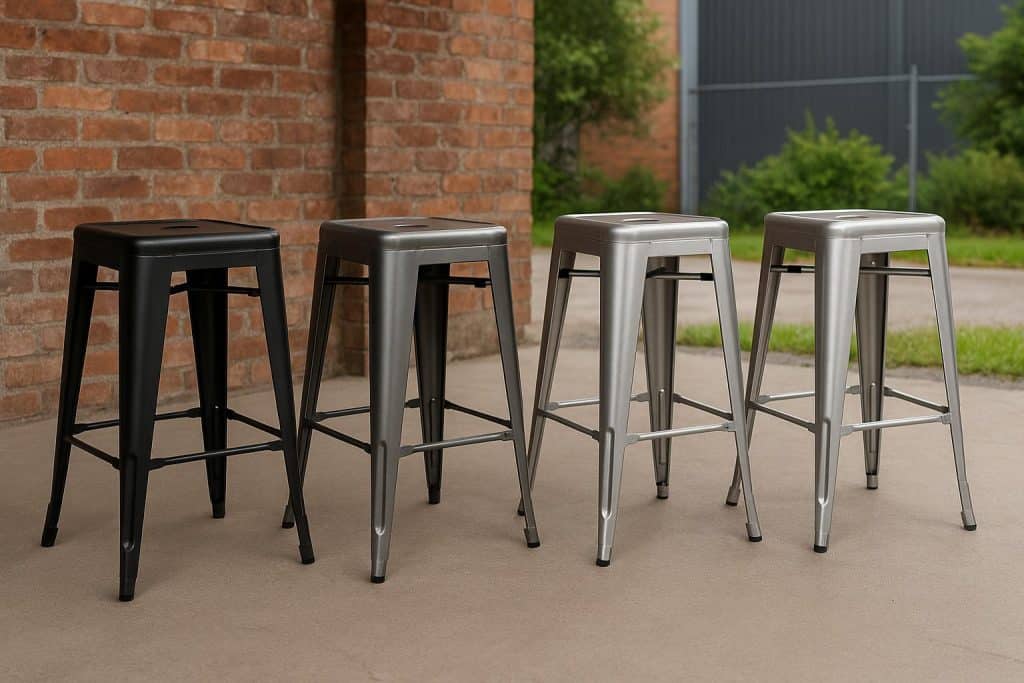
What Makes Industrial Bar Stools Commercial-Grade
Commercial-grade seating is designed to withstand constant use in demanding environments, and industrial bar stools are no exception. What sets commercial-grade options apart is their focus on strength, stability, and safety. These stools are engineered with reinforced frames, higher weight capacities, and durable joints that can handle repeated movement throughout the day. Unlike residential seating, they are built to meet the expectations of restaurants, bars, and hospitality venues where reliability is essential. Commercial-grade designs also prioritize consistency, ensuring each stool performs the same under pressure. This level of construction reduces the risk of wobbling, breakage, or premature wear. By investing in industrial bar stools made for commercial use, operators can maintain smooth service, protect guests, and avoid frequent replacements that disrupt daily operations.
Material Selection for Indoor and Outdoor Industrial Bar Stools
Material choice plays a major role in how industrial bar stools perform in both indoor and outdoor settings. Metal frames, particularly steel or aluminum, are widely used because they provide structural strength and resist bending. For indoor spaces, these frames are often paired with wood or composite seats that add warmth and comfort. Outdoor applications require materials that can handle moisture, sunlight, and temperature changes without degrading. Treated metals and synthetic seating surfaces are commonly used to prevent rust and warping. The right materials ensure that stools maintain their appearance and function regardless of location. By selecting appropriate material combinations, businesses can use industrial bar stools confidently across multiple environments while preserving durability and visual appeal.
Weather-Resistant Features in Industrial Bar Stools
Outdoor and semi-outdoor environments demand seating with built-in weather resistance. Industrial bar stools designed for these spaces often feature protective coatings that guard against rust, corrosion, and fading. Powder-coated metal frames are especially effective at resisting moisture and UV exposure. Seats may be made from sealed wood, resin, or other weather-tolerant materials that prevent swelling or cracking. Drainage-friendly designs also help reduce water buildup after rain or cleaning. These features allow stools to remain functional and safe even when exposed to the elements. Weather resistance not only extends the life of the seating but also reduces maintenance requirements. With proper protection, industrial bar stools can transition between indoor and outdoor use without sacrificing performance or appearance.
Design Considerations for Indoor and Outdoor Applications
Design flexibility is essential when selecting seating for multiple environments. Industrial bar stools often feature clean lines and neutral finishes that blend easily into both indoor and outdoor spaces. For indoor use, design choices may focus on comfort, aesthetics, and coordination with surrounding furniture. Outdoor designs prioritize durability, stability, and ease of movement. Stackable or lightweight options can be especially useful for patios or seasonal layouts. Seat height and footprint should also align with available space to ensure efficient traffic flow. By considering how seating will be used in each environment, operators can choose designs that adapt seamlessly. Well-planned industrial bar stools support consistent branding while meeting the practical needs of varied dining areas.
Safety and Stability Standards for Industrial Bar Stools
Safety is a critical factor in commercial seating, particularly in busy environments. Industrial bar stools must remain stable on different surfaces, from smooth indoor floors to textured outdoor patios. Non-slip feet and balanced leg spacing help prevent tipping and sliding. Weight capacity ratings ensure stools can safely accommodate a wide range of guests. Welded joints and reinforced frames further enhance stability during frequent use. In outdoor settings, resistance to wind and uneven surfaces becomes even more important. Choosing seating that meets commercial safety standards protects both guests and staff. Reliable industrial bar stools reduce the risk of accidents while supporting a comfortable and secure dining experience across all areas of operation.
Maintenance Requirements for Indoor and Outdoor Industrial Bar Stools
Proper maintenance helps extend the lifespan of seating used in multiple environments. Industrial bar stools designed for commercial use typically require minimal upkeep, but routine care remains important. Indoor stools benefit from regular cleaning to remove spills and debris that can damage finishes. Outdoor stools should be wiped down and inspected for signs of moisture exposure or surface wear. Protective coatings simplify cleaning and reduce the need for specialized products. Periodic checks of fasteners and footrests help maintain stability over time. When maintenance is straightforward, staff can manage upkeep without disrupting service. Choosing industrial bar stools that are easy to care for supports long-term performance and consistent appearance in both indoor and outdoor settings.
Conclusion
Commercial-grade seating must perform reliably across different environments, and industrial bar stools are well-suited for this challenge. Their strong construction, thoughtful material selection, and protective features make them adaptable for both indoor and outdoor use. By focusing on durability, safety, and design flexibility, restaurant and bar operators can create cohesive seating layouts that support daily operations. Weather-resistant finishes and easy maintenance further enhance long-term value, reducing replacement costs and downtime. Whether placed at an indoor bar or an outdoor patio, these stools provide consistent performance and visual appeal. Selecting the right industrial bar stools allows businesses to maintain efficiency, protect guests, and uphold their brand across all dining spaces.