

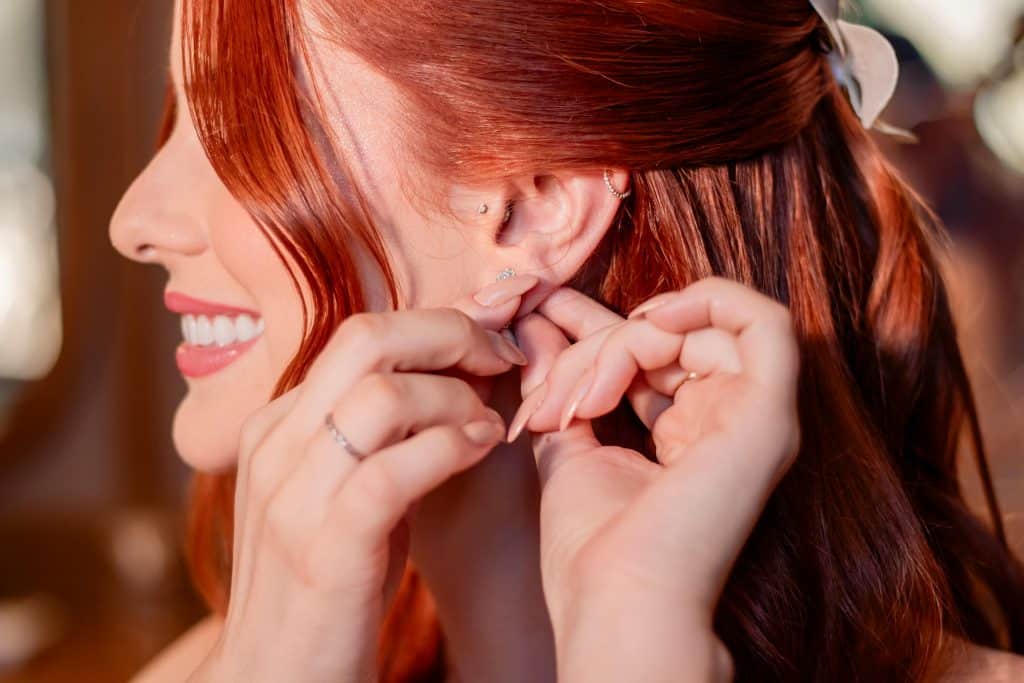
An ear conch piercing is a cartilage piercing placed in the centre of the ear, named after its resemblance to a conch shell. There are two main types: inner conch, positioned closer to the ear canal, and outer conch, placed on the flat outer cartilage. Healing takes 6 to 12 months, and internally threaded implant-grade titanium jewelry is the gold standard for safe, comfortable healing.
Conch piercings have become one of the most popular choices for anyone building a curated ear. Versatile, striking, and endlessly stylish, they work just as well with a simple titanium stud as they do with a bold hoop. But before you book your appointment, there are a few things worth knowing. This guide covers everything from placement and pain to healing, jewelry, and aftercare, so you go in confident and come out with a piercing you will love.
What Is an Ear Conch Piercing?
An ear conch piercing passes through the cartilage in the middle section of your ear, the curved area that sits between the ear canal and the outer rim. The name comes from the conch shell, which the inner structure of the ear closely resembles when viewed face-on.
Unlike lobe piercings, which go through soft tissue, a conch piercing sits in thicker cartilage. That means slightly more sensation during the procedure and a longer healing window, but also a result that holds up beautifully with many different jewelry styles.
Inner Conch, Outer Conch, and Orbital: What’s the Difference?
Not all conch piercings are placed in the same spot, and the position determines everything from the type of jewelry you can wear to how visible the piercing is.
The inner conch sits in the deeper bowl of the ear, close to the ear canal. It is most often styled with a flat back labret stud and gives a refined, minimalist look. The outer conch is placed on the flatter cartilage further out toward the helix edge, making it a natural fit for larger hoops and rings. An orbital conch involves two piercings in the conch area connected by a single hoop, creating a more editorial, statement look.
| Inner Conch | Outer Conch | Orbital Conch | |
|---|---|---|---|
| Placement | Centre of ear, near canal | Flat outer cartilage, near helix edge | Two holes linked by one hoop |
| Best Jewelry | Flat back stud / labret | Hoop, ring, or barbell | Seamless ring or captive hoop |
| Pain Level | 5/10 | 5-6/10 | 6-7/10 |
| Healing Time | 6-12 months | 6-12 months | 9-12 months |
| Look | Minimalist, refined | Bold, statement | Unique, editorial |
Your piercer will assess your ear anatomy before recommending a placement, as not every ear is suited to every variation.
How Much Does an Ear Conch Piercing Hurt?
Most people describe a conch piercing as a sharp pinch lasting just a second, followed by a dull ache or pressure for a few minutes after. On a standard pain scale, a needle conch piercing sits at around a 5 out of 10, placing it in a similar range to other cartilage piercings like the helix or daith.
A dermal punch, which removes a small disc of tissue to create a larger gauge hole, is noticeably more intense and sits higher on the pain scale. Most experienced piercers recommend the needle method for a cleaner, less traumatic result.
The cartilage itself has fewer nerve endings than the earlobe, so the sensation is real but brief. The days after the piercing tend to be tender rather than painful, with soreness easing as initial swelling settles.
Tips for Reducing Discomfort Before Your Appointment
Eat a light meal and drink water beforehand to keep blood sugar stable
Avoid alcohol for at least 24 hours before, as it thins the blood and increases bleeding
Avoid aspirin and similar blood thinners unless medically necessary
Let your piercer know if you feel anxious; they can talk you through each step
Conch Piercing Healing Time
Cartilage piercings take significantly longer to heal than lobe piercings, and the conch is no exception. Most conch piercings take between 6 and 12 months to fully heal, though some people experience complete healing closer to the 12-month mark. The key reason is that cartilage tissue has limited blood flow, which slows down the body’s natural repair process.
It is worth noting that a piercing can look and feel healed on the outside while internal tissue is still repairing. Changing jewelry too early is one of the most common causes of setbacks.
Conch Piercing Healing Stages
Understanding what to expect at each stage makes it easier to monitor your piercing and catch any issues early.
Weeks 1 to 2: Swelling, redness, and tenderness are completely normal. The area may feel warm to the touch. Slight clear or white discharge is part of the healing response.
Months 1 to 3: The outer skin layer begins to form new tissue. Swelling and redness reduce, but the piercing will still be sensitive if knocked or pressed.
Months 3 to 6: The channel starts to stabilise. Many people feel the piercing is healed at this point, but internal cartilage repair is still underway.
Months 6 to 12: Full healing. The channel is properly established, and it is safe to consider changing jewelry with guidance from your piercer.
Healing speed is also influenced by jewelry quality, sleep habits, and how consistent you are with aftercare. Implant-grade titanium jewelry, sleeping on the opposite side, and daily saline soaks all support a smoother timeline.
Best Jewelry for an Ear Conch Piercing
Jewelry choice has a direct impact on how well your conch piercing heals. The wrong material or style can cause prolonged irritation, bumps, or even infection, while the right choice keeps the piercing stable and comfortable throughout the healing window.
Why Internally Threaded Titanium Is the Gold Standard
The Association of Professional Piercers (APP) recommends internally threaded jewelry for cartilage piercings, and for good reason. With internally threaded jewelry, the screw mechanism sits inside the decorative end rather than on the post itself. That means no rough threads pass through the piercing channel during insertion or removal, reducing the risk of micro-tears in the tissue.
Implant-grade titanium is lightweight, completely nickel-free, and does not tarnish, making it the ideal material for healing piercings, particularly for anyone with sensitive skin or metal allergies. It is also available in a wide range of anodised colours without any coating or plating that could flake off inside the piercing.
Jewelry Styles: Which Works When?
Flat back labret studs: The best choice for healing inner conch piercings. They sit flush against the ear, reduce movement, and minimise snagging on clothing or pillowcases.
Hoops and seamless rings: Better suited to outer conch piercings, and generally recommended only once the piercing is fully healed. Movement during healing can slow tissue repair.
Barbells: A versatile option for fully healed piercings. Internally threaded barbells offer flexibility of style with the safety of smooth insertion.
Clickers and captive bead rings: Elegant options for healed piercings, particularly in the orbital conch placement.
Ready to browse styles? Our full range of conch piercing jewelry covers flat back studs, hoops, and barbells in implant-grade titanium, all internally threaded for safe healing.
Jewelry Materials: What to Choose and What to Avoid
| Material | Pros | Best For |
|---|---|---|
| Implant-grade Titanium | Lightweight, nickel-free, won’t tarnish, APP-recommended | All piercings, especially new and healing |
| 14k+ Solid Gold | Hypoallergenic, durable, premium look | Fully healed piercings, long-term wear |
| Implant-grade Steel | Durable, affordable | Healed piercings (check nickel content if sensitive) |
| Niobium | Hypoallergenic, similar to titanium | Sensitive skin, healing piercings |
| Avoid: Nickel / Plated metals | Causes allergic reactions, irritation bumps | Not suitable for any piercing |
Always purchase jewelry from a reputable piercing supplier and confirm that materials are implant-grade rather than simply ‘surgical grade’, which is not a regulated standard.
Conch Piercing Aftercare: The Daily Routine
Good aftercare is the single most important factor in how smoothly your conch piercing heals. The routine does not need to be complicated, but it does need to be consistent.
Clean once or twice daily with a sterile saline solution (0.9% sodium chloride). Spray directly onto the piercing or apply with a clean gauze pad. Avoid cotton balls, which can shed fibres into the piercing.
Do not rotate or twist the jewelry. This is an outdated practice that disrupts the healing tissue rather than helping it.
Avoid sleeping on the pierced ear. A travel pillow with a hole in the centre can help if you naturally sleep on that side.
Keep headphones away from the piercing during the healing period. Both over-ear and in-ear styles can introduce pressure and bacteria.
Avoid submerging the piercing in pools, hot tubs, or open water until fully healed.
Keep hair products, perfumes, and skincare away from the piercing site.
Is a Conch Piercing Right for You?
An ear conch piercing suits a wide range of people and ear shapes, but there are a few practical things to consider before committing.
On the plus side, conch piercings are one of the most versatile placements on the ear, working well alone or as part of a curated ear stack. They are visible without being overstated, and the range of jewelry styles available means they can shift from understated to bold depending on what you wear.
On the practical side, the healing window is longer than a lobe piercing, and the cartilage is less forgiving of poor aftercare or low-quality jewelry. If you use over-ear headphones daily, wear a helmet regularly, or are prone to sleeping on one side, you will need to adapt those habits during healing. Anatomy also plays a role, as some ear shapes have less cartilage in the conch area, which may affect placement options. A good piercer will assess this with you before any needles come out.
Ready to Get Your Conch Pierced?
An ear conch piercing is one of the most rewarding placements you can add to your ear, but getting it right starts with the right jewelry. Internally threaded implant-grade titanium gives your piercing the best possible start: smooth insertion, no irritation, and a material your body can heal around comfortably.
Explore our full range of ear piercing jewelry and find the perfect piece for your new conch piercing – from healing studs to statement hoops, all in APP-recommended implant-grade titanium.