

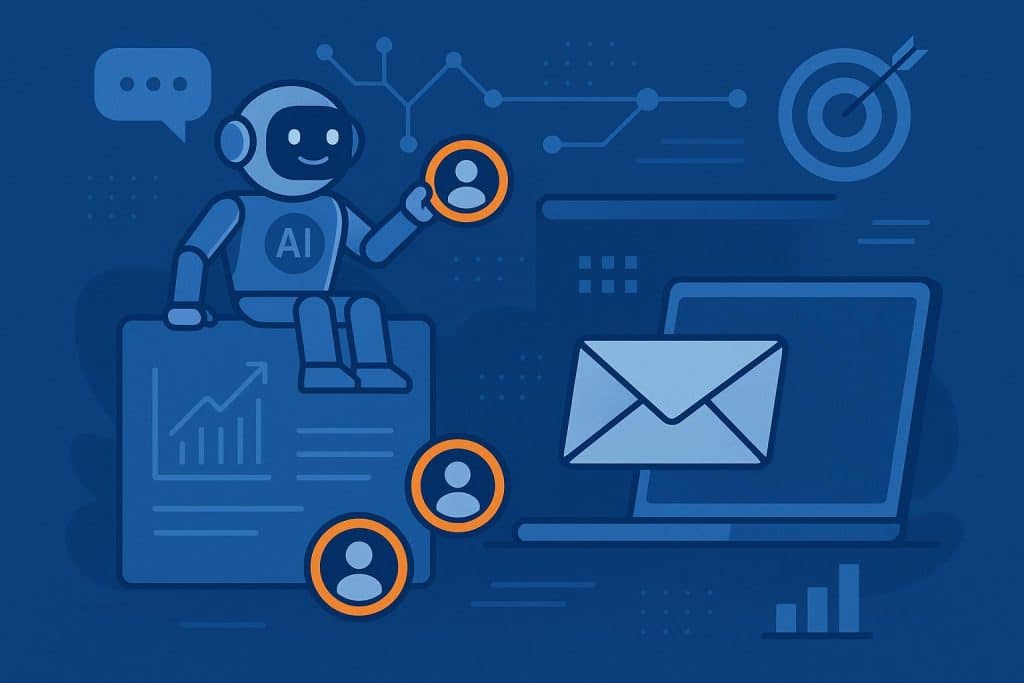
Sales representatives consistently cite administrative tasks as what they least like doing in their jobs. These tasks include composing cold emails, researching prospects, and entering data into CRMs– all duties that consume hours that could be spent in customer conversations. Client interactions rarely appear on lists of job dissatisfaction.
AI-powered software began handling these repetitive tasks approximately three years ago. Modern systems differ substantially from the automation tools of 2015 that sent identical messages to entire contact databases. Current technology learns from engagement patterns, adjusts messaging strategies, and manages routine processes while sales professionals focus on relationship building and deal advancement.
What is AI sales automation?
AI sales automation refers to software that automates prospecting and a range of related sales tasks with minimal human intervention. These AI-powered solutions may be used for various purposes, including lead generation, sending targeted messages via email and professional social networking sites, and tracking how prospects interact with those messages.
The strategy varies from standard email marketing in that it incorporates behavioural analysis. Recipients who open messages without taking further action receive different follow-up sequences from those who click pricing pages or download content. Systems adjust their strategy based on observed engagement signals.
Salesforce’s 2023 research revealed that sales reps spend 60-70% of their workday on administrative operations rather than direct selling activity. AI automation reduces this proportion considerably. The technology updates CRM records, schedules follow-up actions, and identifies leads showing genuine interest.
Key benefits for sales teams
Manual prospect list development previously required substantial time investment. Sales professionals searched professional networks for relevant job titles, compiled contact information into spreadsheets, verified email addresses, and confirmed current employment status. A typical four-hour effort produced approximately 200 qualified contacts.
AI-powered tools complete the same task within minutes. Users establish specific parameters including company size, industry sector, job titles, and geographic location. The software scans multiple databases simultaneously and delivers filtered results rapidly.
Personalization at scale became achievable through automation. Manually customizing hundreds of individual emails is unfeasible for most teams. AI systems look at current firm announcements, investment rounds, hiring activity, and other important developments. This information integrates into message templates automatically. Recipients perceive communications as individually researched when the process actually operates through automated systems.
Lead qualification improved significantly through behavioural tracking capabilities. Prospects who open many messages and click various links are more engaged than those who ignore all communications. Sales teams prioritize outreach to prospective parties over working through contact lists sequentially.
According to a McKinsey report from 2024, B2B firms who implemented AI-driven personalization saw email response rates increase by 40-50% compared to generic advertising tactics. The technology discovers effective subject lines, appropriate sending times, and messaging variations that are relevant to various industry segments.
How companies use AI in their sales workflow
Prospect discovery processes evolved when AI began scanning multiple information sources concurrently. An AI sales automation platform searches professional networks, company databases, and industry directories simultaneously. Organizations can specify highly targeted criteria – such as SaaS chief financial officers at Series B healthcare startups – and receive compiled results within minutes.
Email sequences operate autonomously after initial configuration. First messages deploy on scheduled days. The system monitors recipient actions and triggers appropriate follow-up communications. Prospects who click specific links receive different subsequent messages than those showing no engagement. Branching logic manages these variations without manual intervention.
Multichannel coordination expanded beyond email alone. Individual prospects may encounter connection requests on professional networks, email communications, and targeted advertisements within coordinated timeframes. The AI spaces these touchpoints to maintain presence without overwhelming recipients. The technology tracks channel effectiveness for different prospect categories and adjusts resource allocation based on performance data.
CRM integration automates record maintenance. Prospects book meetings or respond to emails, which are automatically loaded into platforms like Salesforce and HubSpot. The AI logs interactions and suggests next actions based on similar deal progressions at equivalent pipeline stages.
Choosing the right AI sales automation tool
Integration capabilities represent the most critical selection factor. Automation technologies must smoothly integrate with existing CRM systems, email platforms, and other sales technology. Isolated data undermines automation benefits. Organizations should verify native integration support before committing resources.
Customization flexibility determines long-term utility. Standard templates suit straightforward sales processes. Complex B2B transactions require custom data fields, conditional logic structures, and industry-specific messaging frameworks. Generic solutions impose rigid workflows while adaptable platforms accommodate existing sales methodologies.
Compliance functionality protects organizational interests. A good automated messaging platform will have features such as unsubscribe management, sending volume restrictions and compliance verification tools because messages are governed by regulations including but not limited to GDPR in Europe, CAN-SPAM in the U.S., and various industry-specific rules.
Analytics depth separates valuable tools from limited solutions. Basic open rates and click metrics provide insufficient insight. Revenue attribution, pipeline influence tracking, and channel performance analysis deliver actionable intelligence. Organizations need visibility into which messages, prospect segments, and engagement strategies actually generate customers rather than just interaction statistics.
Conclusion
AI sales automation has progressed from experimental technology to normal practice for B2B companies operating in competitive marketplaces. These technologies manage ordinary tasks that used to take up a considerable chunk of a workday. Sales teams devote more time to substantive client interactions and less to administrative tasks.
Organizations that use these tools report quantitative benefits such as shorter sales cycles, increased quota performance, and higher team satisfaction. Representatives prefer selling activities to data input tasks.
The performance difference between teams that use AI automation and those who use manual methods continues to widen. Instead of deciding whether to implement automation technology at all, sales leaders must consider which specific solutions correspond with corporate procedures and financial restrictions.