

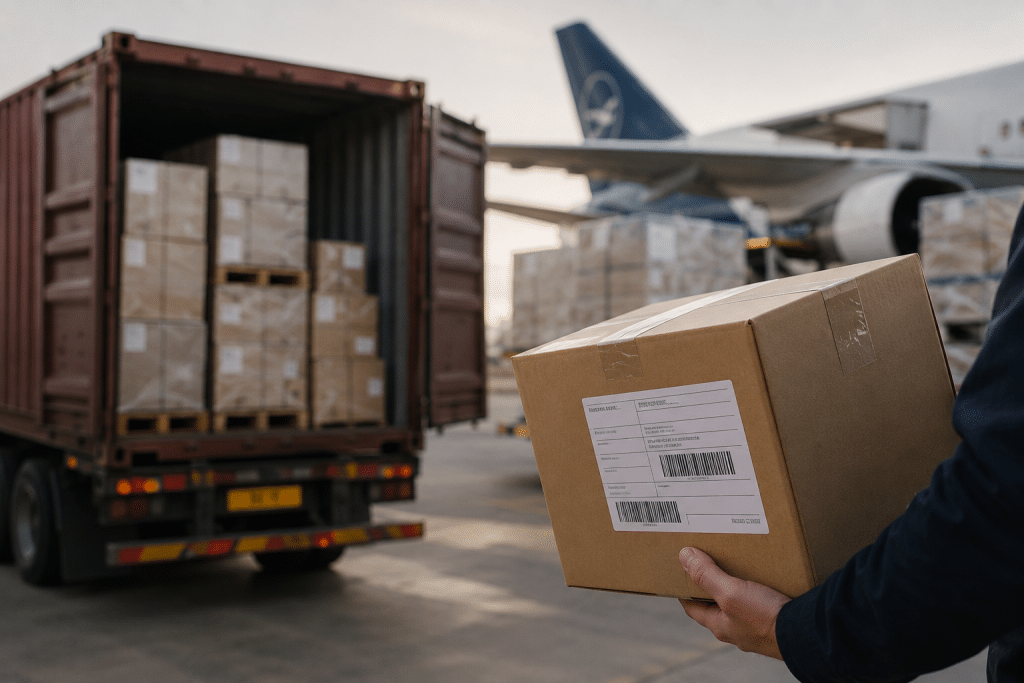
You click “buy.” Three weeks later, a box shows up at your door. Inside is a pair of sneakers, a set of kitchen knives, or a Bluetooth speaker — made in a factory somewhere in Guangdong province, now sitting in your living room in Ohio.
How did it get there? The answer involves more people, more paperwork, and more handoffs than most people ever think about. Here’s what actually happens between the factory floor and your front door.
It Starts Before the Goods Are Even Packed
Before a single box is loaded onto a truck, someone has to arrange the entire journey. That someone is usually a freight forwarder — a company that acts like a travel agent for cargo. They figure out the best route, book space on ships or planes, handle the paperwork on both ends, and make sure the goods clear customs without getting stuck at the border.
Most of the products you buy online — whether from a big retailer or a small independent brand — passed through a freight forwarder’s hands at some point. You just never see that part.
Once the goods are ready at the factory, they’re packed into boxes, loaded onto pallets, and trucked to the nearest major port. China’s biggest export ports — Shenzhen, Shanghai, Ningbo, Guangzhou — are among the busiest in the world. On any given day, thousands of containers are moving in and out, heading to every corner of the planet.
The Container Is the Star of the Show
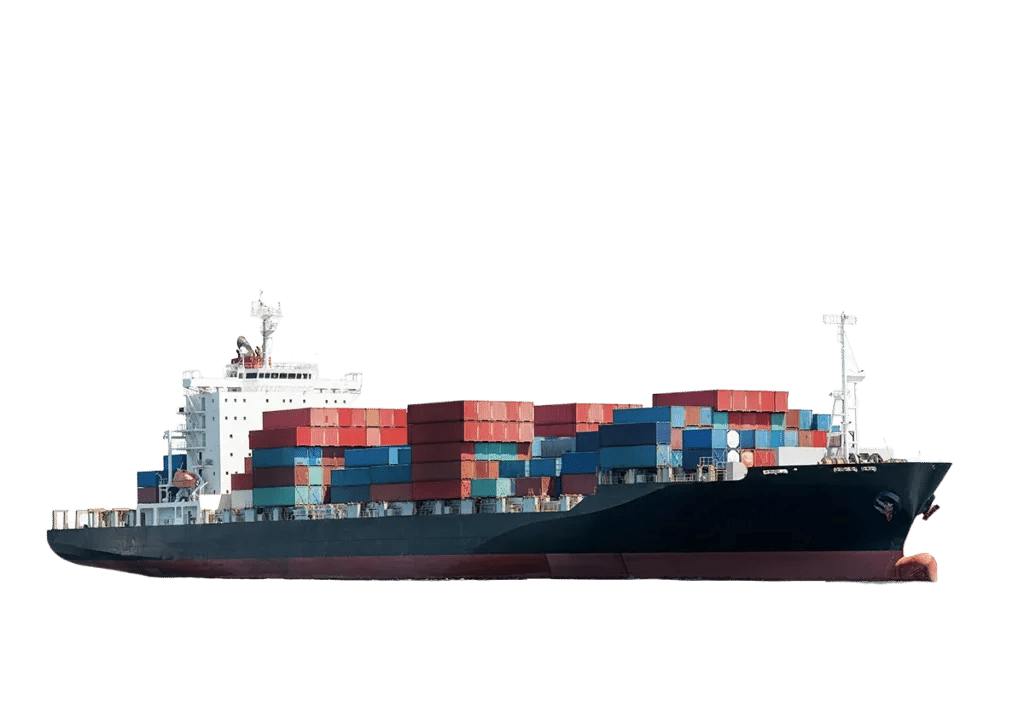
If you’ve ever driven past a port or seen a cargo ship on the news, you’ve seen the containers — those giant metal boxes stacked high like colorful Lego bricks. A standard 20-foot container can hold roughly 25,000 kg of cargo. A 40-foot container holds about twice that.
Here’s the thing most people don’t realize: your package almost certainly didn’t travel alone. Unless a company is shipping an enormous order, their goods share a container with other companies’ products. This is called LCL shipping — Less than Container Load. A freight forwarder collects cargo from multiple different businesses, packs it all into one container, and sends it on its way. At the destination, it gets unpacked and separated back out.
Bigger companies shipping in bulk book an entire container just for themselves. That’s FCL — Full Container Load. It’s faster and more cost-efficient per unit, but you need enough goods to fill the box.
Weeks at Sea
Sea freight from China to the US West Coast typically takes 18 to 25 days. Ships heading to East Coast ports like New York or Savannah take longer — around 30 to 40 days — because they have to travel further, often passing through the Panama Canal.
During those weeks, the container sits stacked with thousands of others on a vessel the size of a small city. Modern cargo ships can carry over 20,000 containers at once. The crew manages the navigation, but the cargo just… waits. Temperature, humidity, motion — the container handles all of it without anyone on board giving it a second thought.
Customs: The Part Nobody Talks About
When the ship arrives at a US port — Los Angeles, Long Beach, New York, Savannah — the containers don’t just roll off and head to their destination. First, they have to clear customs.
US Customs and Border Protection checks the paperwork. Every shipment needs a commercial invoice (what the goods are and what they cost), a packing list (exactly what’s in each box), and a bill of lading (the official shipping document). For ocean freight, there’s also something called an Importer Security Filing — a detailed declaration that has to be submitted at least 24 hours before the ship even leaves China. Miss that deadline, and the penalties start at $5,000.
Customs agents may physically inspect a container, or they may clear it based on paperwork alone. Either way, the goods stay at the port until they get the green light. Under normal conditions, this clearance process adds another 3 to 10 business days on top of the ocean transit time. If something’s flagged for additional review, it can take longer.
Shipping from China to the US Doesn’t End at the Port
After customs clearance, the container gets loaded onto a truck or a train for the last domestic leg. A container landing in Los Angeles might be trucked directly to a warehouse in California, or it might go by rail to Chicago, then by truck to a distribution center, then by a parcel carrier to your house. The full journey of goods shipped from China to the US covers far more ground than most people picture when they click “buy.”
That final stretch — from the warehouse to your door — is actually the most expensive part of the whole journey on a per-mile basis. Moving a container across the Pacific costs less per kilogram than driving a van down your street. Last-mile delivery is just inherently costly because it involves small loads, individual addresses, and a lot of stops.
How Long Does Shipping from China to the US Actually Take?
Not everything from China travels by sea. Express couriers like DHL, FedEx, and UPS can deliver door to door from China to the US in 2 to 7 days, depending on the service level and destination. These carriers move goods by air and pre-clear customs electronically while the package is still in flight, which is why your order seems to just appear with no obvious delay at the border.
Air freight is significantly more expensive than ocean freight per kilogram, which is why it’s mostly used for small, high-value, or time-sensitive goods — think electronics, medical supplies, fashion samples, or urgent restocks. The sneakers in a big retail shipment traveled by sea. The replacement phone your friend ordered express traveled by air.
Understanding how long that journey actually takes depends almost entirely on which of these routes the goods took — and how smoothly each handoff went along the way.
Why Things Sometimes Take Longer Than Expected
The full door-to-door journey involves a lot of handoffs: factory to truck, truck to port, port to ship, ship to US port, US port to customs, customs to domestic carrier, domestic carrier to you. Each handoff is a point where something can slow down.
Port congestion is one of the most common causes of delay. When too many ships arrive at once — which happens around major holidays, after weather events, or during sudden demand spikes — containers pile up waiting to be offloaded. The 2021 port backlog at Los Angeles made global news, with ships waiting weeks offshore. While that level of disruption is not the norm, smaller versions of it happen regularly.
Factory delays, missed vessel bookings, incorrect paperwork, and customs holds all add time too. Experienced freight forwarders build buffer time into their plans because they know the chain rarely runs perfectly end to end.
The Invisible Infrastructure Behind Everything You Buy
The next time a package arrives at your door, that journey probably started six to eight weeks earlier in a factory thousands of miles away. It passed through the hands of packers, truckers, port workers, sailors, customs officers, warehouse staff, and delivery drivers before it reached you.
Most of the time, it works. The scale of global shipping is genuinely remarkable — billions of packages, millions of containers, crossing oceans every year with a reliability rate that most industries would envy. The fact that it occasionally takes longer than expected is less surprising than the fact that it usually arrives at all.