

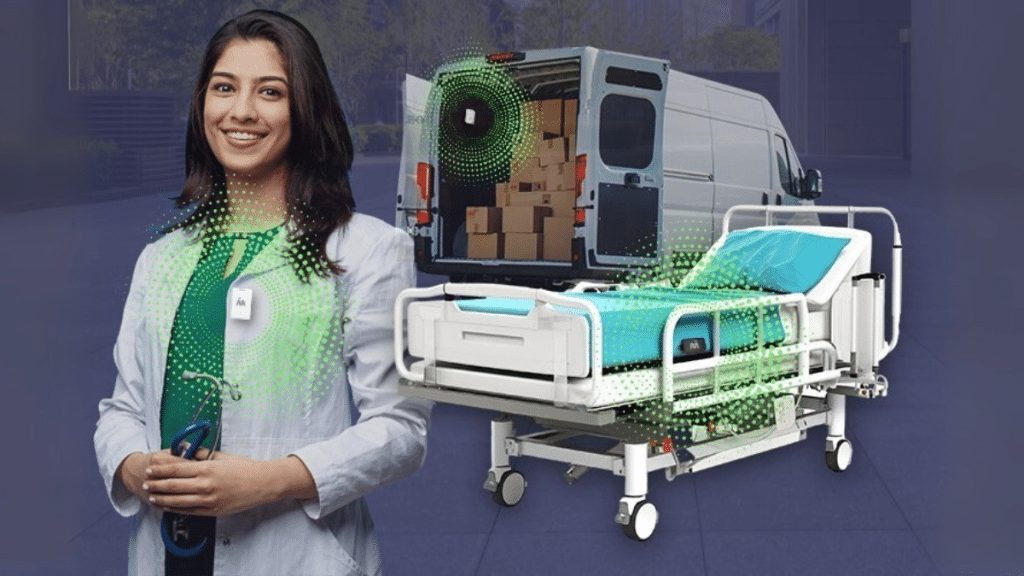
Hospitals are like small cities. Thousands of patients, visitors, staff, and pieces of equipment move through multiple floors, departments, and corridors every single day. While GPS helps us navigate outdoors, it simply doesn’t work indoors — leaving healthcare facilities to rely on outdated methods like printed signs, manual equipment searches, and walkie-talkies.
This is where Indoor Positioning Systems (IPS) come in. By using advanced location technology, IPS can track people, equipment, and workflows in real time, helping hospitals run smoother, faster, and more efficiently.
1. The Need for Better Hospital Navigation and Tracking
Large healthcare facilities face three major operational challenges:
- Lost Time – Nurses spend up to 12% of their shift searching for medical equipment.
- Bottlenecks – Delays occur when patients or staff can’t find the right ward, room, or colleague.
- Wasted Resources – Missing or underused equipment often leads to unnecessary purchases and rentals.
Every minute saved in a hospital isn’t just about efficiency — it can directly impact patient care and safety. IPS technology addresses these problems head-on.
2. How Indoor Positioning Systems Work in Hospitals
A hospital IPS uses a combination of hardware-free or minimal-hardware technology and advanced software algorithms to determine the precise location of a person or asset inside the building.
Here’s the basic process:
- Data Collection – Location data is gathered from existing infrastructure (like Wi-Fi or device sensors) or low-maintenance hardware if needed.
- Location Processing – Advanced algorithms process the data to pinpoint location at room or zone level.
- Actionable Insights – The data feeds into hospital dashboards, mobile apps, or staff devices, showing real-time locations and movement patterns.
Some modern IPS providers, such as Mapsted, use a hardware-free approach, eliminating the need for expensive beacon networks or constant battery replacements.
3. Key Ways IPS Improves Hospital Operational Efficiency
a) Improve Hospital Asset Tracking and Reduce Loss
In critical situations, locating essential devices like infusion pumps or defibrillators instantly can save lives. IPS asset tracking ensures staff know exactly where equipment is, reducing search time from minutes to seconds.
Example: A 500-bed hospital could save hundreds of staff hours each month by cutting average search time from 10 minutes to under 2.
b) How IPS Improves Patient Flow and Wayfinding
IPS-powered hospital apps can guide patients turn-by-turn from the entrance to the exact department or ward, reducing late arrivals and easing congestion at reception.
Result: Improved on-time appointment rates, smoother schedules, and better use of consultation rooms.
c) Real-Time Location Systems (RTLS) for Staff Efficiency
Real-time staff location data helps administrators assign the nearest qualified team member to a patient or emergency. It also makes it easier for colleagues to find each other without phone calls or radio chatter.
Impact: Faster emergency response and more coordinated care delivery.
d) Identifying Bottlenecks and Optimising Space Usage
IPS analytics reveal high-traffic areas, patient queue hotspots, and underused facilities. This insight helps hospitals adjust layouts, signage, and staff allocation to improve movement and reduce delays.
e) Enhancing Staff and Patient Safety
IPS can monitor entry into restricted areas, help locate staff in distress, and guide security teams to incidents quickly.
Benefit: Reduces workplace violence risks and ensures compliance with safety protocols.
4. Using IPS for Data-Driven Decision Making
Over time, IPS builds a rich dataset that can help administrators:
- Track equipment usage rates to avoid unnecessary purchases.
- Analyse patient movement patterns to optimise facility layout and appointment scheduling.
- Monitor staff workload distribution to improve shift planning and reduce burnout.
These insights can be displayed through heatmaps, reports, or integration with hospital management systems, giving leaders the tools they need for evidence-based decisions.
5. ROI of Indoor Positioning Systems in Healthcare
Implementing IPS is not just a tech upgrade — it’s a cost-saving investment.
Industry benchmarks show:
- Search Time Reduction: Cutting 30% of equipment search time for 200 nurses can save over $500,000 annually in recovered productivity.
- Equipment Savings: Tracking assets can reduce unnecessary purchases by up to 25%.
- Appointment Efficiency: Reducing missed appointments directly increases hospital revenue and throughput.
Hospitals using hardware-free IPS solutions often see faster ROI due to lower installation and maintenance costs compared to beacon-based networks.
Final Word
Indoor Positioning Systems are no longer optional for hospitals aiming to improve operational efficiency. They transform how healthcare facilities manage people, assets, and spaces — reducing wasted time, improving safety, and enhancing patient satisfaction.
Hospitals exploring IPS solutions can review providers such as Mapsted for hardware-free navigation, asset tracking, and analytics capabilities. Choosing the right system can mean the difference between daily inefficiencies and a truly optimised healthcare environment.