

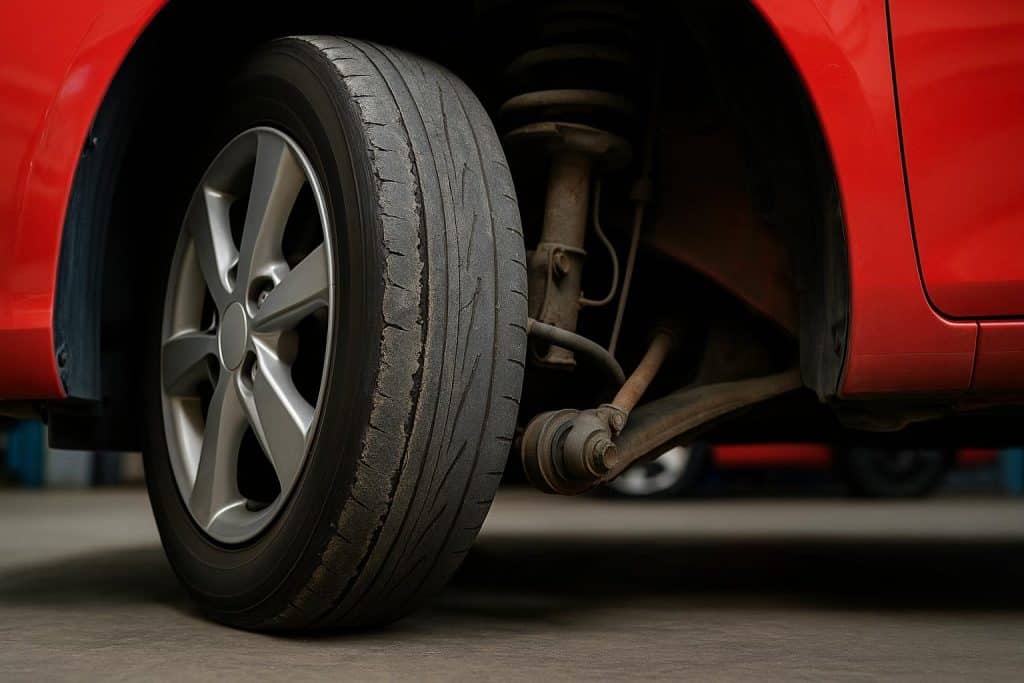
Most drivers assume their car is fine as long as nothing on the dashboard flashes. Wheel misalignment doesn’t work that way. It creeps in after a nasty pothole or a clipped curb, then slowly eats through tire rubber, wears out suspension joints, and siphons extra fuel with every trip. The real frustration hits when a mechanic lays out the bill for damage that could have been caught months earlier. A little awareness about how alignment problems start goes a long way in avoiding those expensive surprises.
What Happens When Wheels Fall Out of Alignment
Three angle measurements, camber, caster, and toe, control how each tire sits against the pavement. When all three stay within factory spec, the car tracks straight and distributes weight evenly across the tread. Shift any one of those angles by even half a degree, and the tire starts meeting the road at a slightly wrong position.
Rough pavement, speed bumps taken too fast, and aging rubber bushings all push those angles out of spec over time. Drivers in regions with freeze-thaw road damage tend to encounter it more frequently. Having a wheel alignment service Knoxville shop measure those angles on a regular schedule catches small deviations before they snowball into bigger mechanical headaches. Modern laser and camera rigs can detect shifts that no driver would feel behind the steering column.
Accelerated Tire Wear
Uneven Tread Patterns Tell the Story
A misaligned wheel drags across asphalt at an angle the tire was never shaped to handle. One shoulder of the tread grinds down while the other barely touches the surface. The result shows up as feathering along the edges, cupping across the face, or heavy erosion on the inner sidewall.
Tires built to last 50,000 miles sometimes give out before 25,000 under that kind of constant stress. Swapping out a full set ahead of schedule is an avoidable expense that stings. Regular angle inspections keep tread depth even across all four corners and stretch the useful life of every tire on the vehicle.
Hidden Suspension Damage
Stressed Components Wear Faster
Every ball joint, tie rod end, and control arm bushing is designed to absorb road shock at a very specific geometry. Once alignment shifts, those forces travel through paths the parts were never built to handle.
Months of that misdirected stress cause rubber bushings to crack, ball joints to develop slack, and steering linkage to loosen. Each worn piece further throws the geometry off, feeding a cycle that worsens. A minor toe deviation, left unchecked for long enough, can spiral into a full front-end rebuild.
Steering Feel Deteriorates
A gentle pull to the left or a faint vibration through the steering column often gets blamed on low tire pressure. That diagnosis might be right occasionally, but persistent drift usually means the suspension geometry has moved enough to compromise handling, especially at highway speeds where small deviations become much more noticeable.
Fuel Economy Takes a Hit
Tires angled even slightly off-center create more friction against the road surface. The engine has to push harder to maintain cruising speed, burning extra fuel in the process. Research from automotive engineering groups has shown that severe misalignment can cut fuel efficiency by as much as 10 percent.
For a car that normally gets 25 miles per gallon, that means roughly 2.5 miles lost from every fill-up gallon. Spread across a full year of commuting, those fractions add up to a noticeable dent in the fuel budget. Restoring proper alignment brings the contact patch back to its intended shape and reduces rolling resistance to its intended level.
Warning Signs That Demand Attention
A few reliable clues point to alignment trouble before serious damage sets in. Drifting without any steering input is the clearest red flag. Running a hand across the tire face and feeling uneven depth confirms physical evidence. A steering wheel that sits crooked on a straight road suggests the toe angle has wandered.
Vibrations that appear at certain speeds, sudden changes in road noise from the tires, or a recent hard hit against a curb all call for a professional look. Spotting these signals early keeps a simple adjustment from turning into a full suspension overhaul.
How Often Should Alignment Be Checked
A solid rule of thumb is an inspection every 6,000 to 8,000 miles. Vehicles that regularly travel unpaved roads or pass through construction zones benefit from shorter intervals. Anytime a fresh set of tires goes on, an alignment check makes sure they start their life wearing evenly.
Seasonal changes offer a natural reminder, too. A spring visit catches any damage left behind by winter potholes, while a fall check prepares the chassis for cold-weather conditions ahead.
Conclusion
Misalignment does its worst work in silence, shaving tread off tires, overloading joints that hold the suspension together, and quietly draining the fuel tank mile after mile. Because the decline is so gradual, many drivers accept sluggish handling or uneven wear as just part of owning a car. Routine alignment checks remain one of the cheapest forms of preventive care available. Keeping all four wheels dialed to factory spec protects tire investments, preserves suspension health, and holds on to the fuel efficiency the vehicle was engineered to deliver.