

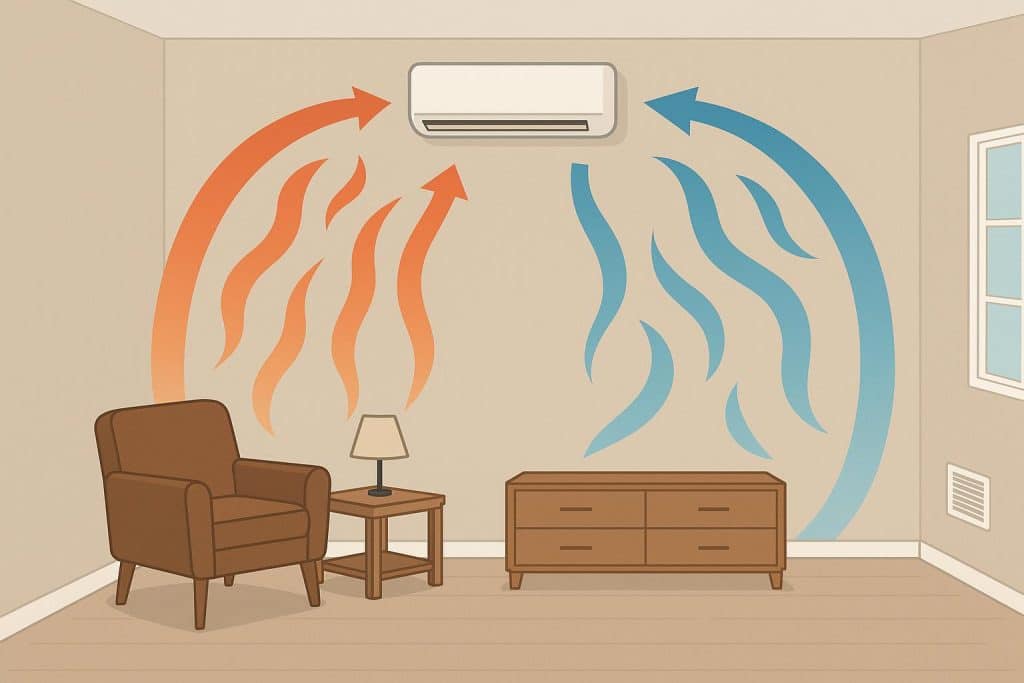
Managing indoor comfort throughout the year has traditionally meant running two separate systems: one dedicated to summer cooling, another to winter heating. That arrangement functions, but it carries real costs, doubled installation expenses, split maintenance responsibilities, and higher combined energy consumption.
A growing number of homeowners, hotel operators, and property managers are questioning whether that complexity is actually necessary. AC and heater combo units provide complete year-round comfort from a single installation, and the efficiency case becomes genuinely persuasive once operating costs are compared directly.
Why Two Systems Often Create More Problems Than They Solve
Running separate heating and cooling systems means managing two installation processes, two service schedules, and two independent sets of components that can fail. In smaller rooms or single-zone spaces, that level of redundancy is difficult to justify when the full financial picture is considered honestly.
Total maintenance spending over five to ten years regularly exceeds what a single integrated system would have cost from the outset. Space limitations create further complications, especially in rooms where fitting two full units is simply not workable.
Property owners reviewing their options frequently discover that an AC and heater combo unit resolves both issues with one decision. A self-contained system covers the complete range of seasonal temperature demands without requiring distinct infrastructure for each function. That consolidation simplifies installation, reduces ongoing service costs, and frees up space that two separate systems would otherwise claim.
What Makes Combined Units Efficient
The efficiency advantage of a combined unit comes from the fact that heating and cooling functions share core components rather than duplicating them. The compressor, refrigerant circuit, and airflow system serve both modes from a single assembly, lowering total energy consumption compared to two systems running independently.
Packaged terminal units, which are among the most common solutions for individual rooms and hospitality suites, are built entirely around this shared-component principle. One chassis, mounted through an exterior wall, handles both heating and cooling through a single control interface and a single electrical connection.
How Heat Pump Mode Changes the Equation
Many combined units include a heat pump mode that draws warmth from outdoor air and moves it indoors, rather than producing heat through electric-resistance coils. Under the right conditions, heat pump operation can be two to three times more energy efficient than resistance heating, making it a meaningful factor in long-term running costs.
That advantage is most pronounced in mild-to-moderate climates, where outdoor temperatures remain well above freezing for most of the heating season. In colder areas, combined units with supplemental electric heat continue performing reliably once outdoor temperatures fall below the heat pump’s effective operating range.
Room Size and Unit Sizing Matter
A combined unit that is undersized for a given space will run continuously but still fail to reach comfortable temperatures. An oversized unit will cycle on and off too rapidly, wearing components faster than expected and leaving indoor humidity levels inconsistent.
Correct sizing is expressed in British Thermal Units, with most single-room installations falling between 7,000 and 15,000 British Thermal Units, depending on floor area, ceiling height, window coverage, and insulation quality. Pairing equipment capacity to the room’s actual thermal load is the most consequential step in securing efficient, reliable performance over the system’s full lifespan.
When to Seek a Professional Assessment
Rooms with non-standard layouts, elevated ceilings, or significant direct sun exposure benefit from a proper load calculation before any purchase is made. That assessment prevents a recurring, expensive mistake: selecting a unit based solely on square footage while overlooking the variables that drive actual heating and cooling demand.
Installation Considerations for Single-Unit Systems
Combined units are substantially simpler to install than two-system configurations. Most packaged terminal models need only a wall sleeve opening through an exterior surface and a standard electrical connection to be fully operational.
That straightforward process makes them a natural fit for hotels, multi-unit residential properties, and commercial suites where minimizing structural work and installation time carries genuine operational value. Servicing is equally contained; the entire unit can be reached and replaced from inside the room without exterior access or prolonged downtime.
Long-Term Cost Performance
Realized energy savings over time depend on how consistently the unit is used and how carefully it is maintained. Cleaning filters on schedule, verifying seals around the wall sleeve, and arranging annual inspections prevent gradual efficiency losses as the system ages.
Combined units with programmable thermostats allow temperature settings to align with actual occupancy patterns, avoiding unnecessary conditioning when spaces are empty. Applied reliably across a full operating year, that kind of disciplined scheduling produces savings that are both measurable and cumulative.
Conclusion
Efficient heating and cooling of a room do not require two competing systems consuming space, capital, and service resources simultaneously. A properly matched combined unit delivers both functions in a single installation, with a smaller physical footprint and lower costs over the life of the equipment.
For property managers, building owners, and homeowners who want reliable year-round comfort without the overhead of managing two separate systems, the case for consolidation is straightforward, supported by real performance data, and validated by the experience of those already operating them.