

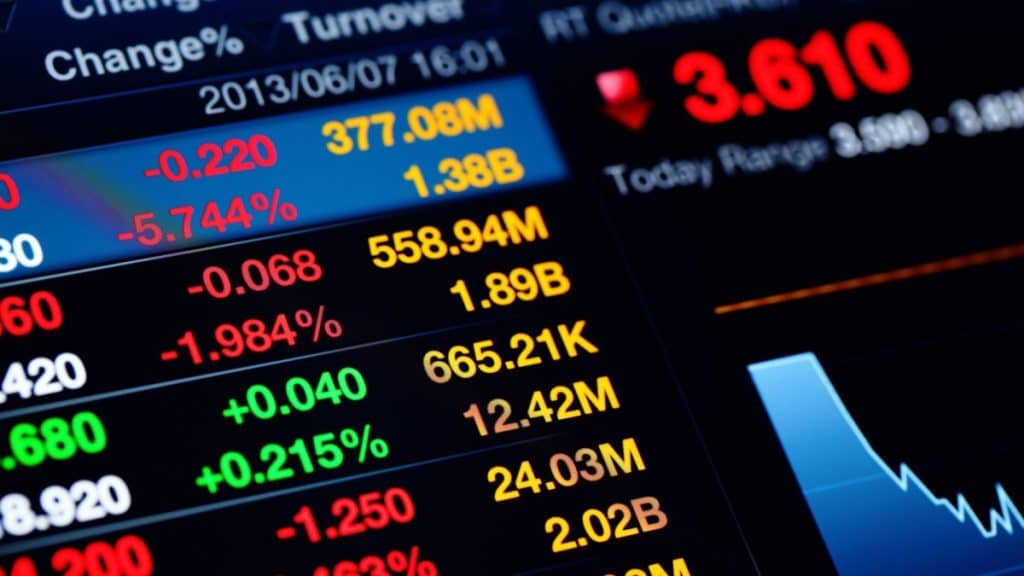
Market efficiency is the silent player in every investment decision, shaping how prices react to information. Ever wonder why some stocks skyrocket while others nosedive at a moment’s notice? Understanding market efficiency could be your key to navigating these sudden shifts. Let’s dive into how this concept works and why it’s crucial for anyone looking to make smarter investment choices. Exploring platforms like Zentrix Ai allows investors to access valuable resources and connect with experienced professionals, helping them refine their active investment strategies.
Decoding Market Efficiency: A Comprehensive Exploration
Market efficiency is a concept that often gets tossed around in investment circles, but what does it actually mean? In simple terms, it’s the idea that financial markets, like stock exchanges, reflect all available information about a security.
Imagine a room full of people trying to guess the number of jellybeans in a jar. Each guess represents the information an individual holds. The market price of a security, like a stock, is akin to the average of all those guesses, adjusted for new information as it becomes available.
What’s fascinating about market efficiency is how it blends economics, psychology, and even technology. As investors, we’re constantly playing a game of cat and mouse with the market, trying to outguess it—but in an efficient market, this is nearly impossible. Prices adjust so quickly to new data that no one can consistently outperform the market without taking on extra risk.
Yet, market efficiency isn’t just an academic theory. It’s a practical concept that affects everyday investment decisions. If markets are truly efficient, then spending hours analyzing stocks may be futile because prices already reflect all known information. Does this mean you should just buy and hold?
Well, that’s where the debate begins. Investors often wonder: If markets are efficient, why do some people still make fortunes while others lose their shirts? The reality is, market efficiency isn’t a black-and-white concept, but rather a spectrum, with different levels of efficiency affecting various markets and securities.
The Core Pillars of Market Efficiency
When we talk about market efficiency, we’re really discussing a system held up by several key pillars. Think of these pillars like the legs of a table—take one away, and the whole structure becomes wobbly. The first pillar is information dissemination.
For a market to be efficient, information must be shared quickly and widely. Picture a water cooler at work where gossip spreads like wildfire—now, replace gossip with financial news, and you’ve got a sense of how information fuels market efficiency. The faster and more accurately this information spreads, the more efficient the market becomes.
Next, consider the role of rational investors. These are the folks who digest information and make decisions based on logic rather than emotion. However, we’re all human, right? So, how rational are investors, really?
Behavioral finance has shown us that emotions like fear and greed can sometimes take the wheel, steering decisions in less-than-logical directions. Yet, in a truly efficient market, the collective actions of all investors should cancel out these irrational impulses, leading to prices that accurately reflect value.
Finally, the last pillar is the speed of price adjustment. In an efficient market, prices adjust almost instantaneously to new information. Let’s say a company announces a new product that’s expected to be a game-changer. In an efficient market, the company’s stock price would adjust within moments, reflecting the new expected value. If there’s a lag in this adjustment, it could indicate that the market is not fully efficient.
Levels of Market Efficiency: An In-Depth Analysis
Market efficiency isn’t a one-size-fits-all concept. Instead, it operates on different levels, each with its own quirks and implications for investors. Imagine market efficiency as a staircase—you’ve got the weak form at the bottom, the semi-strong form in the middle, and the strong form at the top. Where you stand on this staircase can change how you approach investing.
The weak form of market efficiency suggests that past prices and volume data have no bearing on future prices. So, if you’re a fan of technical analysis—those charts and patterns that some traders swear by—you might have to rethink your strategy. According to the weak form, the market already knows what you know, and any patterns you spot are just random noise.
Then we have the semi-strong form, which takes things up a notch. This level asserts that all publicly available information, not just past prices, is reflected in stock prices. This means that as soon as a company announces earnings or a new product, the stock price should adjust almost immediately.
In this world, even fundamental analysis, which involves studying a company’s financials, might not give you an edge. The market has already priced it all in. Ever had a hunch about a stock based on something you read in the news, only to see the price already spike? That’s semi-strong efficiency in action.
At the top of the staircase, we find the strong form of market efficiency. This level posits that all information, public and private, is already reflected in stock prices. If this were true, even insider trading wouldn’t yield any extra profit because the stock price already factors in everything.
However, this is more of a theoretical extreme than a practical reality, as insider trading laws and market anomalies suggest that strong-form efficiency might be more of a myth than a truth.
Conclusion
In the ever-fluctuating world of investing, market efficiency offers a fascinating lens to view price movements. But the big question remains—can anyone really outsmart the market? Whether you lean towards passive strategies or active trading, understanding the levels of market efficiency can guide your next move. Remember, a well-informed investor is always one step ahead.