

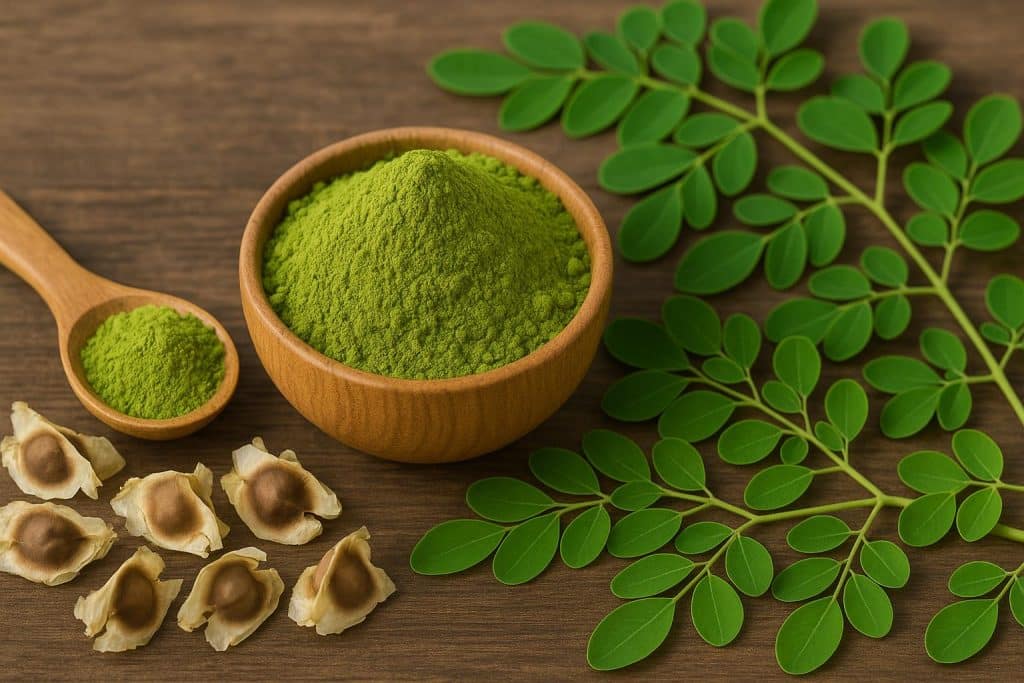
Moringa powder attracts attention because it sits in a privileged area between food and supplements. The dried leaves carry protein, fiber, carotenoids, minerals, and several polyphenols with antioxidant activity. Research gives reasons for interest, though it also sets limits. Laboratory work and small clinical studies suggest metabolic and anti-inflammatory effects, yet stronger human evidence remains limited. That distinction matters for anyone considering moringa as part of an everyday eating pattern.
Nutrient Density
Dried moringa leaves are concentrated, so a small serving delivers more nutrients than the same volume of many fresh greens. In discussions about daily diet quality, benefits of moringa powder usually refer to provitamin A carotenoids, iron, calcium, potassium, amino acids, and polyphenols. That profile matters most where meals lack variety, vegetable intake runs low, or micronutrient intake falls short across ordinary weeks.
Human Evidence
Clinical evidence remains much thinner than the public conversation suggests. Reviews describe promising findings in cells and animals, yet human trials are few, small, and methodologically uneven. Some studies report improved glucose markers or lipid values, while others show little change. That mixed picture does not cancel moringa’s value. It simply places moringa in the category of supportive nutrition, rather than established therapy for a defined medical condition.
Blood Sugar
Blood sugar control is one of the most studied areas. Investigators have linked moringa’s effects to isothiocyanates, chlorogenic acid, and other compounds that may affect glucose absorption and insulin signaling. Several small trials suggest lower fasting glucose or a milder rise after meals. Even so, the shifts are generally modest. For people with diabetes or prediabetes, moringa may complement care, but it should not replace prescribed treatment.
Cholesterol
Cholesterol research follows a similar pattern. Short studies have reported reductions in total cholesterol after regular moringa intake, which has prompted interest in its cardiometabolic role. Possible mechanisms include altered lipid absorption, lower oxidative stress, and changes in hepatic fat handling. The clinical meaning remains uncertain, though, because trial size and duration are limited. At present, the evidence supports cautious interest rather than firm conclusions about long-term risk.
Oxidative Stress
Moringa leaves contain flavonoids, phenolic acids, and carotenoids that can neutralize reactive compounds in laboratory models. This matters because oxidative stress contributes to cellular injury, vascular dysfunction, and inflammatory signaling. Still, a strong antioxidant signal in a test system does not guarantee a major effect in human tissue after digestion and absorption. The science supports biological plausibility, while real-life impact depends on dose, diet quality, and overall health status.
Inflammation
Inflammation is another active area of research. Plant compounds in moringa may influence cytokine activity, oxidative pathways, and cellular stress responses that shape chronic disease risk. That possibility is relevant for conditions linked with insulin resistance, fatty liver, and vascular strain. Human data, however, remain early. Current findings suggest a reasonable mechanism, though they do not yet establish how much routine intake changes inflammatory markers in everyday clinical settings.
Protein Quality
Protein adds another practical point to the discussion. Moringa leaves contain essential amino acids, which are unusual for a plant powder used in small amounts. That feature may help support mixed dietary patterns, especially where animal foods are limited. Serving size still matters. A teaspoon can enrich a meal, but it does not substitute for legumes, dairy foods, eggs, fish, or other more substantial protein sources across the day.
Practical Limits
Moringa works best when expectations stay grounded. It can be stirred into yogurt, oats, soups, or sauces to add micronutrients and phytochemicals without much volume. Used that way, it may improve variety, which often tracks with better overall diet quality. Still, one powder cannot offset a pattern dominated by ultra-processed foods and minimal produce. Health effects come from the full dietary pattern, along with sleep, movement, and medical care.
Safety Notes
Safety deserves attention because concentrated powders can affect people differently than whole foods. Small trials have generally found moringa leaves to be well tolerated, though isolated reports of liver injury mean caution remains appropriate. Product quality, preparation, and dose all matter. People taking medicines for blood sugar, blood pressure, or liver conditions should seek professional guidance before regular use, since additive physiological effects or interactions are possible.
Conclusion
Moringa powder earns its place in nutrition discussions because it offers genuine nutrient density and a useful range of bioactive compounds. Research suggests possible benefits for glucose handling, lipid measures, oxidative balance, and inflammatory signaling, though the human evidence remains early. The strongest interpretation is also the simplest one. Moringa appears most useful as a concentrated food ingredient, used regularly within a varied diet, rather than as a stand-alone answer for better health.