

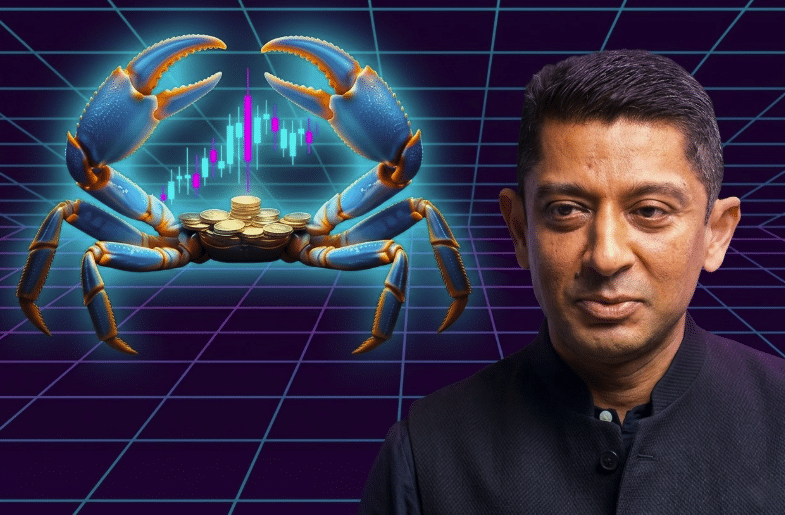
Artificial intelligence is moving beyond analytics and into direct participation in financial decision making. What was once used to support traders is increasingly being developed to evaluate conditions and act independently. This transition marks a significant change in how markets may function, with decision making gradually shifting from human judgment to system driven processes.
The implications are substantial. Autonomous systems operate at speeds and scales that exceed human capability, raising questions about control, accountability, and risk. If multiple systems respond to similar signals simultaneously, the potential for amplified volatility becomes a real concern. At the same time, firms see clear advantages in efficiency and consistency, driving continued adoption despite these uncertainties.
Otonomii, created by Kaushal Sheth, reflects this emerging direction. The platform is designed to integrate observation, learning, and execution within a single framework. Rather than separating analysis from action, it treats decision making as a continuous process, where systems adapt based on evolving market conditions.
This approach introduces a different way of thinking about financial infrastructure. Instead of relying on fragmented tools that require human coordination, systems like Otonomii aim to operate as unified intelligence layers. They are built to act selectively, engaging only when specific conditions are met, rather than producing constant output.
As adoption increases, the industry faces new challenges. Regulators, institutions, and market participants will need to address how autonomous systems are governed and how responsibility is assigned when decisions are made by machines. The shift is already underway, and the question is no longer whether AI will influence markets, but how far that influence will extend.