

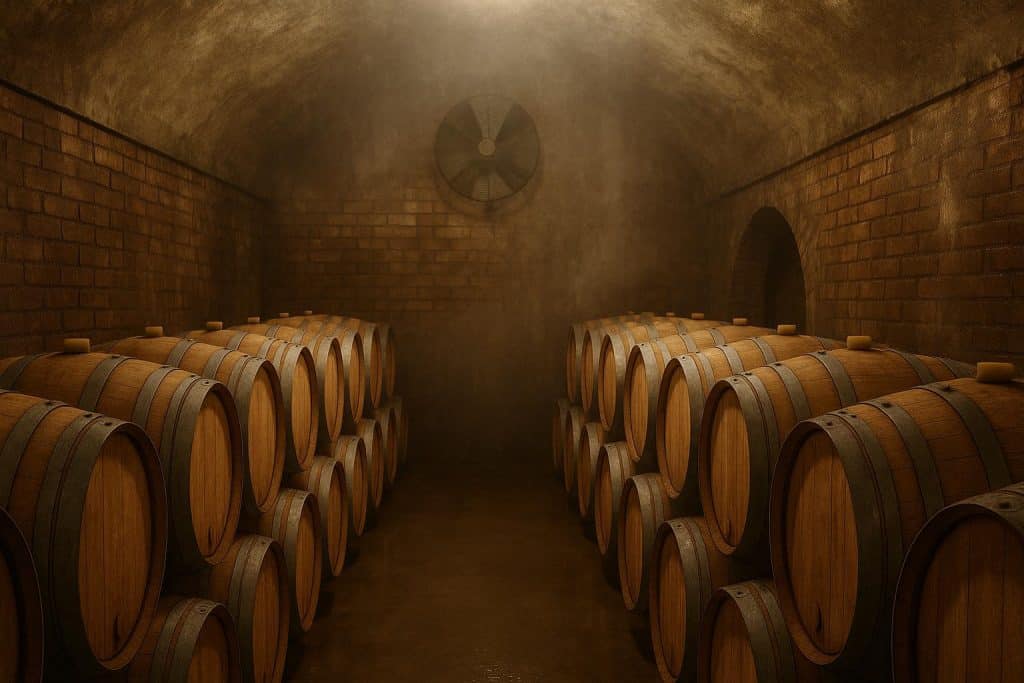
Creating the perfect environment for fine vintages requires more than just a cool cellar. Achieving consistent wine aging depends on maintaining a precise balance of moisture and temperature within the storage space. When producers prioritize winery humidity control, they protect the structural integrity of every bottle, ensuring that corks remain supple and seals stay tight over many years.
In this article, we cover the science behind cellar humidity, the passive and active control methods available to commercial producers, and the maintenance practices that protect your collection from mold, oxidation, and spoilage.
Key Takeaways
- Proper moisture levels prevent corks from drying out and failing.
- Stable environmental factors are essential for long-term maturation.
- Consistent conditions protect the chemical balance of the liquid.
- Monitoring the cellar environment reduces the risk of oxidation.
- Strategic management of the cellar air preserves the producer’s investment.
The Science of Humidity in Wine Cellars
Achieving the perfect aging process for fine wine depends heavily on precise cellar climate management. Mastering moisture and temperature variables is essential for any facility aiming to preserve the integrity of its collection.
Why Relative Humidity Matters for Cork Integrity
When the air becomes too dry, the natural cork begins to lose its moisture content and shrinks, creating a gap that allows oxygen to enter the bottle. Excessive oxygen exposure leads to premature oxidation, which ruins the flavor profile of the wine and can render the vintage undrinkable. Consistent moisture levels keep the cork supple and ensure a tight seal for years of maturation.
The Relationship Between Temperature and Moisture Levels
As temperatures rise, the capacity of the air to hold moisture increases significantly, and if the cooling system is not properly calibrated, this can lead to rapid fluctuations in the environment. If temperature spikes, relative humidity often drops, putting corks at immediate risk. Monitoring both variables ensures that the cellar remains a stable sanctuary for aging wine regardless of external weather changes.
Essential Winery Humidity Control Techniques
Achieving precise winery humidity control is the cornerstone of preserving the quality of every vintage. By integrating both natural and mechanical solutions, facilities can maintain the stability required for long-term storage.
Passive Methods for Natural Moisture Regulation
Effective cellar climate management often begins with the building envelope itself. High-thermal-mass materials like stone or concrete absorb excess humidity during peak periods and release it when the air becomes too dry. Properly designed underground structures leverage the earth’s constant temperature to reduce reliance on energy-intensive equipment while maintaining a stable environment for aging barrels.
Active Climate Control Systems for Commercial Wineries
When passive design is insufficient, active systems become necessary. Industrial-grade humidifiers are essential in arid climates to prevent excessive evaporation, while high-capacity dehumidifiers remove moisture in damp environments to prevent mold growth on labels and barrels.
Modern HVAC systems provide a centralized solution for monitoring and adjusting environmental variables automatically, and when paired with high-quality wine cellar insulation and vapor barriers, they operate with maximum efficiency.
| Control Method | Primary Benefit | Energy Usage | Best Application |
|---|---|---|---|
| Thermal Mass | Passive Stability | Very Low | Underground Cellars |
| Industrial Humidifiers | Moisture Addition | Moderate | Arid Environments |
| Automated HVAC | Precision Control | High | Large Commercial Facilities |
| Vapor Barriers | Leak Prevention | None | All Storage Areas |
Monitoring and Measuring Cellar Conditions
Accurate data serves as the foundation for every successful climate strategy in a professional winery. By keeping a close watch on your environment, you protect your investment from the risks of spoilage or cork degradation.
Selecting Reliable Hygrometers and Sensors
Choosing the right hardware is essential for maintaining consistent relative humidity levels. High-quality humidity sensors provide the accuracy needed to detect even minor fluctuations in the air. When evaluating equipment, prioritize a calibration range accurate within a 2% margin of error, wireless connectivity that provides real-time alerts, and durability suited to the cool, damp conditions of a subterranean cellar.
| Feature | Basic Hygrometer | Advanced Monitoring System |
|---|---|---|
| Data Logging | None | Cloud-based storage |
| Alerts | Manual check only | Instant SMS/Email |
| Accuracy | +/- 5% | +/- 1% |
Data Logging for Long-Term Aging Analysis
Modern humidity monitoring systems allow winemakers to track trends over several years, which is vital for long-term aging analysis. By reviewing historical data, you can identify seasonal patterns that require adjustments to your climate control settings.
Consistent data collection helps you spot subtle shifts before they become major problems, transforming raw numbers into actionable insights for your cellar management team.
Preventing Mold and Bacterial Growth
High humidity is essential for aging, yet it creates a hidden danger for your wine collection. Achieving effective mold prevention requires a proactive approach to both airflow management and sanitation.
Managing Airflow to Reduce Stagnant Pockets
When air stops moving, moisture settles into corners and behind racks, creating damp zones that encourage fungal development. Strategic placement of industrial fans eliminates these dead zones by keeping air in constant motion, reducing the risk of localized condensation while maintaining proper wine barrel hydration without allowing surface moisture to accumulate on wood or walls.
Sanitation Protocols for High-Humidity Environments
Maintaining a sterile environment is the most effective way of preventing wine spoilage. Regular inspections of the facility help identify potential issues before they compromise the quality of the wine. Key sanitation practices include:
- Perform weekly wipe-downs of non-porous surfaces using food-grade sanitizing agents.
- Monitor the exterior of barrels for signs of unwanted growth.
- Use high-efficiency particulate air (HEPA) filtration systems to capture airborne spores.
- Schedule deep cleaning sessions during periods of lower cellar activity.
The Impact of Barrel Storage on Humidity Requirements
Because wooden barrels are porous, they act as a living component of your cellar, reacting constantly to ambient humidity levels. Managing this environment effectively helps producers minimize losses and maintain the quality of their inventory.
Evaporation Rates and the Angel’s Share
The angel’s share refers to the portion of wine that evaporates through the wood of the barrel during maturation. When barrel room humidity is too low, the air draws moisture out of the barrel at an accelerated rate, resulting in higher volume loss.
Maintaining optimal moisture levels slows down this evaporation, ensuring that maturation remains consistent and predictable over months or years.
Balancing Barrel Hydration with Structural Preservation
Proper wine barrel hydration prevents the wood from drying out and shrinking. If the staves lose too much moisture, the barrel may develop gaps leading to leaks and potential oxidation. To maintain a stable environment, monitor moisture levels daily with high-quality sensors, maintain consistent airflow to prevent uneven drying, ensure proper room insulation to shield against external weather, and inspect barrels regularly for signs of wood stress.
Common Challenges in Winery Humidity Control
Even the most advanced climate systems encounter unexpected hurdles. By identifying these obstacles early, you can protect your inventory and ensure long-term quality.
Dealing with Seasonal Climate Fluctuations
During extreme summer heat or winter cold, the demand on your cooling and humidification units increases dramatically, and if your system is not calibrated for these shifts, you may experience dangerous spikes or drops in moisture levels. Monitoring local weather forecasts and adjusting set points before a major heatwave or cold front arrives is a cornerstone of effective mold prevention, as it stops condensation from forming on walls during rapid temperature changes.
Addressing Structural Leaks and Insulation Deficiencies
Many climate issues stem from poor wine cellar insulation rather than equipment failure. Gaps in door seals, cracks in concrete, or poorly insulated ductwork allow outside air to infiltrate your controlled environment, forcing equipment to work harder and leading to inconsistent aging conditions.
Essential maintenance steps include using high-grade weather stripping on doors, inspecting vapor barriers regularly, auditing thermal bridges, and performing quarterly checks of all gaskets and window frames.
Managing Air Circulation Imbalances
Uneven airflow within the cellar can create localized humidity pockets, leading to inconsistent aging conditions. Poor circulation often results in some areas being too dry while others retain excess moisture. Ensuring proper fan placement and balanced airflow helps maintain uniform conditions throughout the space.
Equipment Calibration and Maintenance Drift
Over time, sensors and control systems can drift out of calibration, causing inaccurate humidity readings and poor system response. Regular calibration checks and scheduled servicing ensure your system maintains precise environmental control and avoids long-term fluctuations.
Best Practices for Equipment Maintenance
Proactive maintenance of your climate control systems prevents costly damage to your collection. Regular inspections help identify minor issues before they escalate into expensive repairs.
Routine Calibration and Troubleshooting
Check that your humidity sensors are accurate at all times. Calibrate them at least twice a year using a reliable reference hygrometer. Common issues include clogged air filters, refrigerant leaks, and blocked condensate lines. Fixing these problems early helps prevent wine spoilage and keeps aging conditions consistent.
| Maintenance Task | Frequency | Primary Benefit |
|---|---|---|
| Filter Replacement | Every 3 Months | Improved Airflow |
| Sensor Calibration | Every 6 Months | Data Accuracy |
| Coil Cleaning | Annually | Energy Efficiency |
| Drain Line Flush | Annually | Leak Prevention |
Conclusion
Achieving excellence in winemaking requires a deep commitment to environmental precision. Every decision regarding moisture levels directly impacts the final profile of your bottles, and reliable data serves as the foundation for your success.
Managing evaporation losses, keeping barrels properly hydrated, and maintaining strict sanitation are key to protecting your wine as it matures. Taking control of your cellar environment and staying consistent with these practices helps improve quality and ensures better results in every glass.
FAQs
Why is relative humidity so critical for cork integrity during the aging process?
Maintaining high relative humidity is essential because it prevents the cork from drying out and shrinking, which would allow oxygen to enter the bottle and lead to premature oxidation and wine spoilage. Most professional facilities target a relative humidity level between 60% and 75% to ensure that cork integrity is never compromised throughout the aging process. Without consistent moisture control, even a brief period of dry conditions can permanently damage the seal and ruin years of careful maturation.
How does airflow contribute to mold prevention in wineries?
While high humidity is necessary for wine barrel hydration, it also creates a risk for fungal growth in stagnant areas. Proper airflow management prevents moisture from pooling in specific corners or behind racks by keeping air in constant circulation throughout the facility. Combining strategic ventilation with strict sanitation protocols is the most effective way to maintain the moisture needed for the barrels while preventing mold from taking hold.
How can winemakers address evaporation rates and the angel’s share?
By maintaining high barrel room humidity, typically around 70%, the concentration gradient between the wine inside the barrel and the surrounding air is reduced, which slows down evaporation rates. This practice preserves the volume of the vintage while also maintaining proper wine barrel hydration and preventing the staves from drying out and shrinking. Consistent monitoring and automated HVAC integration are the most reliable tools for keeping evaporation within acceptable limits across all seasons.