

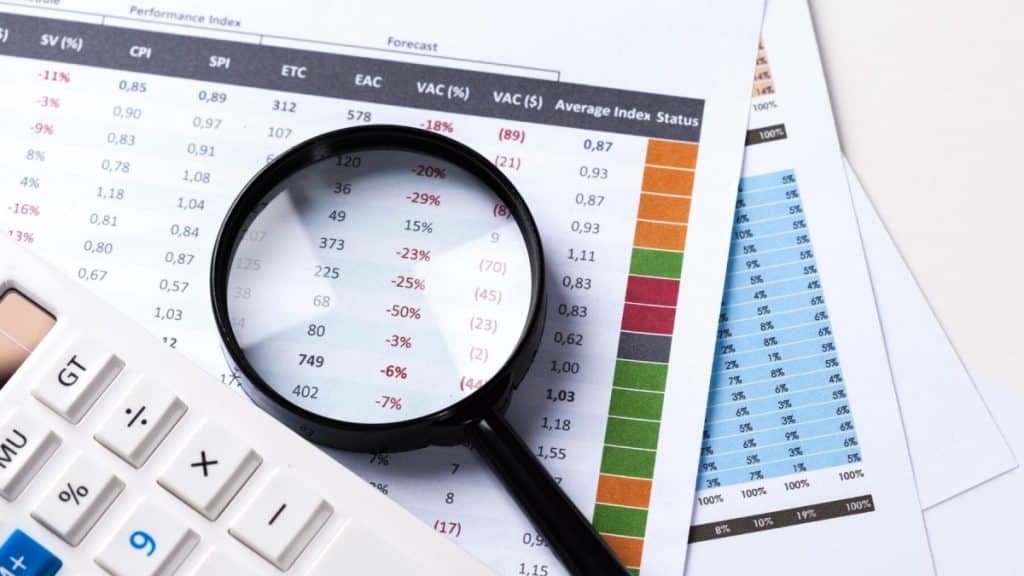
The unsung heroes of financial research are liquidity ratios, which provide a clear picture of a company’s capacity to fulfill short-term commitments. These tools empower businesses and investors alike, from the fast and cash ratios’ laser-focused insights to the current ratio’s broad view. Are you prepared to learn how these measurements might improve financial judgments? Explore the top three ratios and how they can change your life through education firms that specialize in financial analytics.
1. Present Ratio: Accurately Determining Short-Term Solvency
What Can Be Learned About Financial Stability from the Current Ratio?
The current ratio serves as a financial checkpoint. It shows whether a company can use its current assets to pay its short-term debt, similar to how a person compares how much cash is in their wallet to bills on their desk. A ratio greater than one generally indicates sufficient assets to cover short-term obligations. However, excessive increases could signal underutilization or stashing away too much capital rather than investing it wisely.
Formula and Usage: How Can I Do It Correctly?
Dividing current assets by current liabilities will give you your current ratio; for instance, dividing $500,000 of current assets by $250,000 of current liabilities yields a current ratio of two. Don’t you find it comforting knowing you have twice as much money for groceries and rent? This percentage differs by industry, though. While manufacturers often want more significant numbers to manage inventories, retailers may require a lower ratio.
Examples and Interpretations from the Real World
Because they depend on consistent cash flow, tech companies, for example, frequently have lower current ratios. In contrast, a typical manufacturer could require a more excellent ratio to account for spikes in seasonal inventories.
2. Acid-Test Quick Ratio: A More Comprehensive Look at Liquid Assets
What Is Unique About the Quick Ratio?
To concentrate on resources that can be swiftly turned into cash, the fast ratio eliminates less liquid assets like inventory. This technique is perfect when evaluating financial health without the buffer of selling inventory. Your savings account is more important than the old couch you intend to sell if you have an urgent bill to pay. A larger quick ratio indicates more immediate financial strength.
Why Is the Quick Ratio Important, and How Can I Calculate It?
Before dividing by current liabilities, this formula first subtracts inventory from current assets. So, for instance, a business with $400,000 in current assets and $150,000 in inventories but $200,000 in liabilities would have a quick ratio of 1.25, meaning for every $1.00 outstanding, it has $1.25 of highly liquid assets, similar to having an emergency fund that helps protect long-term plans against unexpected events.
Sectors Where Fast Ratios Are Essential
Think about sectors such as consultancy or software. Since these industries frequently don’t depend on inventories, the quick ratio provides a more accurate view of their liquidity. On the other hand, retailers may have lower quick ratios because they operate with a lot of inventory.
3. The Ultimate Liquidity Stress Test: The Cash Ratio
Regarding liquidity, why is the cash ratio the gold standard?
The cash ratio is highly stringent. It evaluates a company’s capacity to settle debts using cash or cash equivalents alone, without inventories or receivables. Consider it the monetary equivalent of living in an emergency on your emergency supply. It’s about surviving, not about comfort. This measure is handy in times of economic recession or abrupt changes in the market.
Dissecting the Formula: Cash in Operation
Cash and cash equivalents are divided by current liabilities to calculate the cash ratio. The ratio is 0.6, for instance, if a company has $300,000 in cash and $500,000 in liabilities. This indicates that just 60% of debts might be settled right now. Although this may seem concerning, the majority of industries function with ratios far lower than 1, depending on inventories and receivables to fill the gap.
In situations where the cash ratio is crucial
This statistic is frequently crucial for startups during financial constraints or businesses in unstable industries like oil and gas. Investors consider large IT companies and other high-cash-ratio businesses as a buffer against unanticipated economic shocks. When assessing a company, consider whether a company’s cash ratio and risk profile match.
Conclusion
Gaining proficiency in liquidity ratios can make financial analysis more incisive and knowledgeable. Using the cash, quick, and current ratios allows you to accurately assess a company’s stability. These tools tell the story behind the numbers, not merely crunch them. Use these ideas to make better, more assured financial decisions that lead to long-term success.