

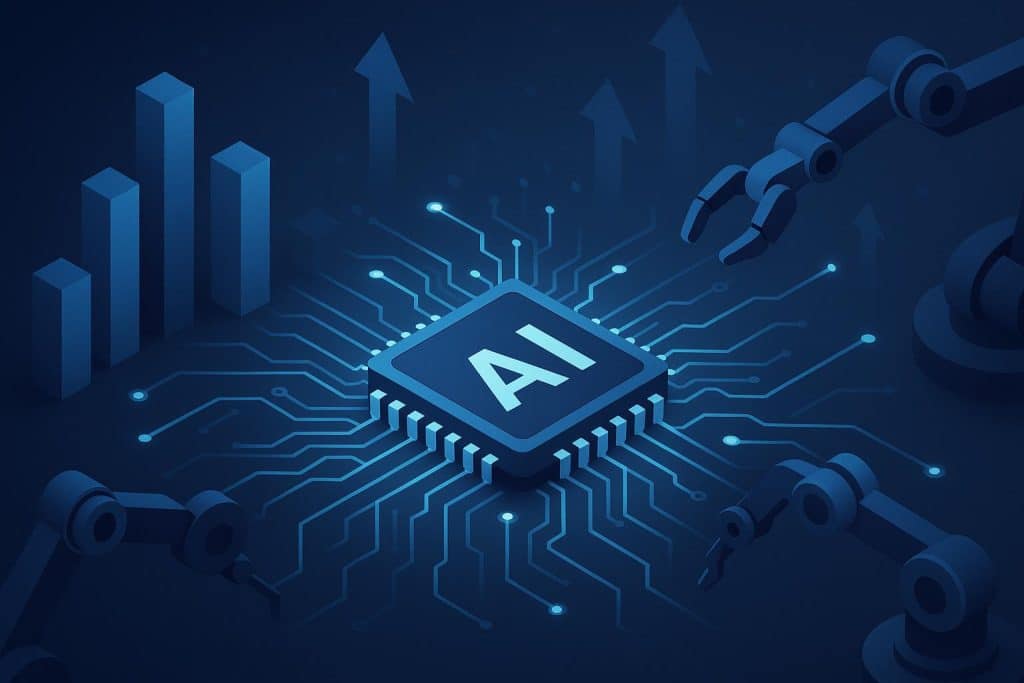
The digital era has always been defined by rapid shifts, but the current integration of Artificial Intelligence (AI) into the corporate world isn’t just a shift—it’s a total overhaul. For years, sales and marketing departments operated in silos, relying on historical data, manual outreach, and gut-feeling intuition. Today, those methods are being replaced by predictive precision and automated intelligence.
As businesses strive to remain competitive in a saturated market, understanding the synergy between human creativity and machine efficiency has become the primary differentiator between industry leaders and those left behind.
The Evolution of Personalization
In the early days of digital marketing, “personalization” meant including a prospect’s first name in an email subject line. Modern AI has pushed this concept into a new dimension. We are now in the age of hyper-personalization.
AI algorithms analyze vast datasets—ranging from social media activity and past purchase history to browsing patterns and even the time of day a user is most active. This allows marketers to deliver content that isn’t just relevant, but timely. Instead of casting a wide net, brands are now using “spear-fishing” tactics, reaching the right individual with the exact solution they need before they’ve even voiced the requirement.
Bridging the Gap Between Data and Action
The biggest challenge for modern enterprises isn’t a lack of data; it’s the “data graveyard”—vast amounts of information that sit unused because humans lack the bandwidth to process it. This is where AI excels. Machine learning models can sift through millions of data points in seconds to identify high-value leads.
In the middle of this technological surge, businesses are finding that the human element is most effective when supported by smart automation. For instance, an AI sales assistant can handle the tedious task of initial lead qualification and follow-ups, ensuring that no prospect falls through the cracks while the human sales team focuses on high-level negotiations and relationship building. This hybrid approach ensures that efficiency doesn’t come at the cost of the personal touch.
Predictive Analytics: The Crystal Ball of Commerce
Predictive analytics is perhaps the most “magical” application of AI in the current market. By utilizing historical data to predict future outcomes, companies can move from a reactive stance to a proactive one.
- Churn Prediction: AI can identify patterns in customer behavior that suggest they are about to leave, allowing marketing teams to intervene with targeted retention offers.
- Sales Forecasting: Managers can now predict quarterly revenue with startling accuracy, allowing for better resource allocation and inventory management.
- Lead Scoring: Not all leads are created equal. AI assigns scores to prospects based on their likelihood to convert, ensuring the sales team prioritizes their time effectively.
Content Creation and the Generative Revolution
The rise of Large Language Models (LLMs) has sparked a debate about the role of the “creator.” While AI-generated content is a powerful tool for scaling SEO efforts and drafting product descriptions, its true value lies in its role as a collaborator.
Marketers are using AI to brainstorm campaign slogans, generate various versions of ad copy for A/B testing, and even create visual assets in seconds. This allows for a level of experimentation that was previously cost-prohibitive. By rapidly testing what resonates with an audience, brands can pivot their strategies in real-time, staying ahead of cultural trends and consumer shifts.
The Sales Funnel Refined
The traditional sales funnel is being reshaped into a more fluid “customer journey.” AI-powered chatbots and virtual assistants provide 24/7 support, answering complex queries and guiding users through the buying process without human intervention. This “always-on” presence is crucial in a global economy where customers expect instant gratification regardless of time zones.
Furthermore, AI tools are now capable of Sentiment Analysis. By analyzing the tone of a customer’s email or a social media mention, AI can alert a representative if a situation requires urgent, empathetic human intervention. This ensures that technology acts as a bridge to better customer service, rather than a barrier.
Ethical Considerations and the Road Ahead
As we lean further into an AI-driven world, ethics must remain at the forefront. Data privacy, algorithmic bias, and transparency are not just “compliance” issues—they are pillars of brand trust. Customers are willing to share their data in exchange for better experiences, but only if they feel that data is being handled responsibly.
The future of sales and marketing isn’t about machines replacing humans; it’s about the augmented professional. Those who master these tools will find themselves with more time for strategy, more insights for decision-making, and a significantly higher ROI on their creative efforts.
Conclusion
The revolution of sales and marketing through artificial intelligence is no longer a distant prospect—it is the current reality. From the way we identify a lead to the way we nurture a lifelong customer, AI is the engine driving the modern business machine. By embracing these tools, companies can move beyond the noise of the marketplace and forge deeper, more meaningful connections with their audience.
As we look toward the next decade, the question isn’t whether your business should adopt AI, but how quickly you can integrate it to stay relevant in an increasingly automated world.