

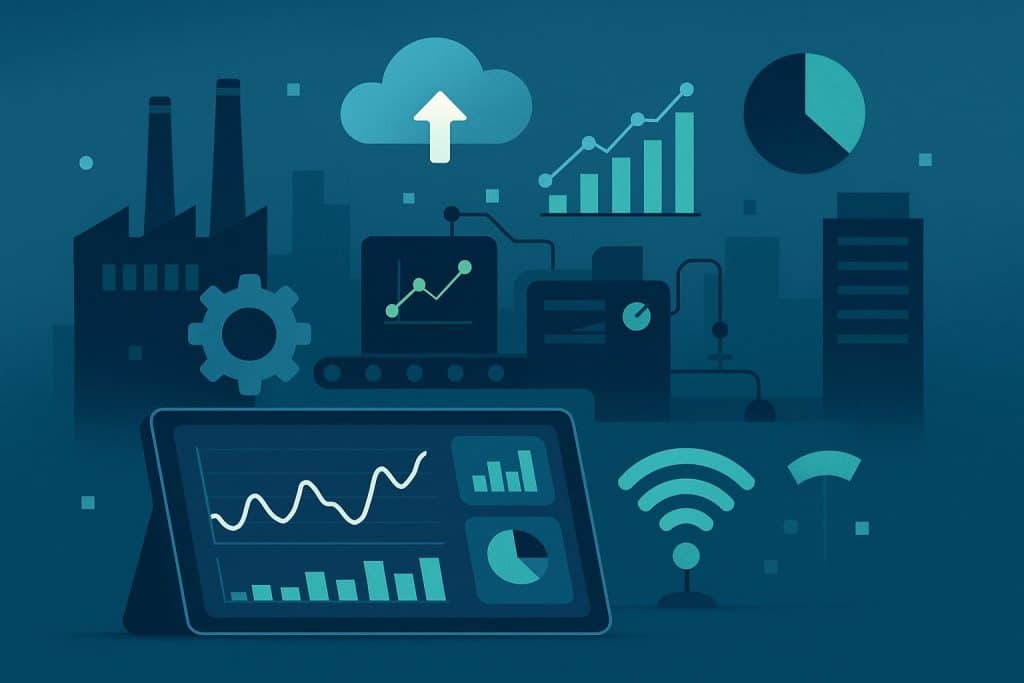
Manufacturing has become a fast-moving and highly competitive environment. Even a short production shutdown can lead to missed deadlines, wasted materials, and major financial losses. Because of that, many companies are investing in smarter technology that helps monitor operations in real time and prevent problems before they become serious.
Modern factories are increasingly relying on IT services for manufacturing to support data-driven infrastructure that keeps production lines running smoothly. By collecting and analyzing information instantly, manufacturers can detect issues early, reduce downtime, and improve overall efficiency. All of those factors can aid in preventing production shutdowns and the problems that come along with them.
What Is Data-Driven Infrastructure?
Data-driven infrastructure refers to systems that constantly collect and analyze information from machines, sensors, software, and connected devices throughout a manufacturing facility. Instead of waiting for equipment to fail, manufacturers can monitor performance in real time and respond quickly when something seems wrong.
For example, sensors on production equipment may track temperature, vibration, speed, or energy use. If a machine begins operating outside of normal conditions, the system can alert maintenance teams immediately. This approach helps manufacturers move from reactive problem-solving to proactive maintenance and planning.
Why Production Shutdowns Are So Costly
Unexpected shutdowns can create serious problems for manufacturers. When production stops, companies may face delayed shipments, overtime labor costs, damaged materials, and unhappy customers. In some industries, even a few hours of downtime can cost thousands or millions of dollars. Restarting equipment after a shutdown may also take additional time and resources.
Modern supply chains often depend on precise schedules. With that being the case, a single disruption can affect suppliers, transportation providers, and customers across multiple locations. Preventing these shutdowns has become a top priority for manufacturers of all sizes.
Real-Time Monitoring Makes a Difference
Real-time monitoring is one of the biggest advantages of data-driven infrastructure. Instead of relying on manual inspections alone, connected systems continuously watch over production equipment and operations. If a conveyor motor begins overheating or a robotic arm starts moving incorrectly, the system can detect the issue immediately. Maintenance teams can then address the problem before the equipment completely fails.
That allows manufacturers to schedule repairs during planned maintenance windows instead of dealing with sudden, unexpected breakdowns. Real-time visibility also helps managers make faster decisions when production conditions change. Both of those factors can help prevent complete shutdowns.
Predictive Maintenance Reduces Downtime
Predictive maintenance has become one of the most valuable tools in modern manufacturing. Traditional maintenance schedules often rely on fixed timelines, whether equipment actually needs service or not. With predictive maintenance, systems analyze real-time data to determine when a machine is likely to fail or require attention. That helps companies avoid unnecessary maintenance while also preventing costly equipment breakdowns.
For example, unusual vibrations in a machine may signal that a part is wearing out. Replacing the part early can prevent a complete system failure later. This approach helps manufacturers save money while improving reliability.
Better Communication Between Departments
Data-driven infrastructure also improves communication between departments. Production managers, maintenance teams, warehouse staff, and executives can all access the same information through connected systems. When everyone has real-time data to draw from, it’s easier to coordinate production schedules, inventory management, and equipment repairs.
Cloud-based systems are especially useful because they allow authorized employees to access information from multiple facilities or remote locations. That fosters faster communication. It can also give facilities the benefit of more consistent decision-making.
Looking at the Future of Smart Manufacturing
As technology continues advancing, data-driven infrastructure will become even more important in manufacturing. Artificial intelligence, automation, and advanced analytics are helping factories operate more efficiently than ever before. Manufacturers that invest in real-time systems are often better prepared to handle supply chain challenges, equipment issues, and changing customer demands.
The future of manufacturing will likely depend on connected systems that can predict problems, improve efficiency, and keep production running with minimal interruptions. Companies that embrace this real-time revolution will be in a stronger position to stay competitive in an increasingly technology-driven industry.