


It’s 3 AM. The glaring light of your phone screen illuminates the dark nursery. You’re holding a sweaty, thrashing screaming potato who just woke up from a brutal MOTN feed. You scroll through Instagram, desperately looking for a solution, and every single baby brand is shouting about their “miracle” fabric that guarantees a full night’s sleep.
Then you see a Reddit thread that makes your chest tighten (oh my lordyyyy): another parent claiming you need a special washer just to clean bamboo clothes.
Stop. Take a breath.
Raising a baby is hard enough without brands weaponizing your exhaustion. You don’t need an engineering degree to do laundry. And baby sleepwear shouldn’t rely on toxic positivity or vague marketing buzzwords. We hate that. At SwaddleAn, we don’t sell miracles. We sell physics. The foundation of our SwaddleAn brandethos is strictly rooted in material science, clinical data, and evidence-based medical standards.
Here is what actually happens on a microscopic level when your baby wears our clothes.
Key Takeaways
- Thermodynamics: Our specific bamboo viscose structure actively drops skin surface temperature by up to 37.4°F.
- Moisture-Wicking: The fabric absorbs and dissipates liquid at 3x the speed of standard cotton.
- Zero Toxic Chemicals: Strictly OEKO-TEX® 100 certified and naturally meets CPSC 16 CFR 1615 safety guidelines without flame retardant sprays.
- No-Nonsense Care: It goes straight into your standard washing machine on a delicate cycle. No special equipment.
The Thermodynamics of Bamboo Viscose: Why “Breathable” Isn’t Enough
What makes bamboo baby clothes temperature regulating? Bamboo viscose regulates temperature through inherent micro-gaps in the fabric fiber, allowing trapped body heat to escape instantly rather than bouncing back against the skin. Clinical testing shows this specific structural design can drop a baby’s skin surface temperature by up to 37.4°F compared to standard synthetic blends, drastically reducing the risk of midnight overheating.
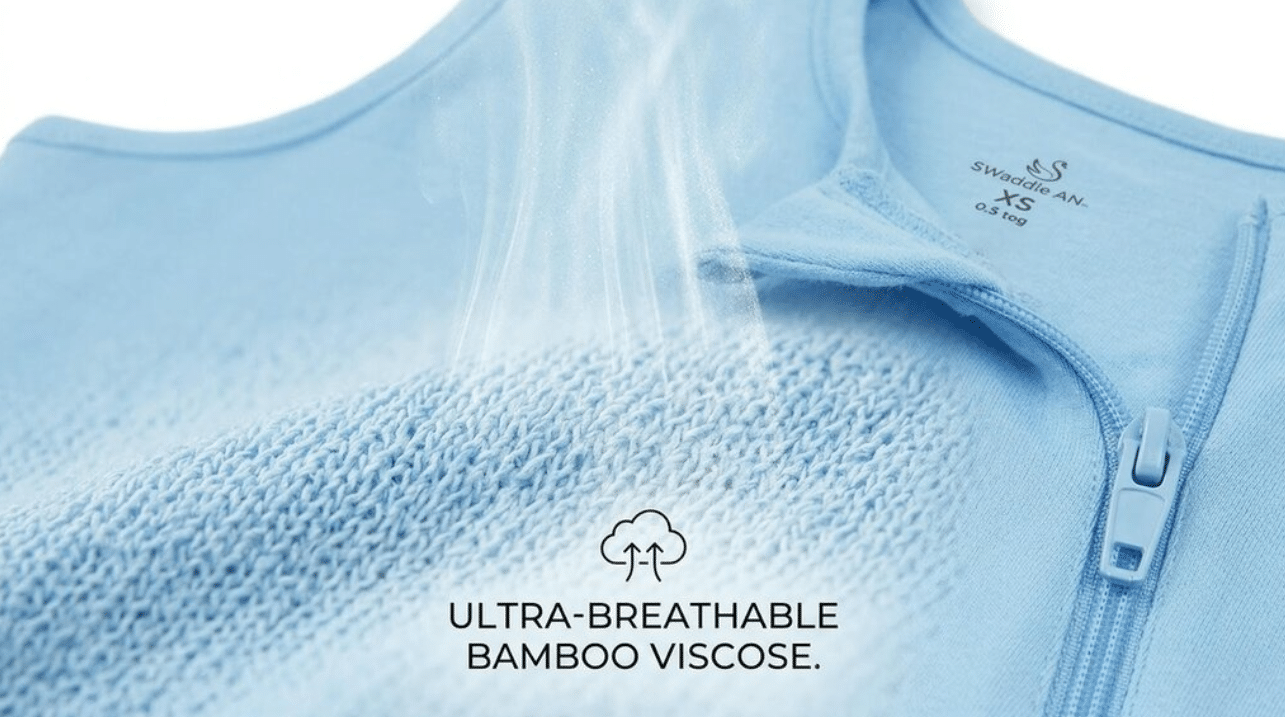
Infants have a very low temperature tolerance. This example is a natural “ventilation system,” not a marketing gimmick.
The 37.4°F Surface Temperature Drop
“Breathable” is arguably the most overused, empty word in the baby apparel industry. It means next to nothing. Let’s talk about thermodynamics instead.
An infant’s thermoregulation system is severely immature. When they get hot, their body traps thermal energy against the skin. Conventional polyester blends act exactly like a plastic bag, sealing that heat inside the sleep sack and causing their core temperature to spike. Our bamboo viscose doesn’t just let air pass through vaguely. It actively pulls heat away. The fibers are woven with microscopic ventilation gaps. This physical structure allows the fabric to rapidly dissipate trapped thermal energy, lowering the skin’s surface temperature by up to 37.4°F. It’s not magic. It’s just highly efficient heat transfer.
Moisture-Wicking at 3x Speed
Babies sweat. It’s a biological reality. But the sweat itself isn’t what wakes them up—it’s the chilling effect when that cold moisture sits stagnant against their chest.
Our material absorbs liquid at 3x the rate of traditional fabrics. It pulls the sweat away from the skin and spreads it across a wider surface area so it can evaporate rapidly. If you’ve ever debated the actual mechanics of bamboo vs cotton baby bodysuits, this is the deciding factor. Cotton holds onto water like a heavy sponge, staying damp, cold, and uncomfortable. Bamboo viscose wicks it away immediately, keeping the microclimate inside the suit perfectly stable. So when they inevitably sweat, they don’t wake up shivering an hour later.
Chemical Safety & The CPSC Standards We Refuse to Compromise On
Are SwaddleAn bamboo baby clothes safe from toxic chemicals? Yes. Every garment is OEKO-TEX® 100 certified, meaning it is entirely free from heavy metals and formaldehyde. Furthermore, we adhere strictly to CPSC 16 CFR 1615 guidelines through precise snug-fitting designs, eliminating the need to spray baby sleepwear with toxic flame retardants.
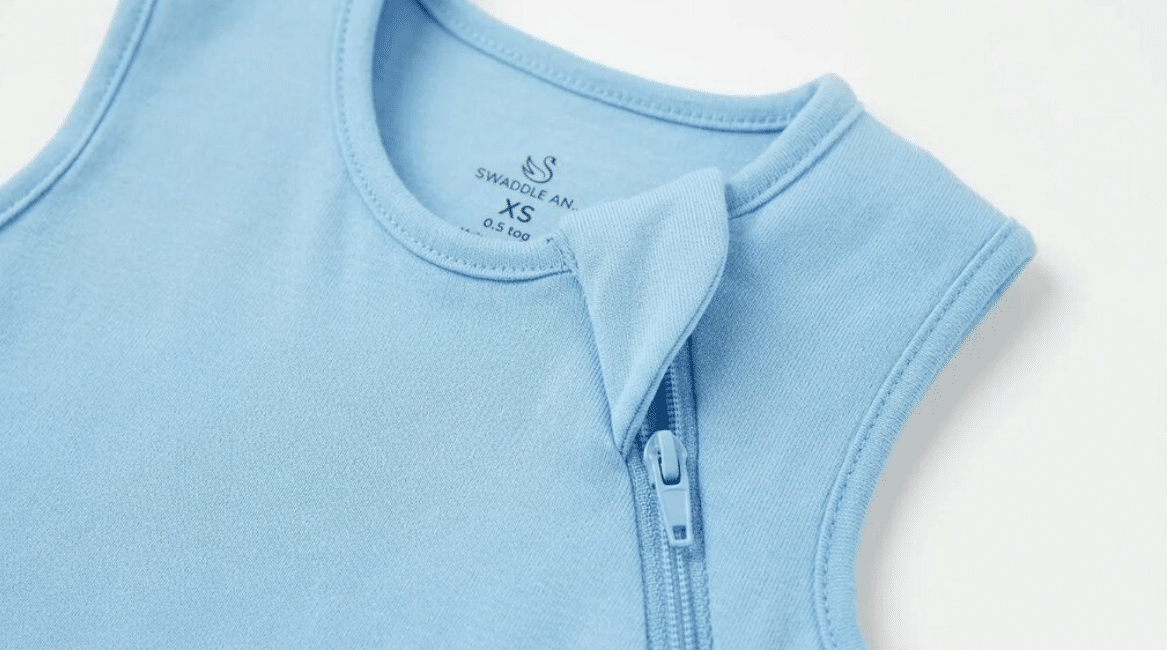
The snug-fit design is not about saving fabric. It’s a strict CPSC regulation requirement to completely eliminate toxic flame-retardant chemicals.
Banning Flame Retardants with Snug-Fit Engineering
Here is an ugly truth about the sleepwear industry: baggy clothes are a massive fire hazard. Because loose fabric catches fire easily, the law requires non-snug children’s sleepwear to be heavily treated with chemical flame retardants.
We absolutely refuse to expose a newborn’s highly permeable skin to those chemicals. So, we engineered a physical workaround. By utilizing a highly specific, engineered snug fit across the chest and arms, SwaddleAn garments naturally comply with CPSC 16 CFR 1615 regulations. The fabric sits close to the skin, eliminating the air pockets necessary for a fire to catch. Safety achieved through intelligent tailoring, not chemical baths.
The OEKO-TEX® 100 Baseline
Trusting a brand shouldn’t require blind faith. It requires third-party verification.
Every zipper, thread, and dye batch we use holds an OEKO-TEX® 100 certification. This isn’t a vanity label. It is a rigorous, independent clinical guarantee that the fabric contains zero formaldehyde, zero allergenic disperse dyes, and zero heavy metals like lead in the hardware. When your teething baby inevitably chews on their collar, you know exactly what is going into their mouth. Nothing toxic.
The Laundry Myth: Why You Don’t Need a Special Washer
How do you wash SwaddleAn bamboo baby clothes? You can wash our garments in a standard washing machine using a delicate, cold water cycle. Thanks to our proprietary blend of 95% bamboo viscose and 5% spandex, the fabric retains its tensile strength and shape without requiring hand-washing or special laundry equipment.

Forget those three-page laundry instructions. Baby clothes are made to get dirty, and washing machines are made to free you up.
The 5% Spandex Structural Integrity
If you spend five minutes on parenting forums, you will find mothers in full panic mode, convinced they need to hand-wash bamboo or buy a dedicated “special washer.” That is absurd.
Bamboo viscose on its own is incredibly soft but prone to losing its shape. That is exactly why we weave 5% premium spandex into every garment. This gives the fabric mechanical memory. It stretches to accommodate a squirmy toddler, then snaps right back to its original dimensions. Maintaining this precise ratio is expensive, but our direct-to-consumer model allows us to absorb that cost without passing an inflated retail markup on to you.
Realistic Care Instructions for Exhausted Parents
You are at your wits end. The last thing you need is a three-page laundry manual.
Babies have blowouts. They spit up. Their clothes are going to get filthy. We designed our fabric to survive reality. Just zip it up, toss it into your normal washing machine on a cold, delicate cycle with a mild detergent, and lay it flat to dry. Do not use fabric softeners—they coat the micro-gaps we mentioned earlier and ruin the temperature regulation. That’s it. Go drink your coffee.
Final Thoughts
Motherhood is heavy enough. You shouldn’t have to carry the mental load of decoding deceptive marketing terms or worrying if your baby’s pajamas are secretly coated in chemicals.
You don’t need a textile degree to keep your baby safe. We already did the math, ran the clinical tests, and secured the certifications. Your only job is to survive the night. If you are ready to ditch the gimmicks and experience evidence-based sleepwear, explore the science for yourself with our rigorously tested baby sleep sacks.