

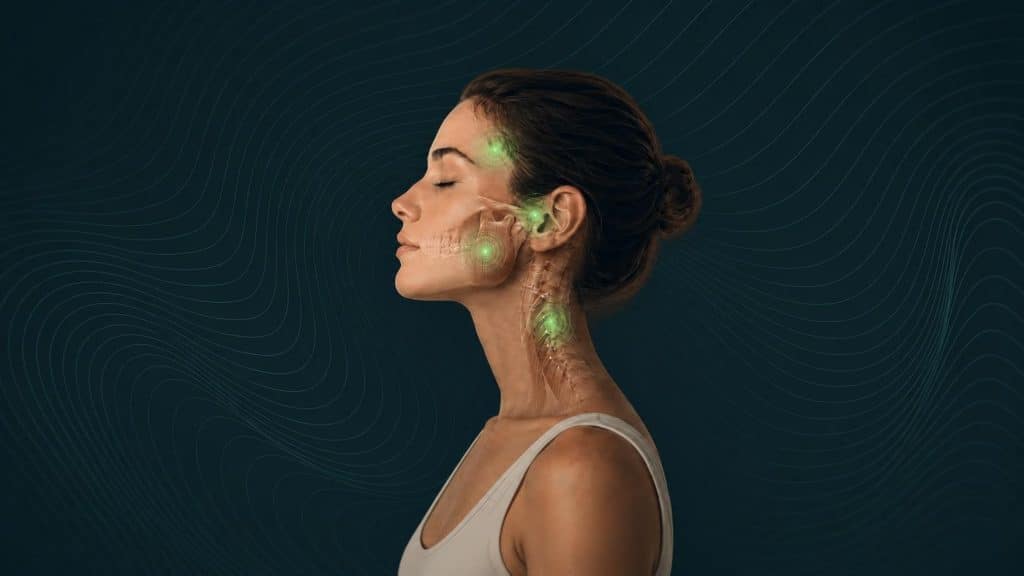
Jaw pain can be difficult to interpret. For some people, it appears briefly after chewing something firm or talking for a long time. For others, it becomes a recurring discomfort that affects eating, speaking, sleep, concentration, or daily comfort.
The jaw does not work in isolation. It relies on the temporomandibular joints, the chewing muscles, the bite, the neck, posture, breathing patterns, and daily habits. When one or more of these areas becomes overloaded, symptoms may begin to show up in ways that feel confusing or inconsistent.
Common signs that jaw pain may relate to TMJ
TMJ refers to the temporomandibular joint, which connects the lower jaw to the skull. A TMJ disorder can involve the joint itself, the surrounding muscles, or the way the jaw moves.
Jaw pain may be TMJ-related when it appears with symptoms such as:
- Clicking, popping, or grinding sounds in the jaw
- Pain when chewing, yawning, or opening wide
- Tightness through the cheeks, temples, or jaw muscles
- Jaw locking or restricted opening
- Headaches linked with jaw tension
- Ear discomfort without a clear ear-related cause
These symptoms do not confirm a diagnosis on their own. Similar symptoms can have different causes, which is why a careful assessment matters.
Clenching jaw and muscle tension
Clenching jaw habits can place repeated pressure on the jaw joints and chewing muscles. Some people notice clenching during the day, especially when concentrating or feeling stressed. Others may clench or grind during sleep and only notice symptoms on waking.
Morning jaw pain, tightness, headaches, tooth sensitivity, or worn teeth may suggest that overnight clenching or grinding is contributing. This does not mean stress is the only cause. Bite position, sleep quality, muscle patterns, posture, and general health factors may also influence how the jaw responds.
For practical self-awareness, it can help to notice when your teeth are touching. At rest, the lips can be closed while the teeth remain slightly apart. If the teeth are often pressed together outside of eating, the jaw muscles may be working more than they need to.
When to seek a clearer assessment
Jaw pain that settles quickly after a clear trigger may not always need further investigation. A firm meal or a short period of overuse can sometimes leave the jaw feeling tired for a day or two.
It is worth seeking assessment when jaw pain is persistent, keeps returning, affects chewing, limits opening, or appears with headaches, facial pain, neck discomfort, or sleep-related symptoms. Assessment is also useful when previous care has helped only briefly, or when the cause of symptoms remains unclear.
A TMJ assessment usually looks beyond the painful area. It may consider jaw movement, joint loading, muscle tenderness, bite factors, clenching and grinding, posture, sleep, breathing, and related neck or shoulder patterns. This broader view helps explain why symptoms can vary from person to person.
For readers looking for more detailed information on TMJ-related jaw pain, this guide to clenching jaw symptoms, assessment, and care pathways may be useful.
Conclusion
Jaw pain can come from several contributing factors. TMJ may be involved when pain is linked with jaw movement, clicking, locking, muscle tightness, headaches, or clenching and grinding patterns.
A clear diagnosis helps separate temporary discomfort from a more complex jaw problem. It also supports a care plan that is guided by symptoms, jaw function, and how the body is responding over time.